Tenjuku no Mori Keigetsu, a ryokan in the forest
天宿の杜 桂月
A small ryokan on a wooded hill in Mine, Yamaguchi, where every room has its own open-air hot-spring bath.
A ryokan at the end of the road
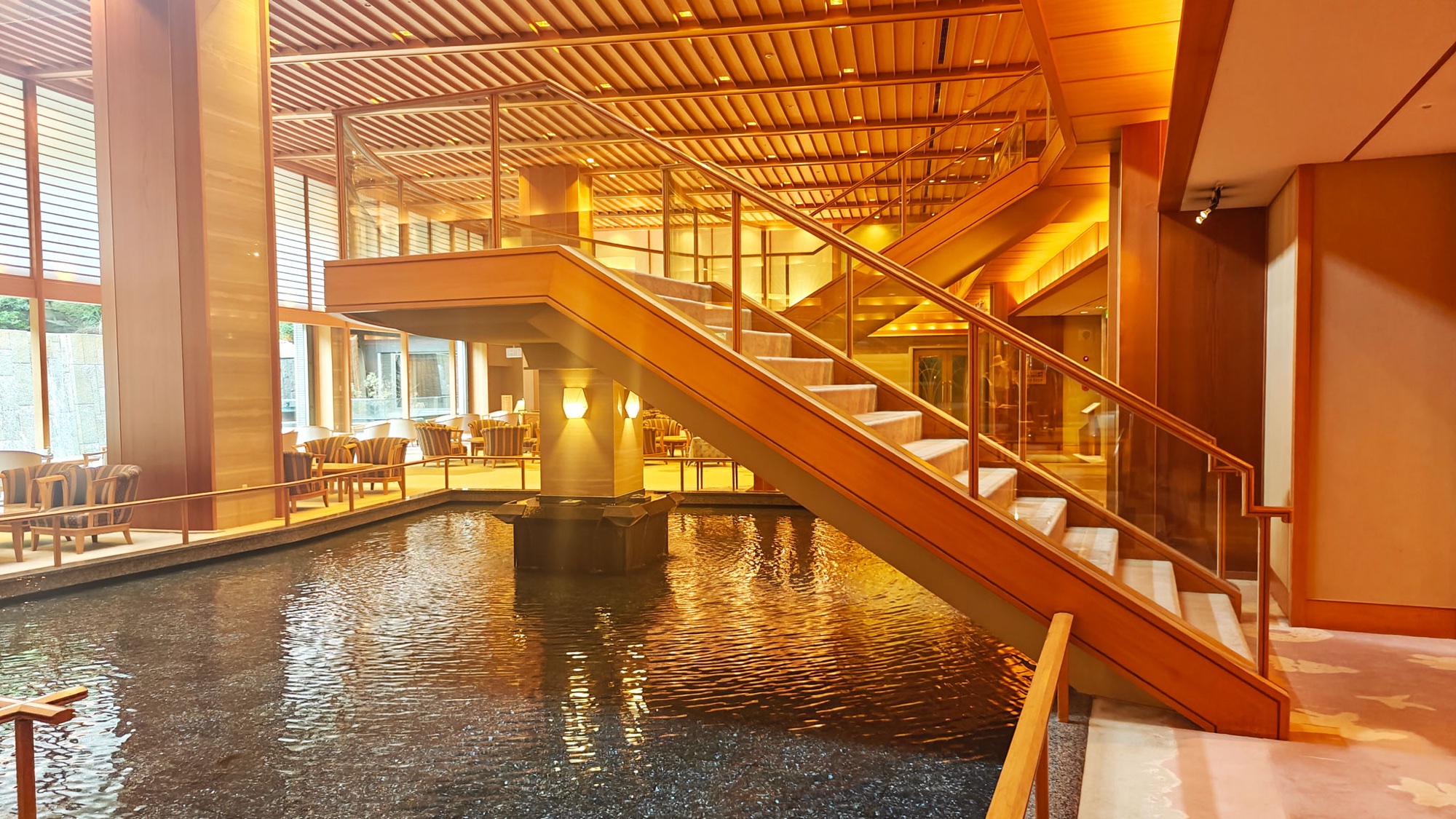
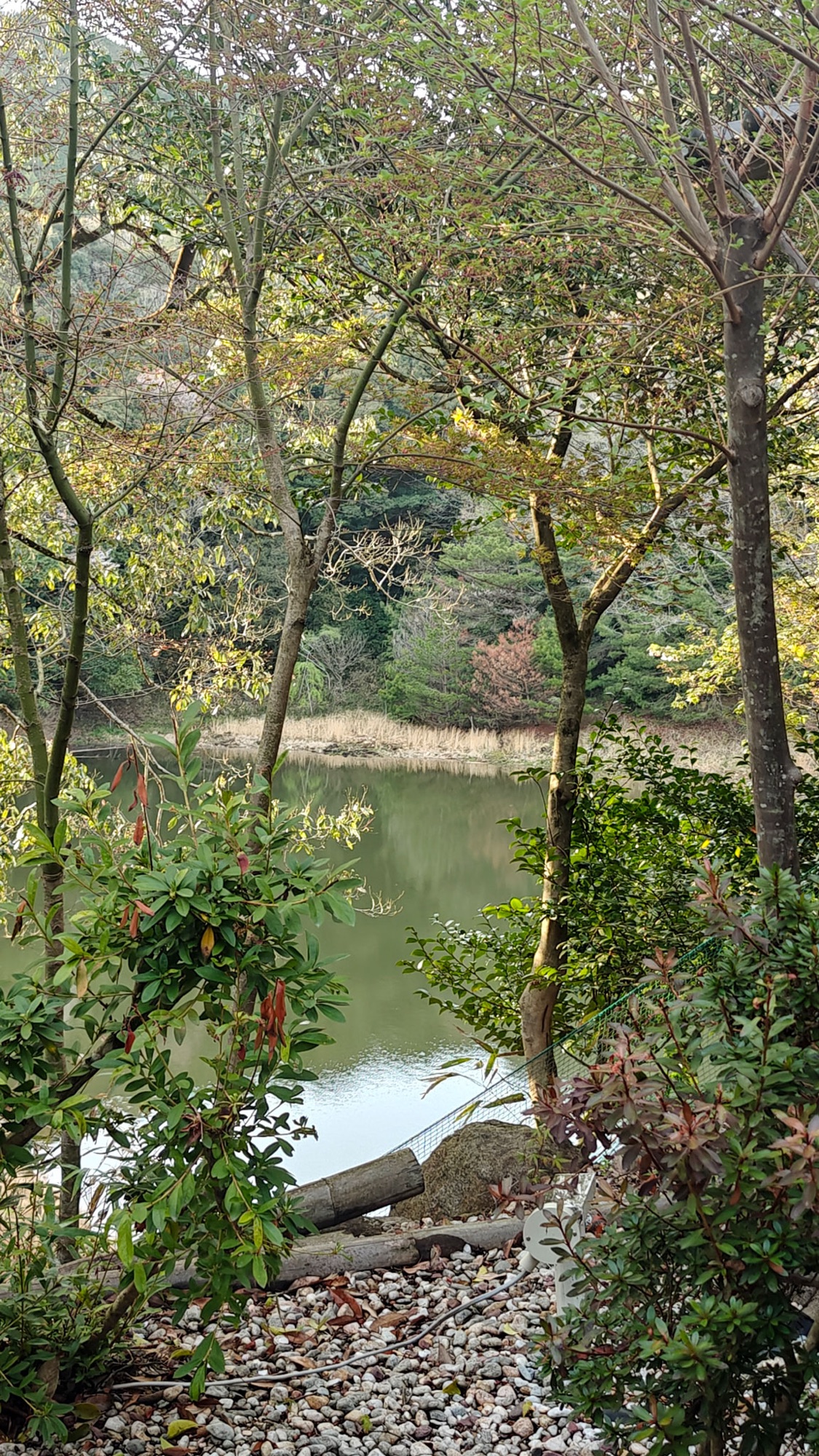
Tenjuku no Mori Keigetsu stands at the top of a lane that climbs past the last houses in the valley and stops at the gate. There is a small pond below the buildings and forest on the other three sides. Eight rooms is small enough that you rarely meet anyone.
It is the only place to stay at Yunokuchi Onsen (湯の口温泉). The spring was drained by the mines that once worked this part of Yamaguchi and reached again in 1974, by a borehole 1,300 metres deep. The water comes up cold, so it is heated for the baths.
We came by car and stayed two nights.
The annex room and its own rotenburo
Every room has a hot-spring bath of its own, open-air or half-open, and the price gap between the categories is small. We took the annex, a separate building at the edge of the slope, for barely more than a room in the main house.
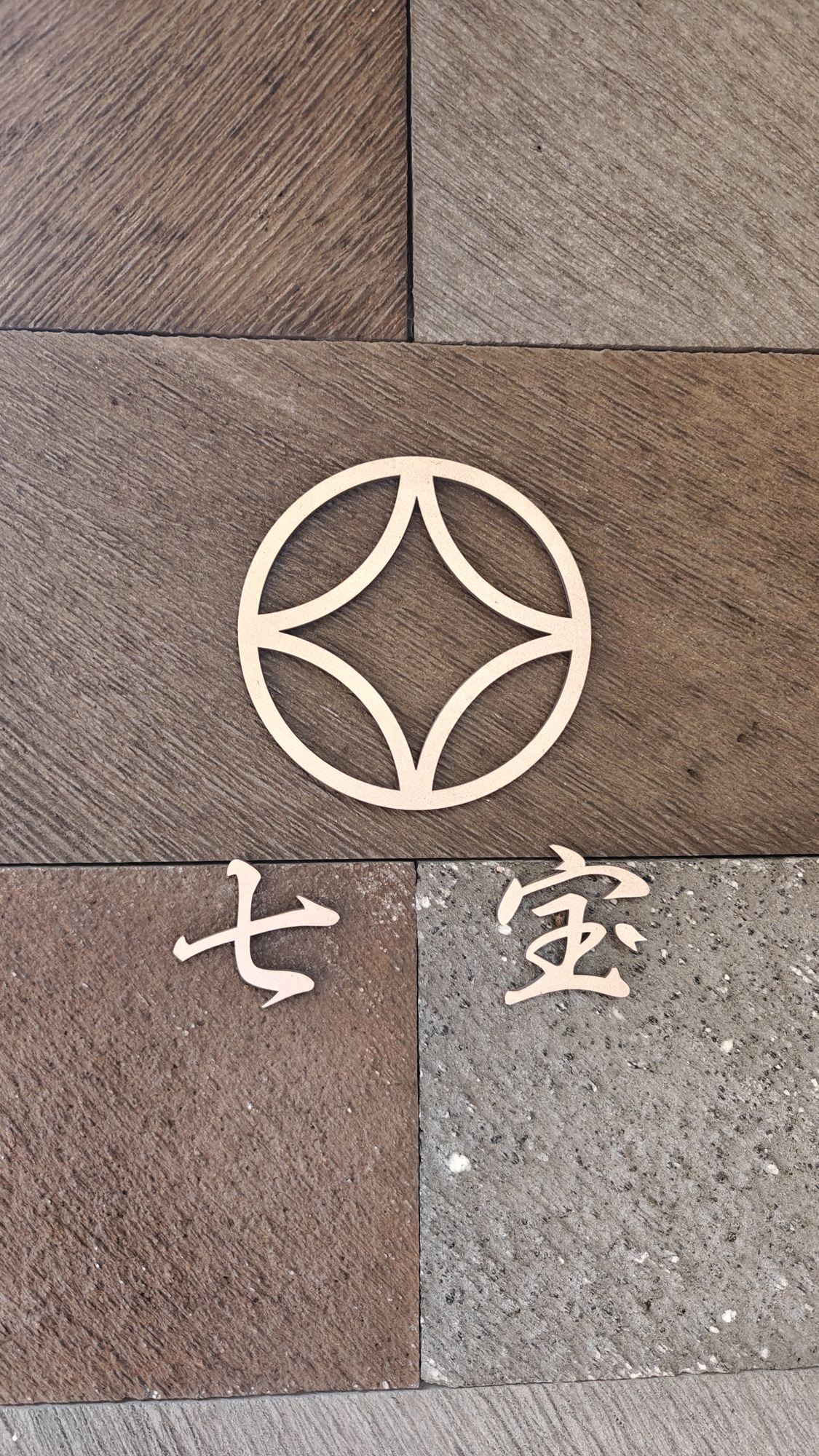
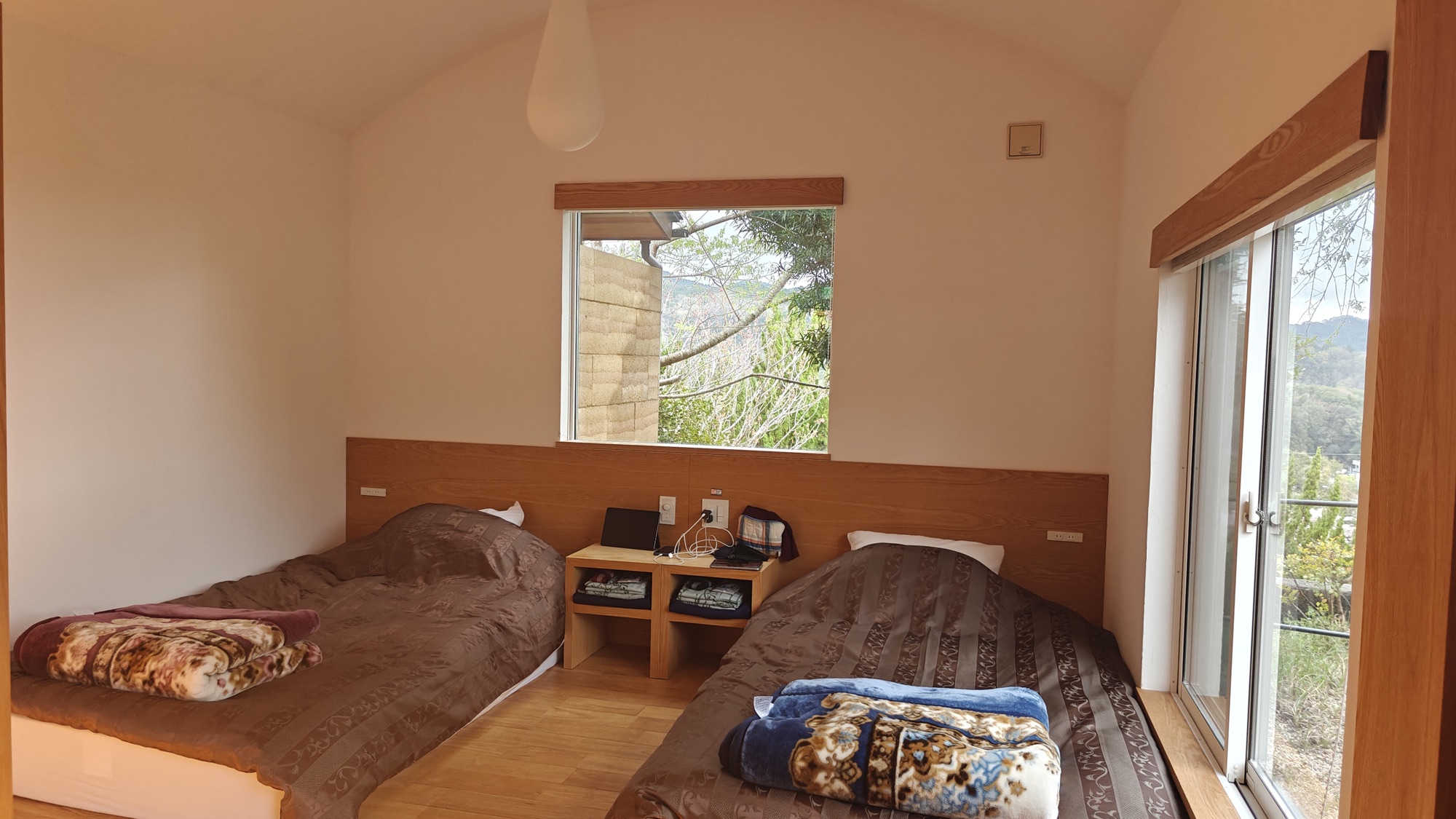
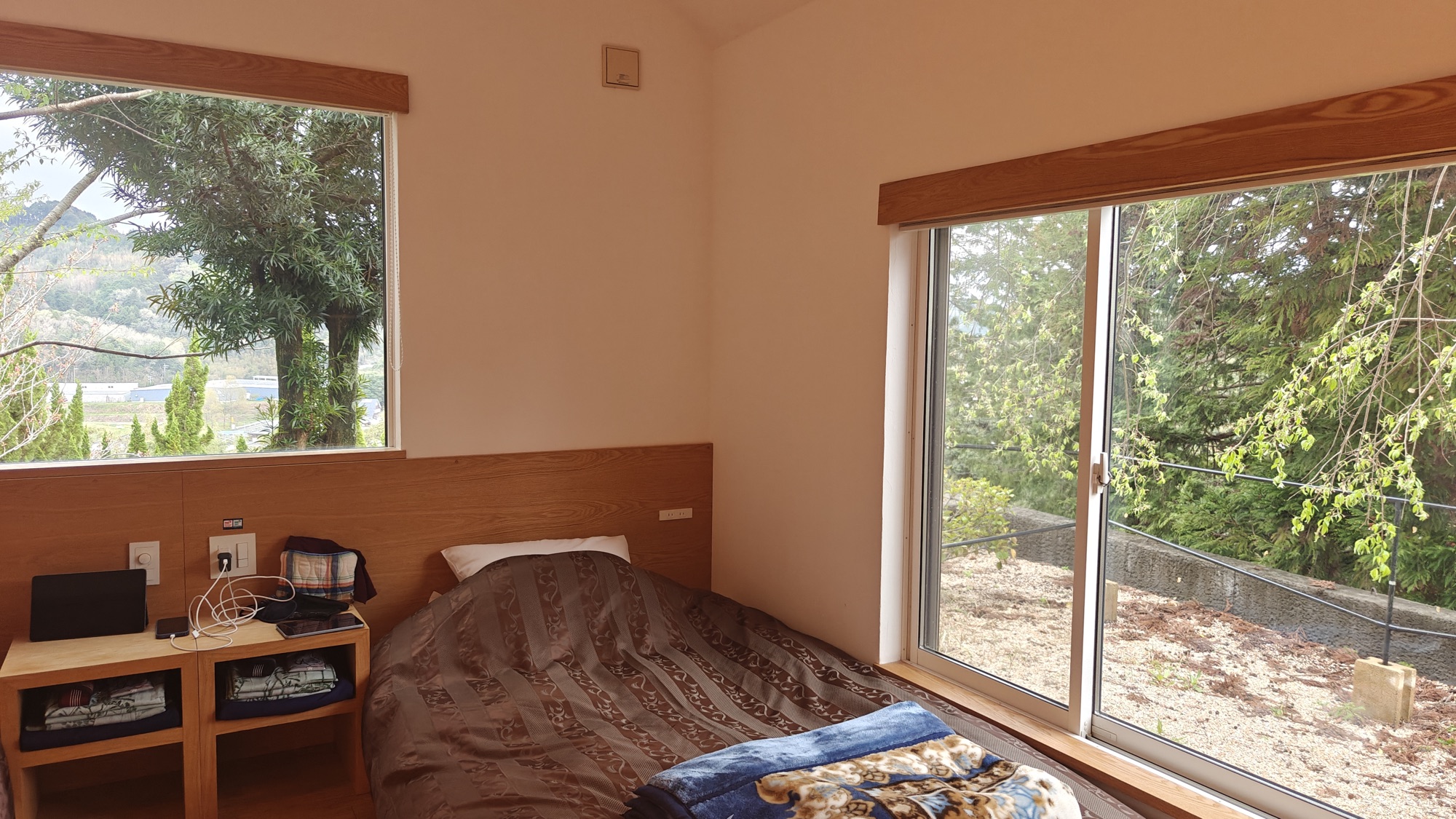
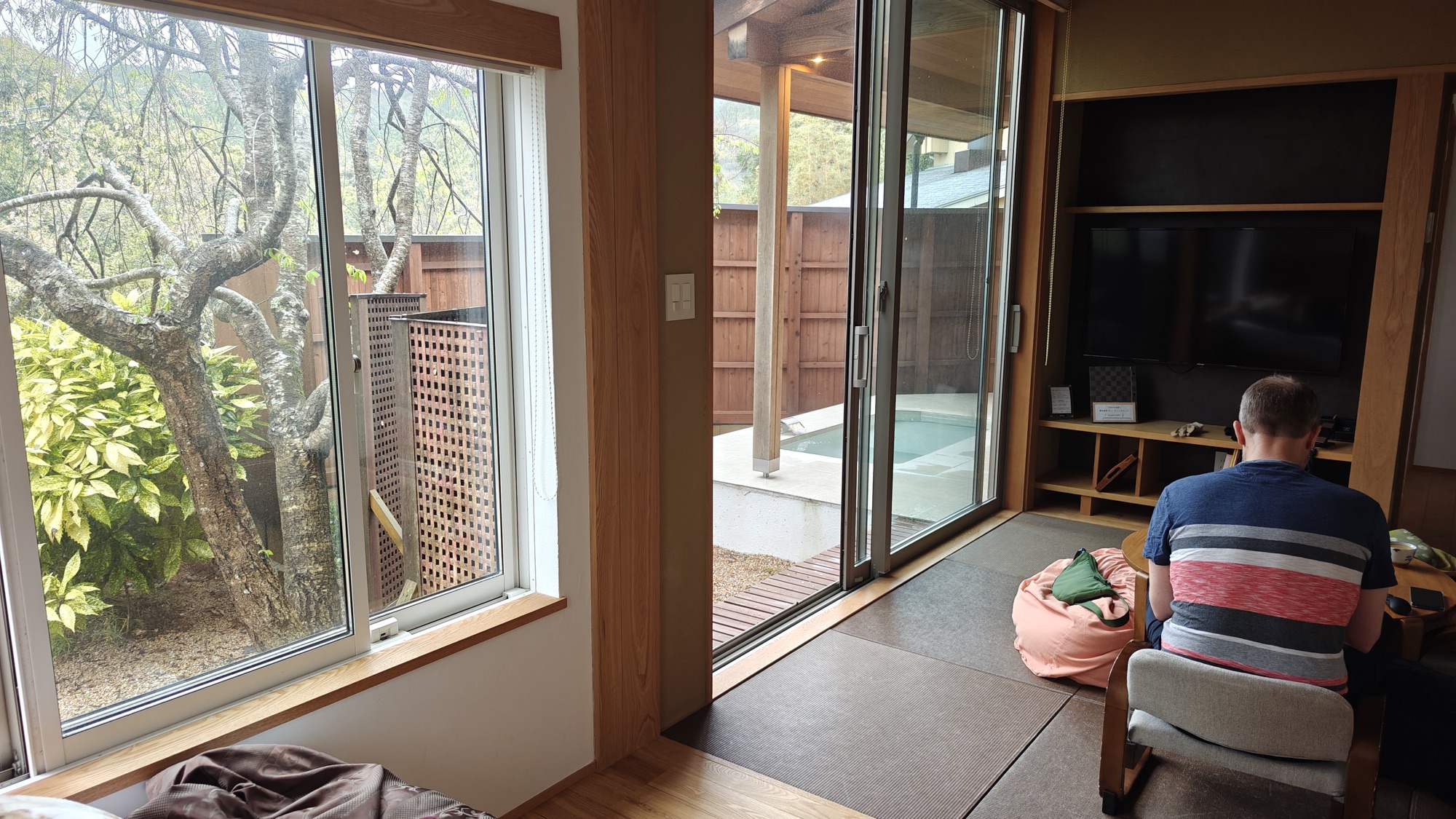
Ours was called Shippō (七宝), after the pattern cut into the plaque by the door. Inside there is a tatami living area with a low table and two chairs, a bedroom with twin beds behind it, and windows on two sides: one onto the trees against the fence, the other down the valley.
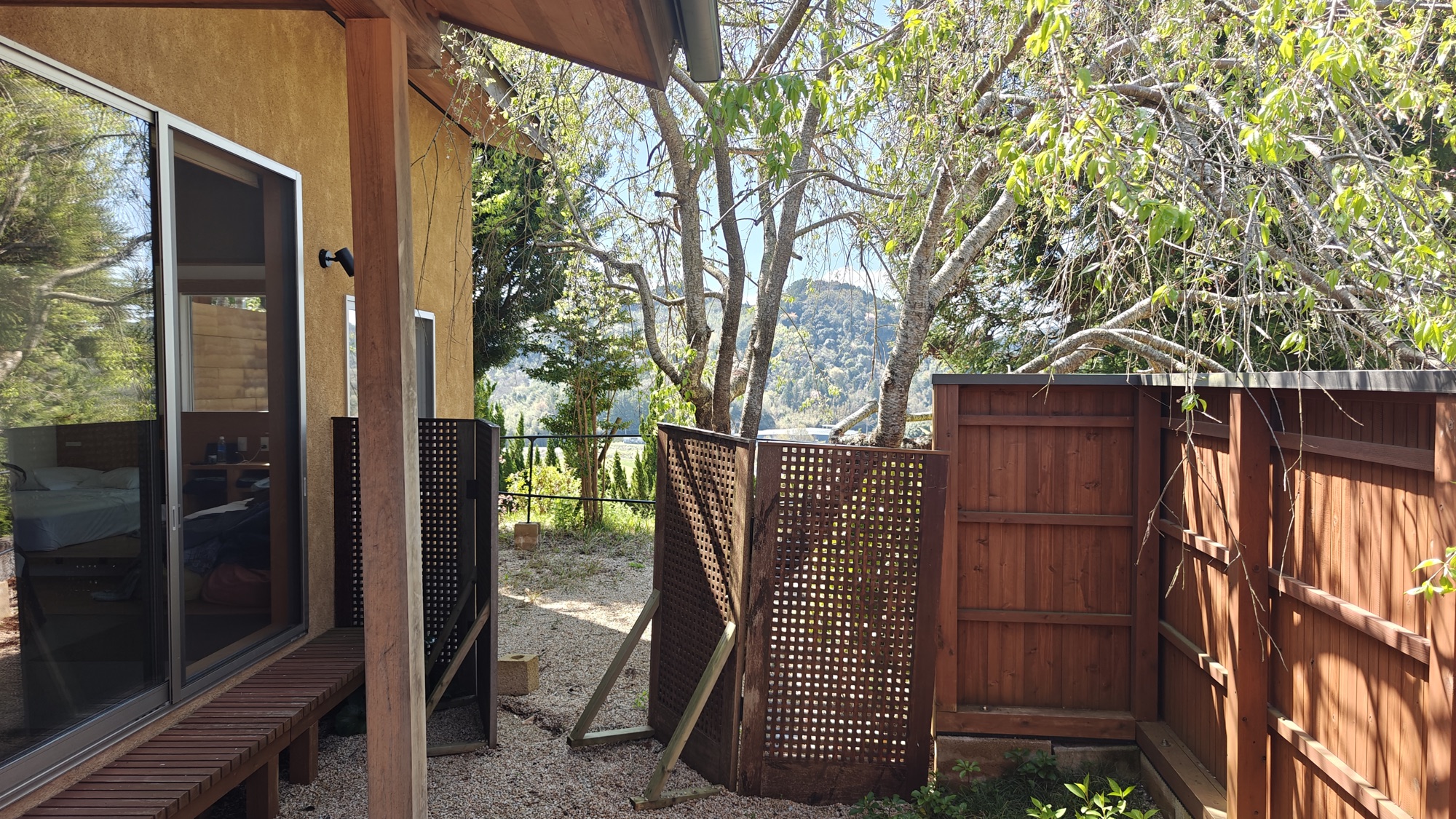
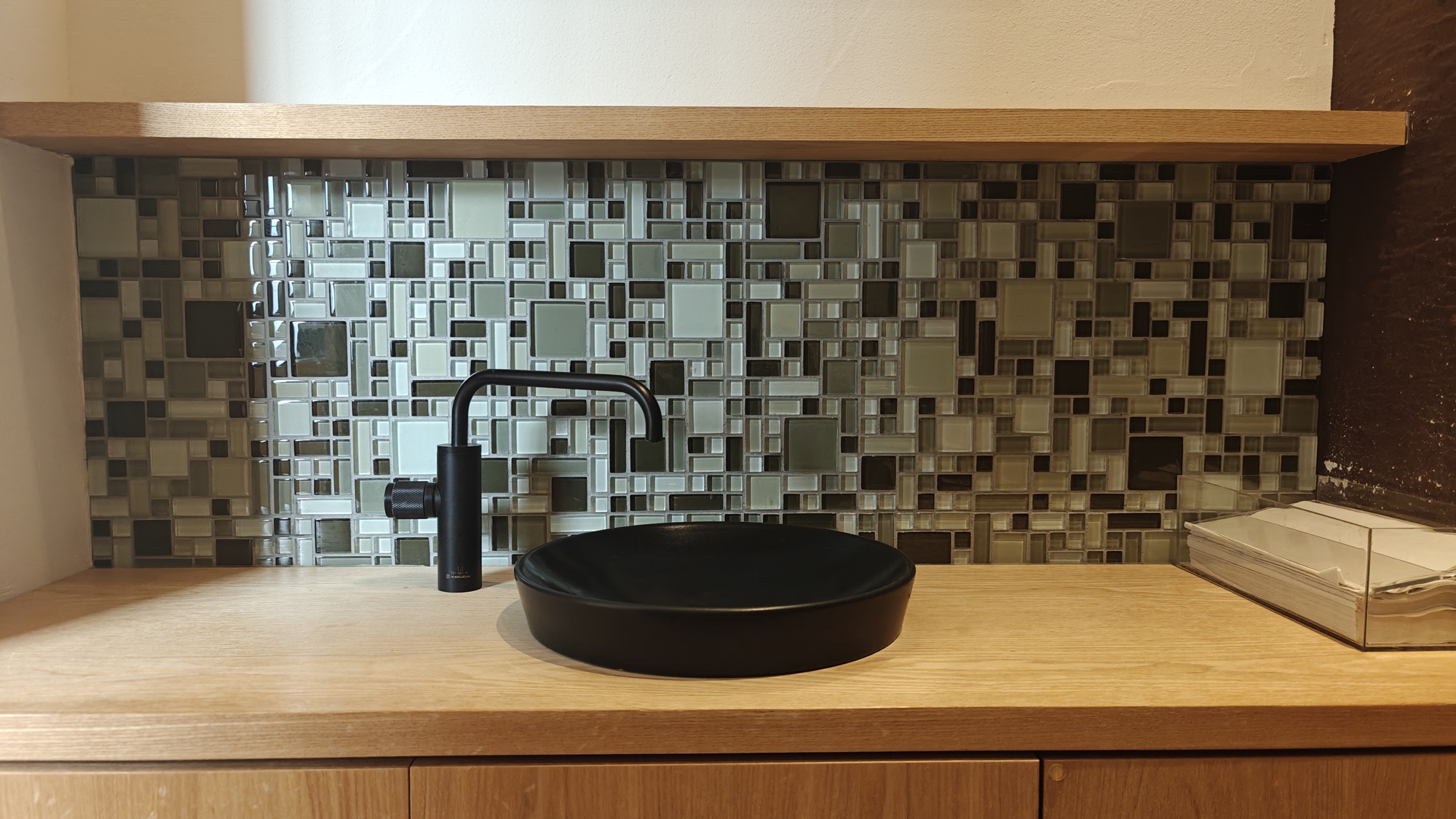
Full-height glass doors slide back onto a deck, a strip of garden and the bath itself: a shallow rectangular tub, open to the sky, screened with wood panels and left open on the valley side. Off the living room there is a washbasin under a mosaic wall and a nook with kettle, fridge and safe.





The baths, the sauna and the lounge
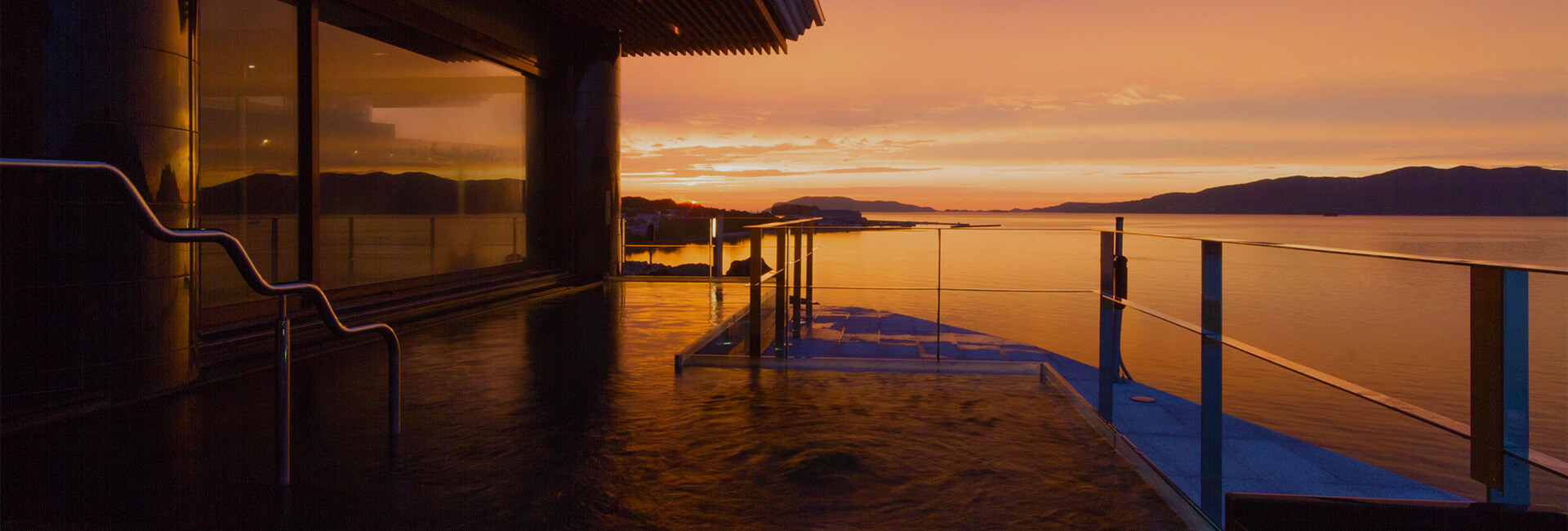
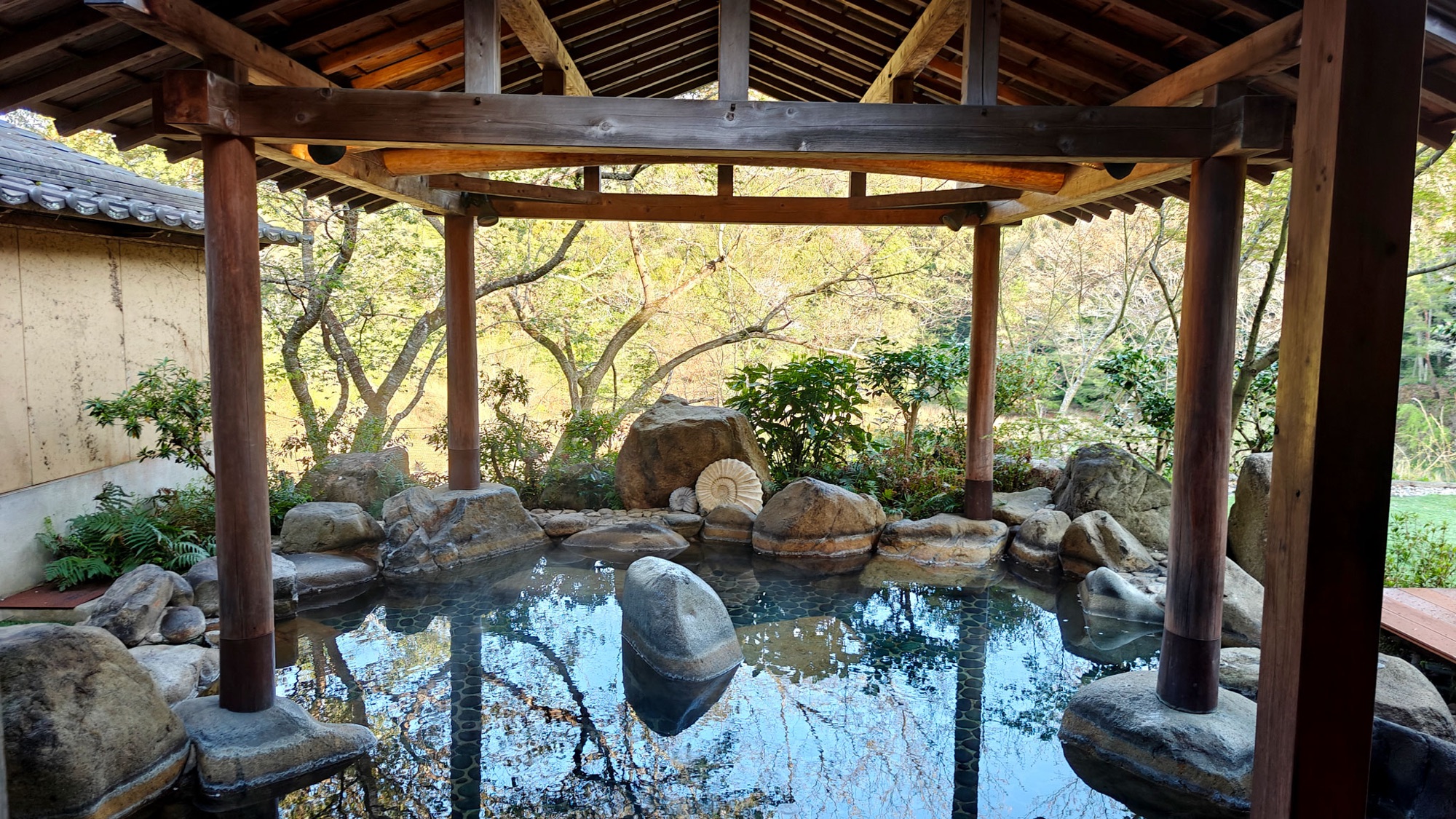
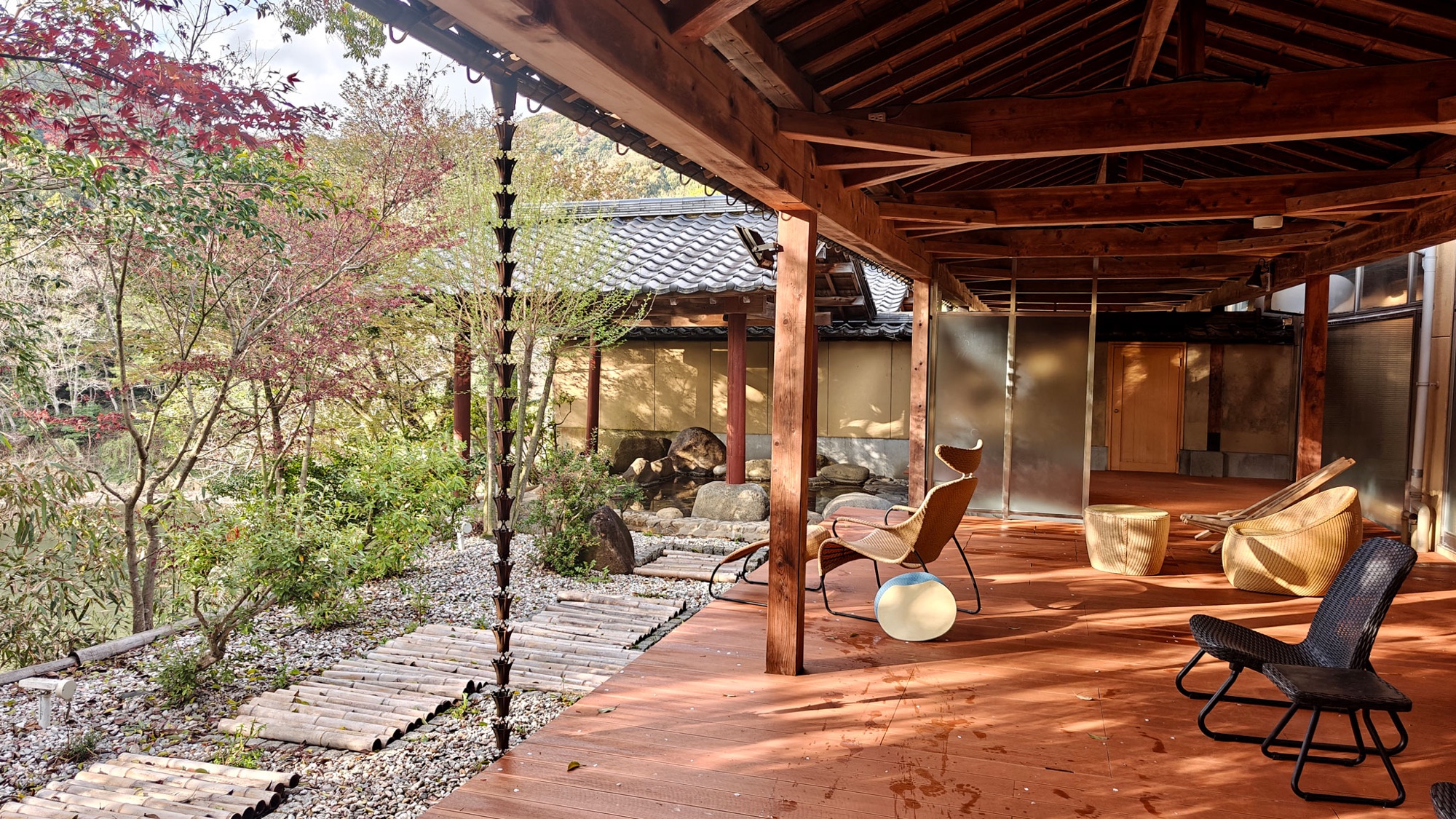
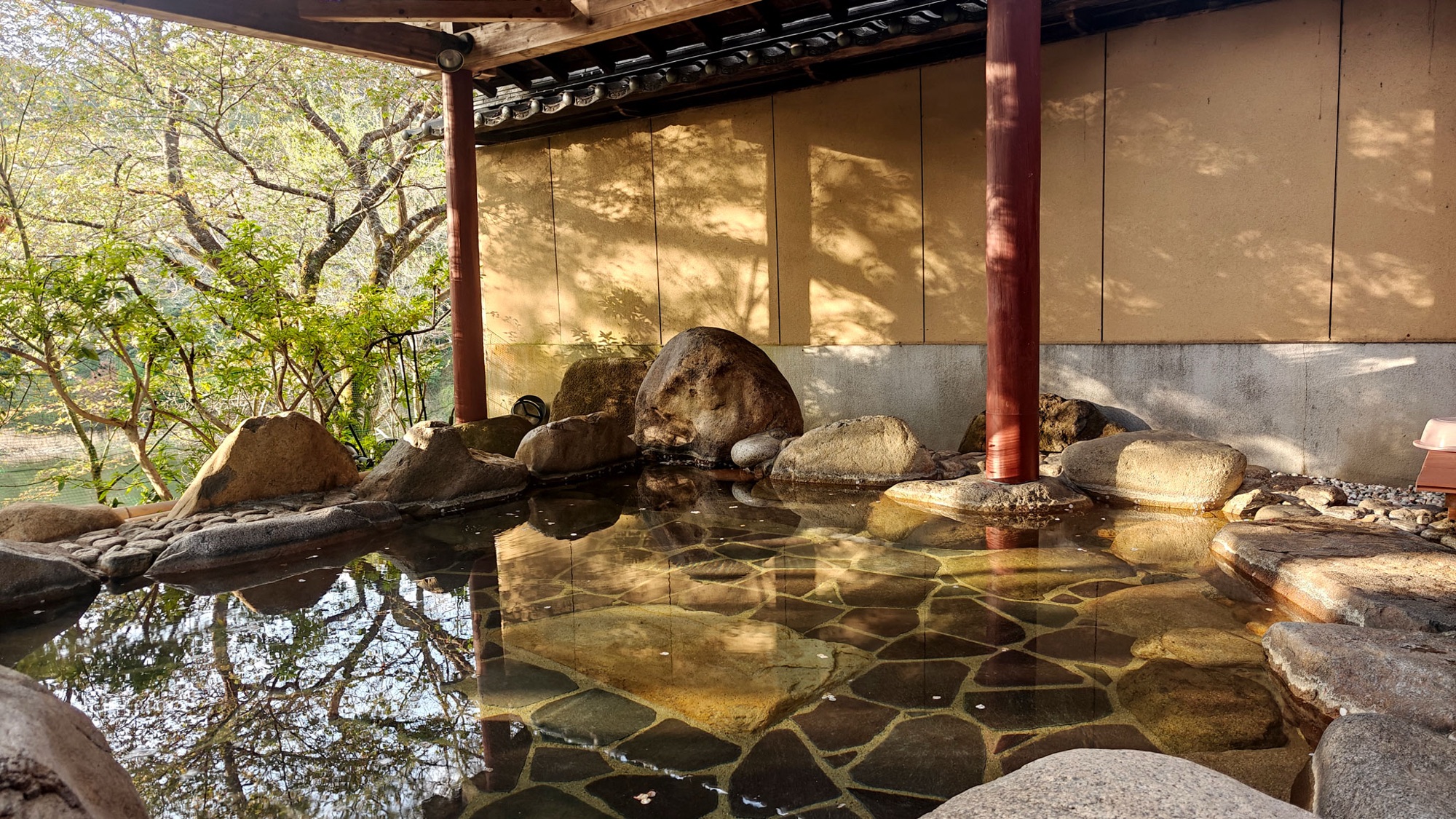
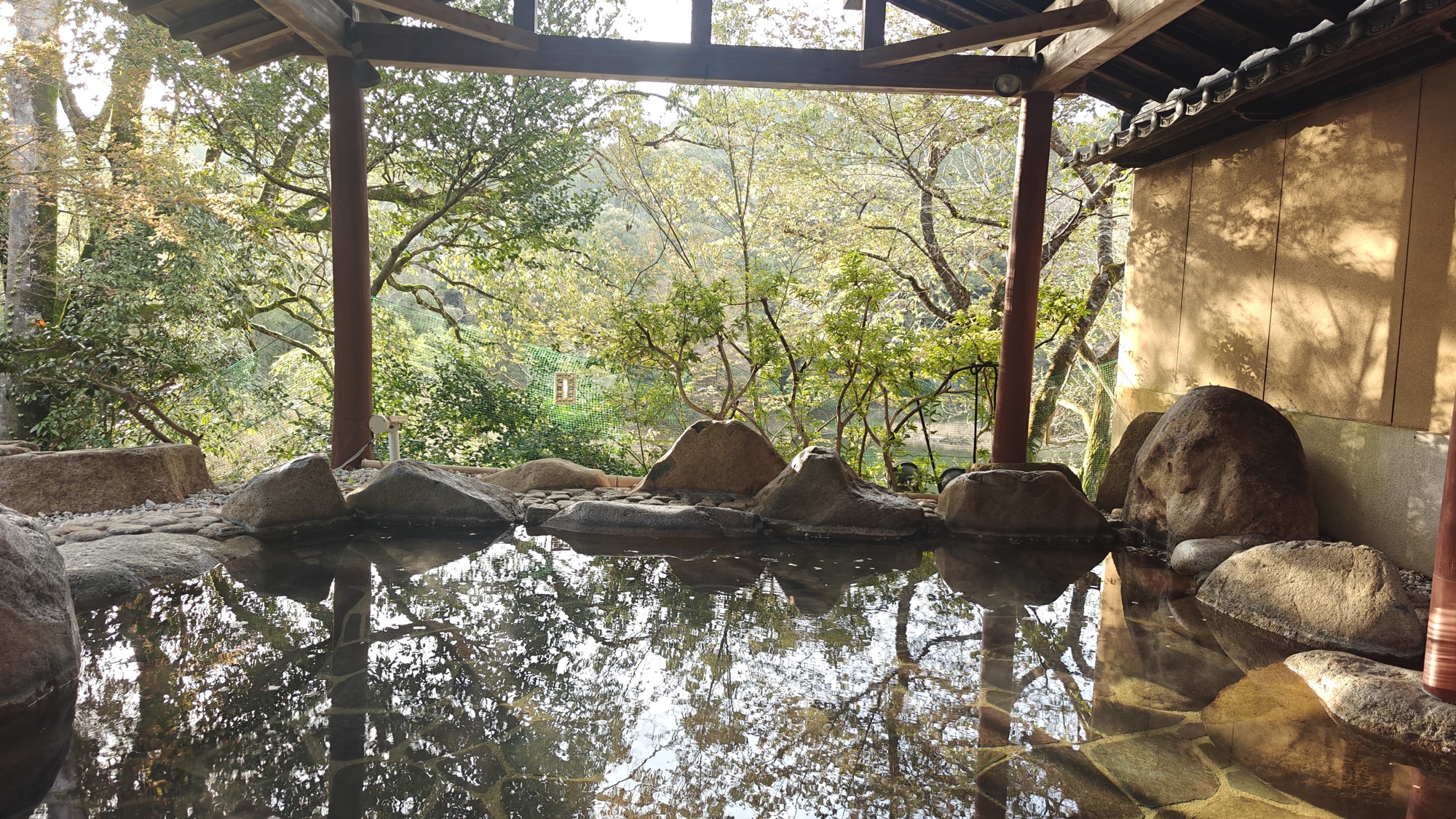
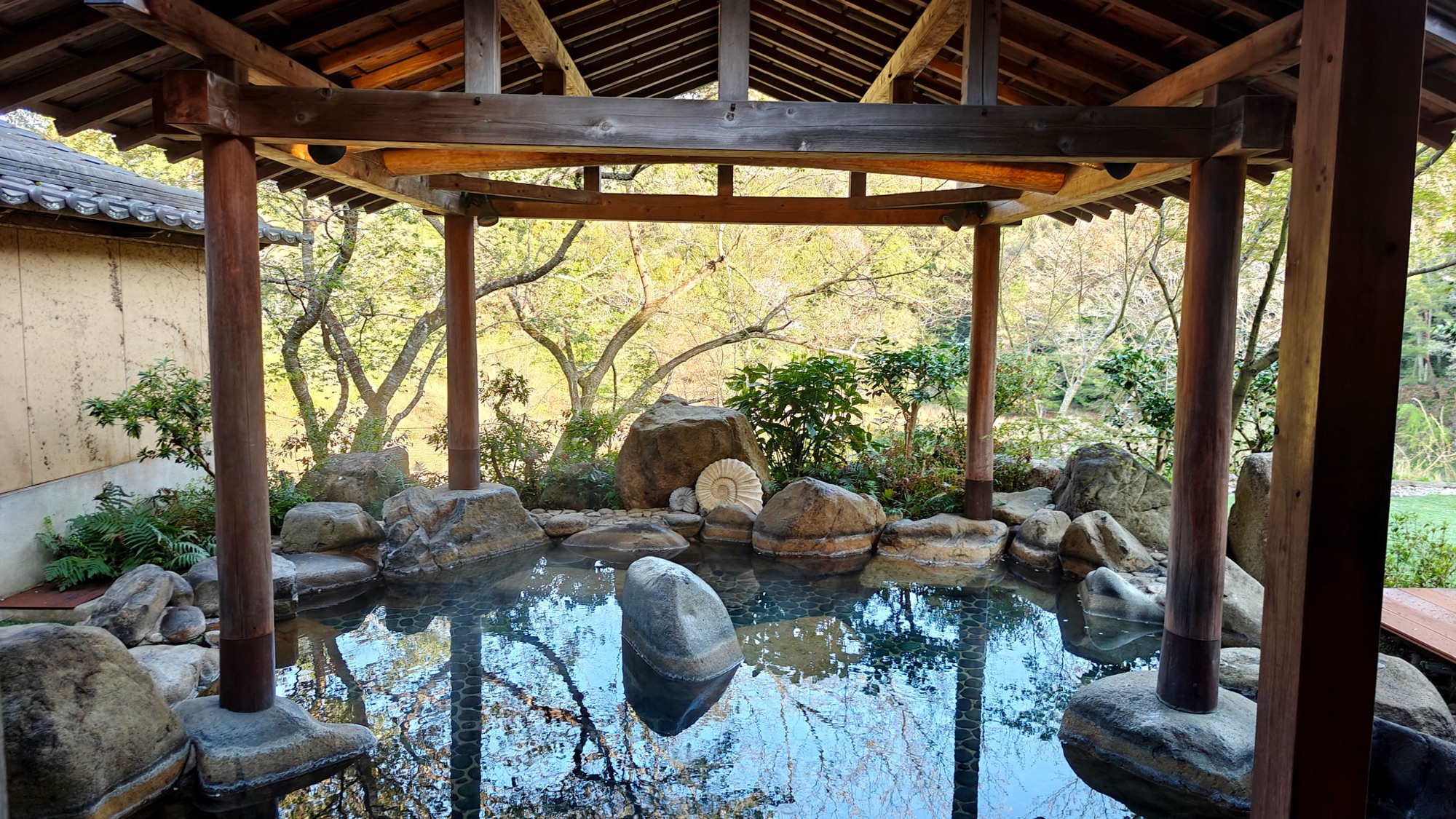
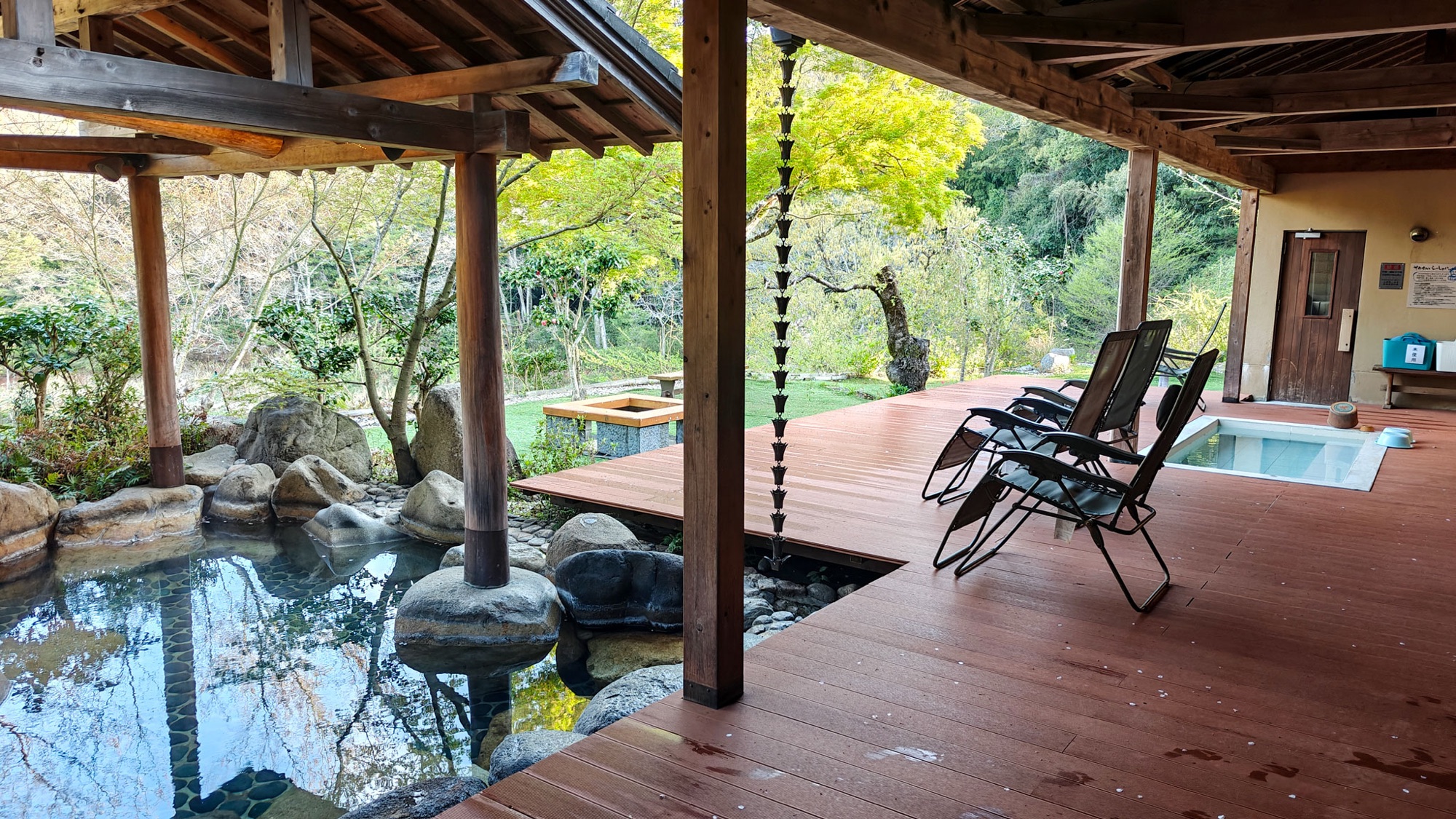
The shared baths are worth using even though the room has one. There is an indoor bath, a rock-lined rotenburo under a timber roof, a cold bath and a sauna, and the men’s and women’s sides swap between morning and afternoon, so you get both in a single stay.
What holds it together is the covered lounge in between: an open deck with a mix of reclining chairs and wicker loungers, facing down over the pond. You can go from sauna to cold water to rotenburo and sit outside between rounds without going back indoors, and the view from those chairs is the best thing on the property: trees to the waterline, and the water below. One afternoon a family of wild boar came out along the far bank.
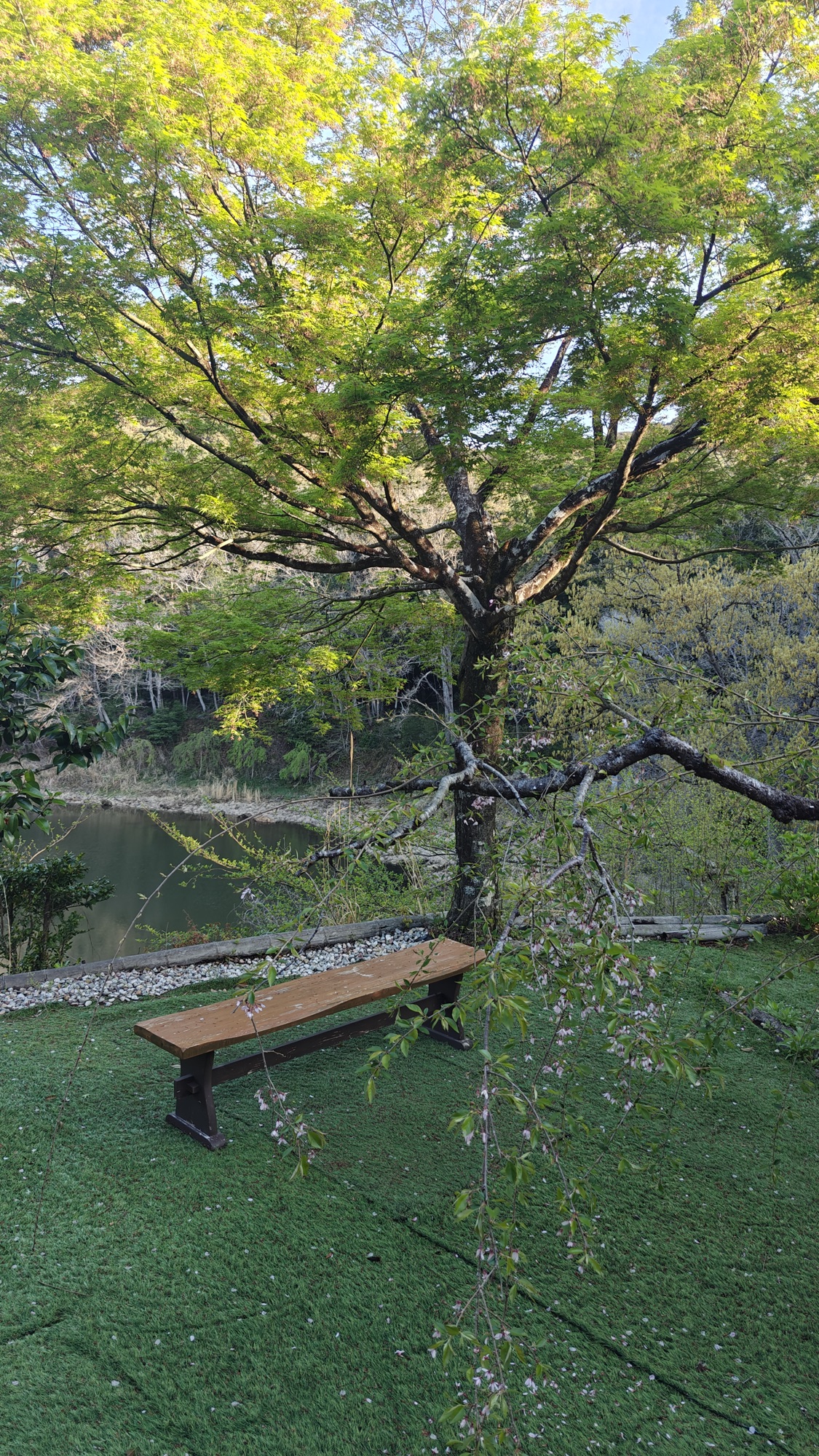
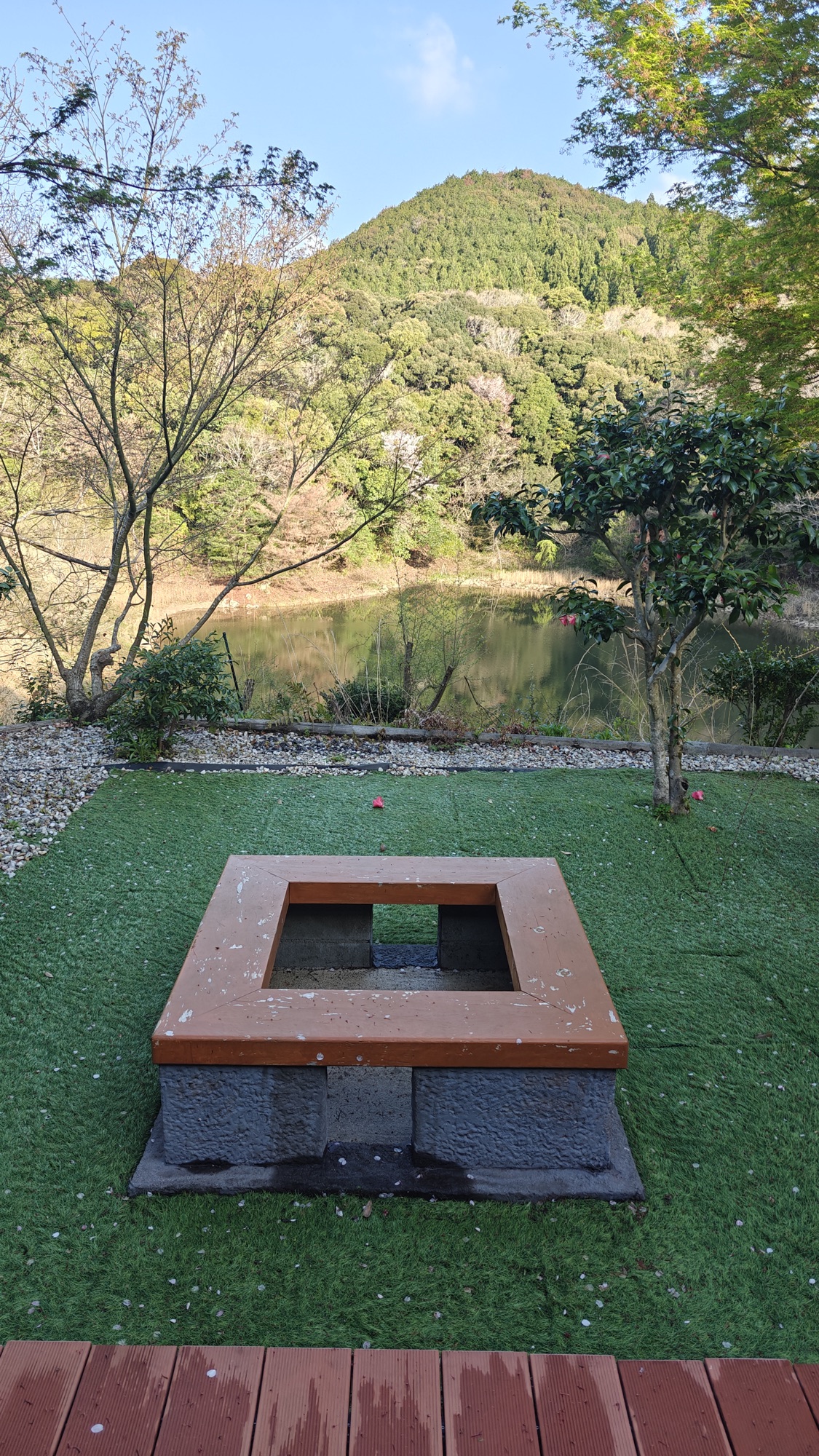
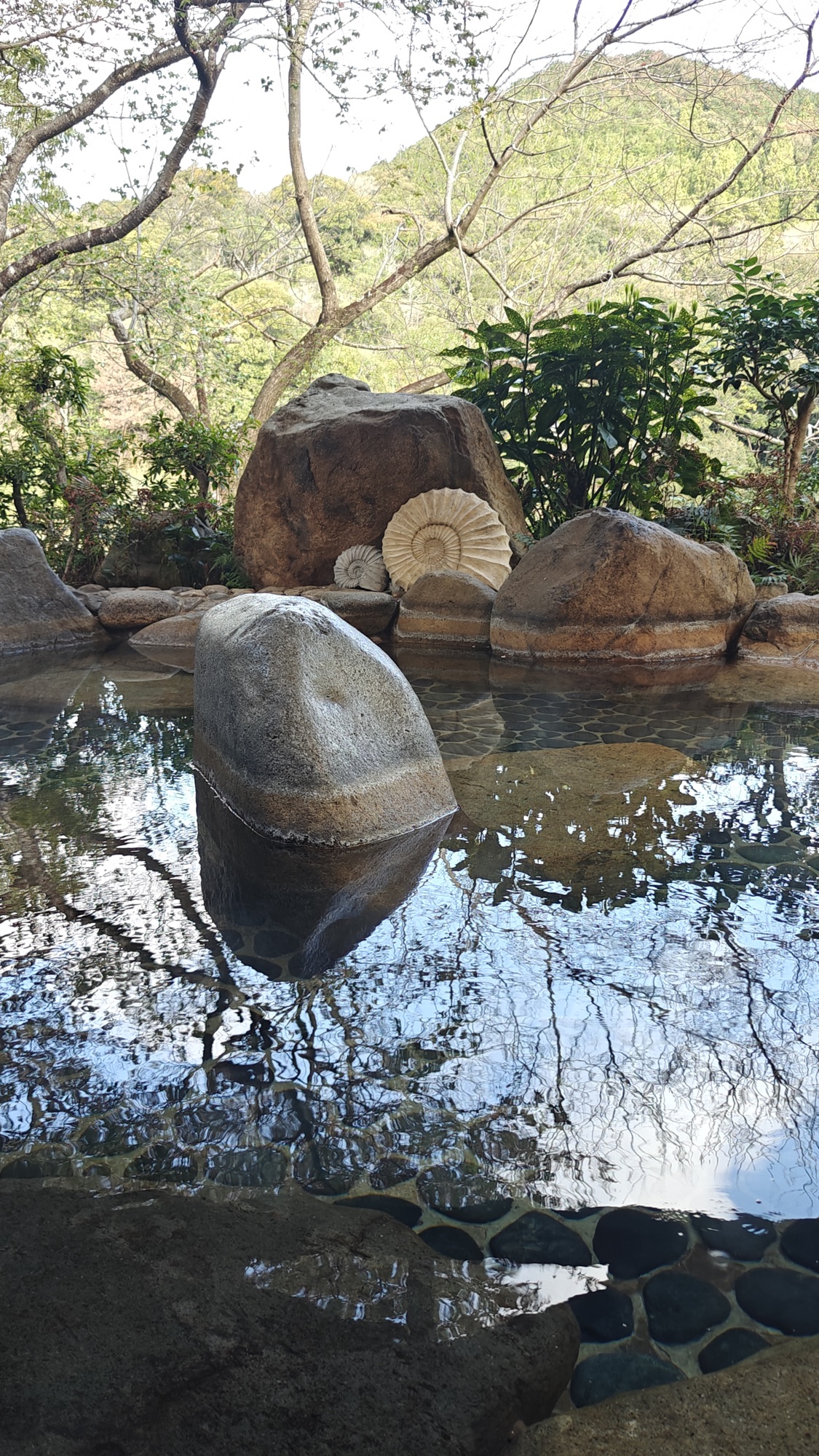
Below the deck a lawn runs down to the water, with benches under the trees and a square bath set flush into the grass. A large ammonite is set into the rocks at the lip of the rotenburo.


Dinner, and a night of fugu
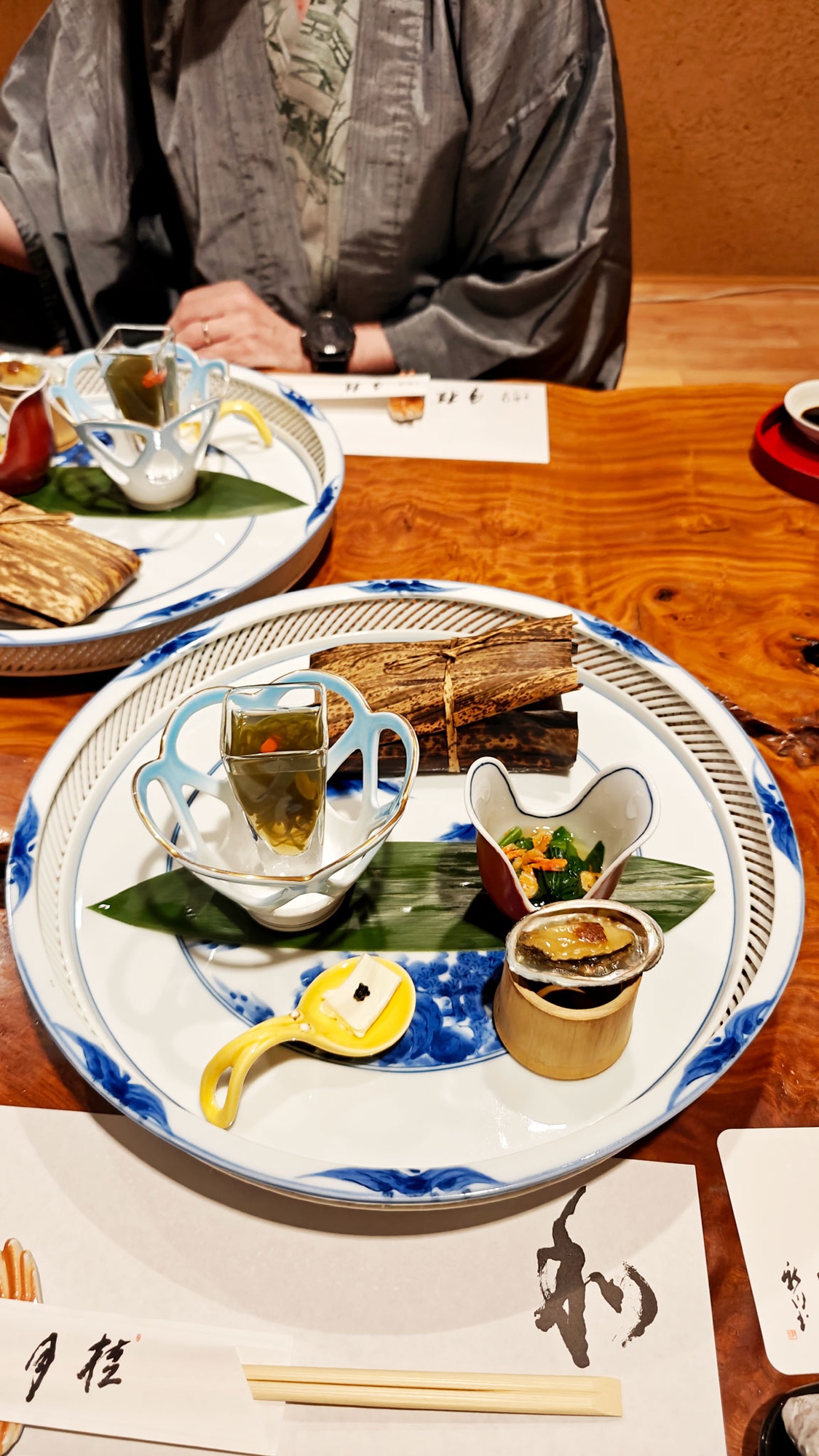
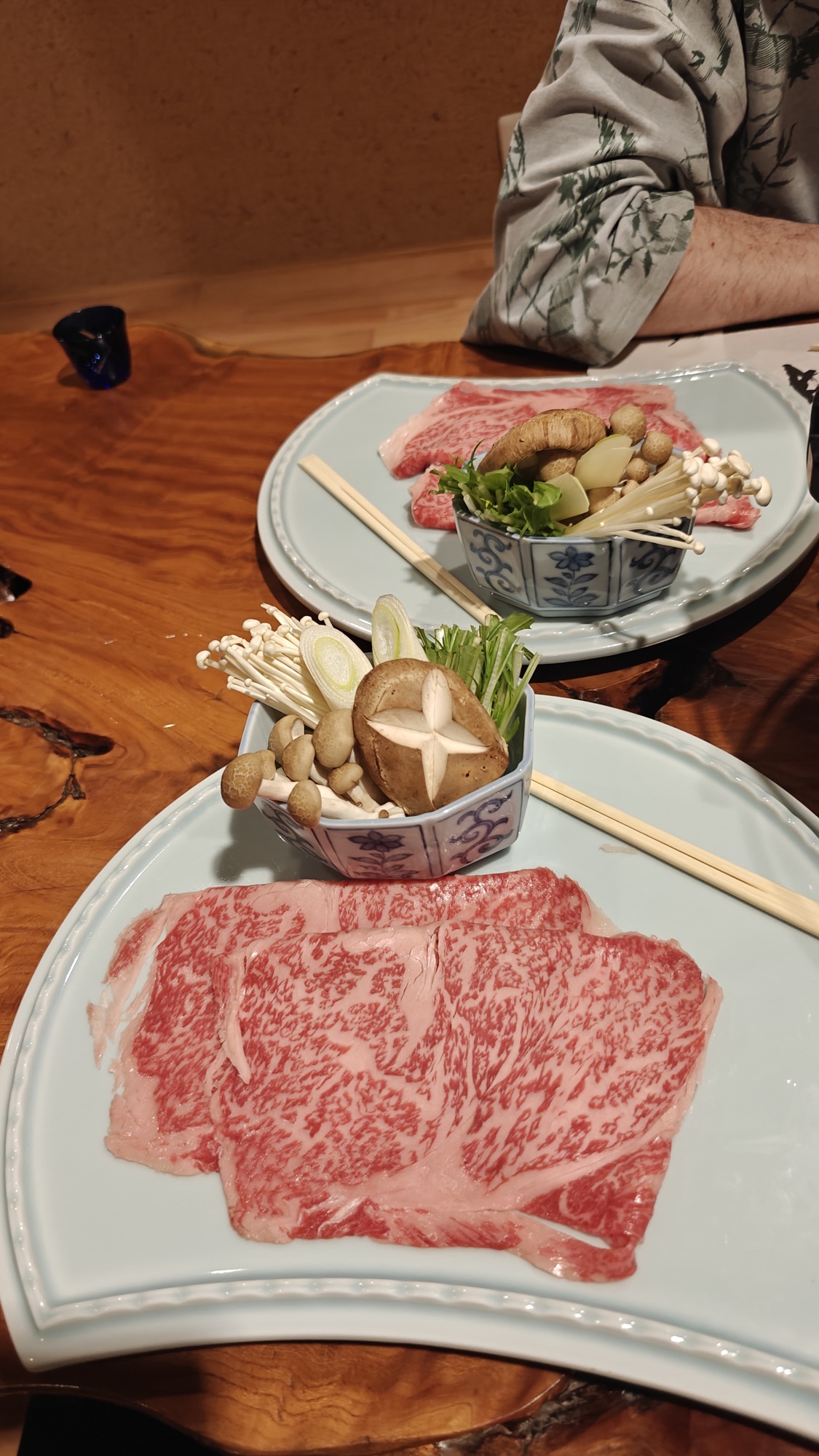
Both dinners were long and more food than we needed. The first was a straightforward kaiseki: an opening tray, sashimi built around a spiny lobster, then marbled beef to cook at the table with mushrooms and greens. We drank Taka (貴), a junmai from Nagayama Honke in Ube, at the other end of the prefecture. It was one of the best sake we drank on the whole trip.
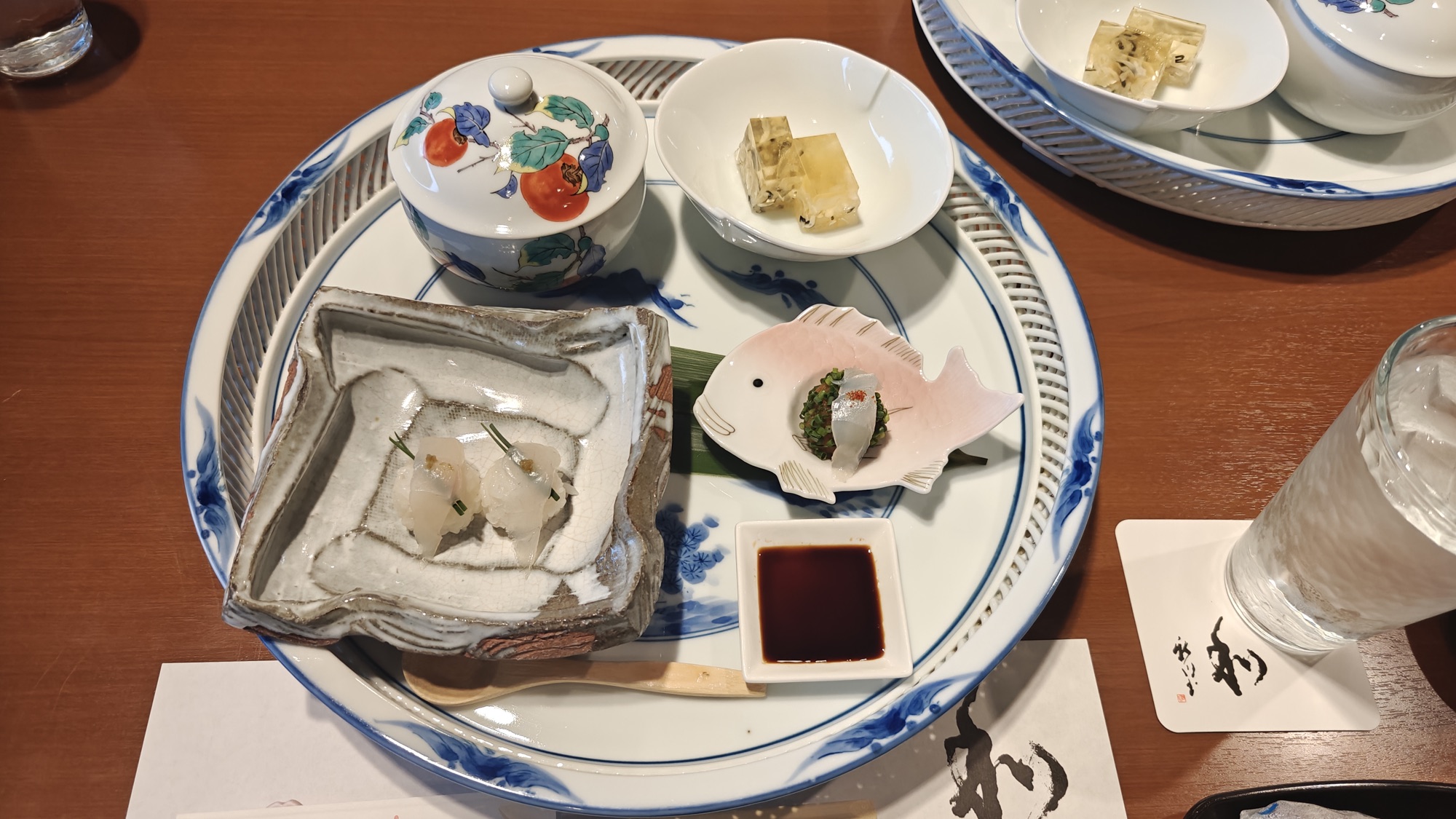
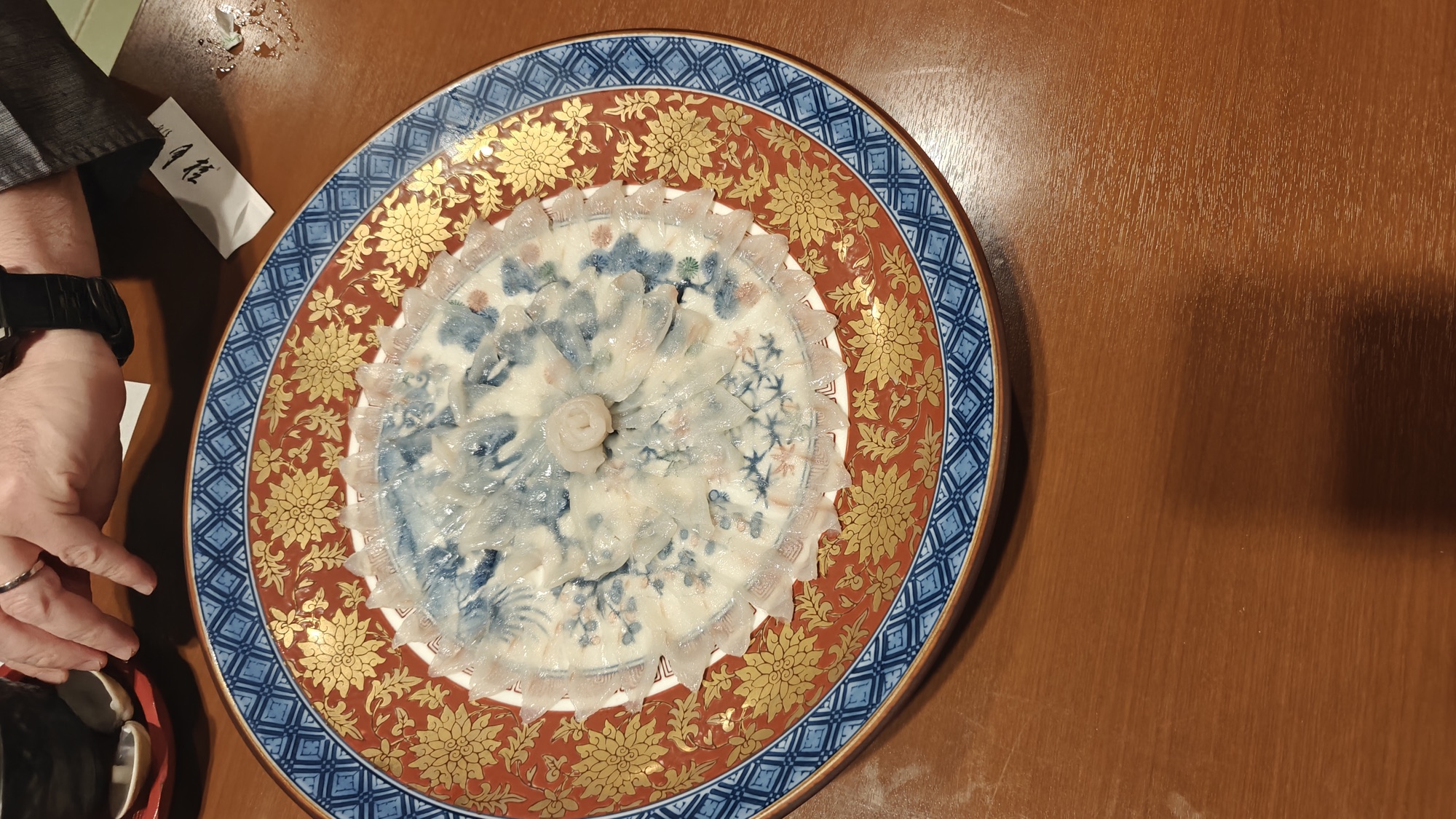
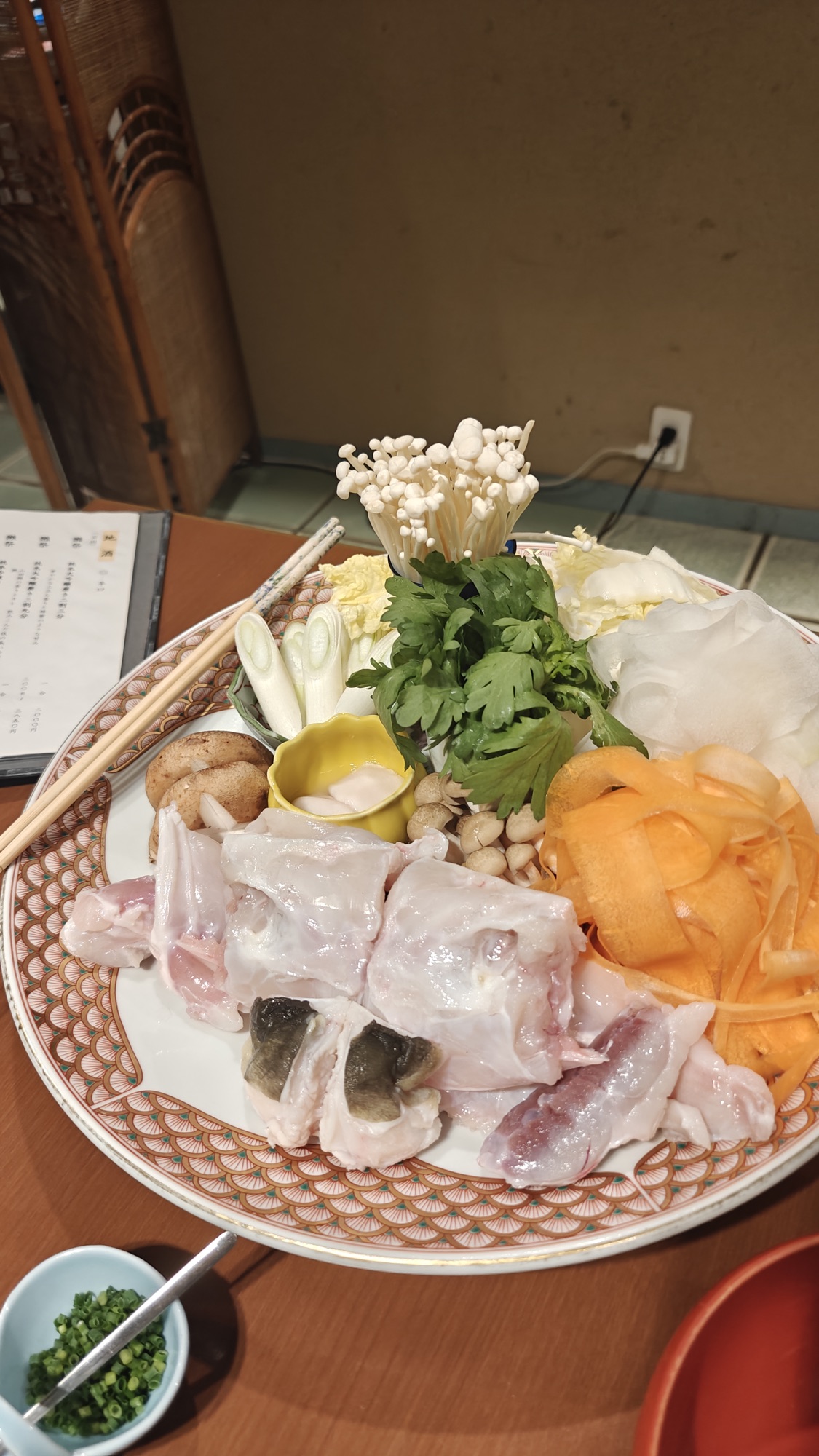
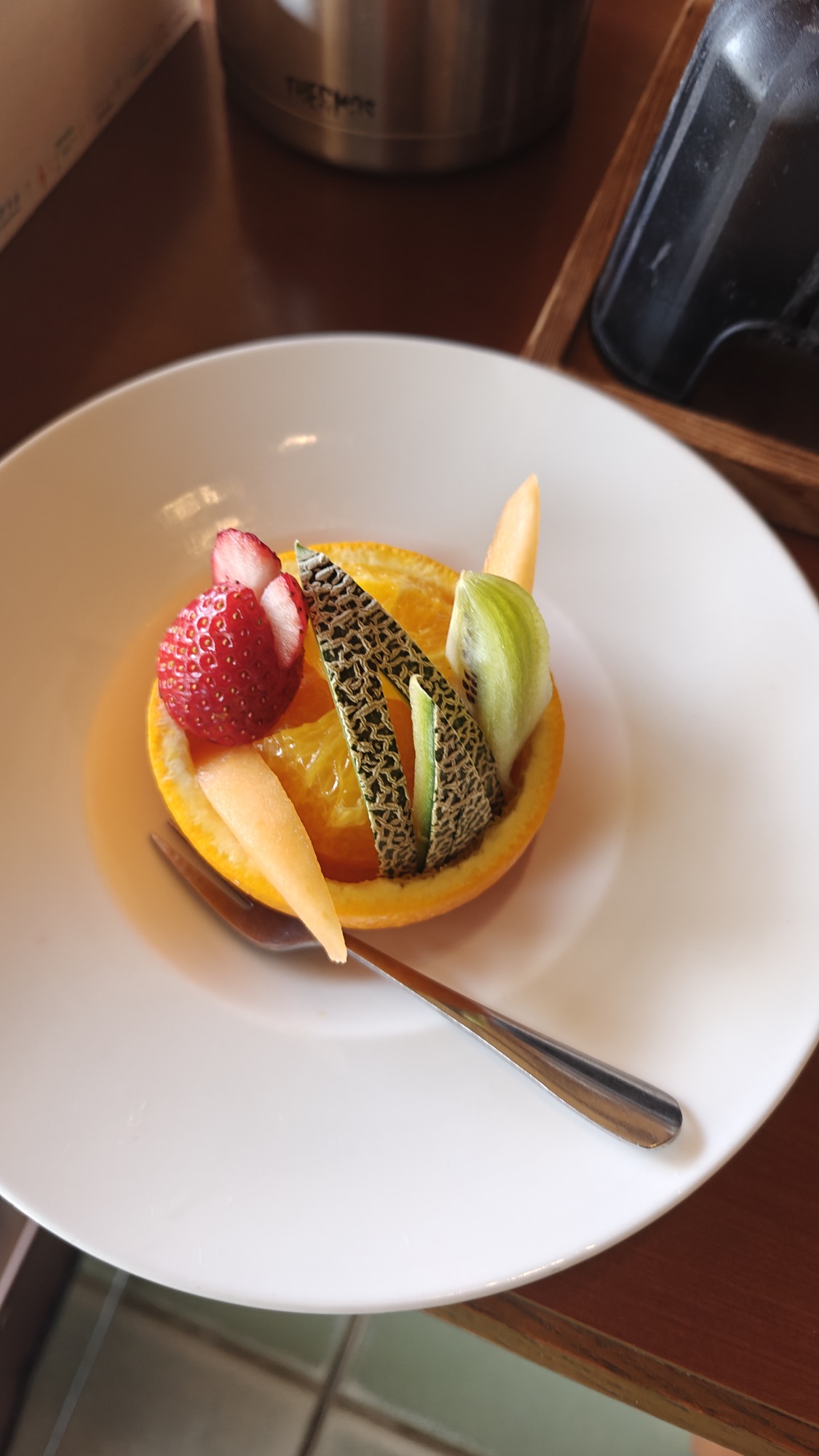
The second night was fugu from beginning to end. Sashimi first, fanned round the plate and sliced thin enough to read the pattern through it; then a run of other courses, one of them grilled and tied up in a leaf; then the hotpot, with the rest of the fish and a tray of vegetables beside it. Dessert arrived with a sparkler in it.
Everything tasted made in the house rather than bought in.



Breakfast at the window
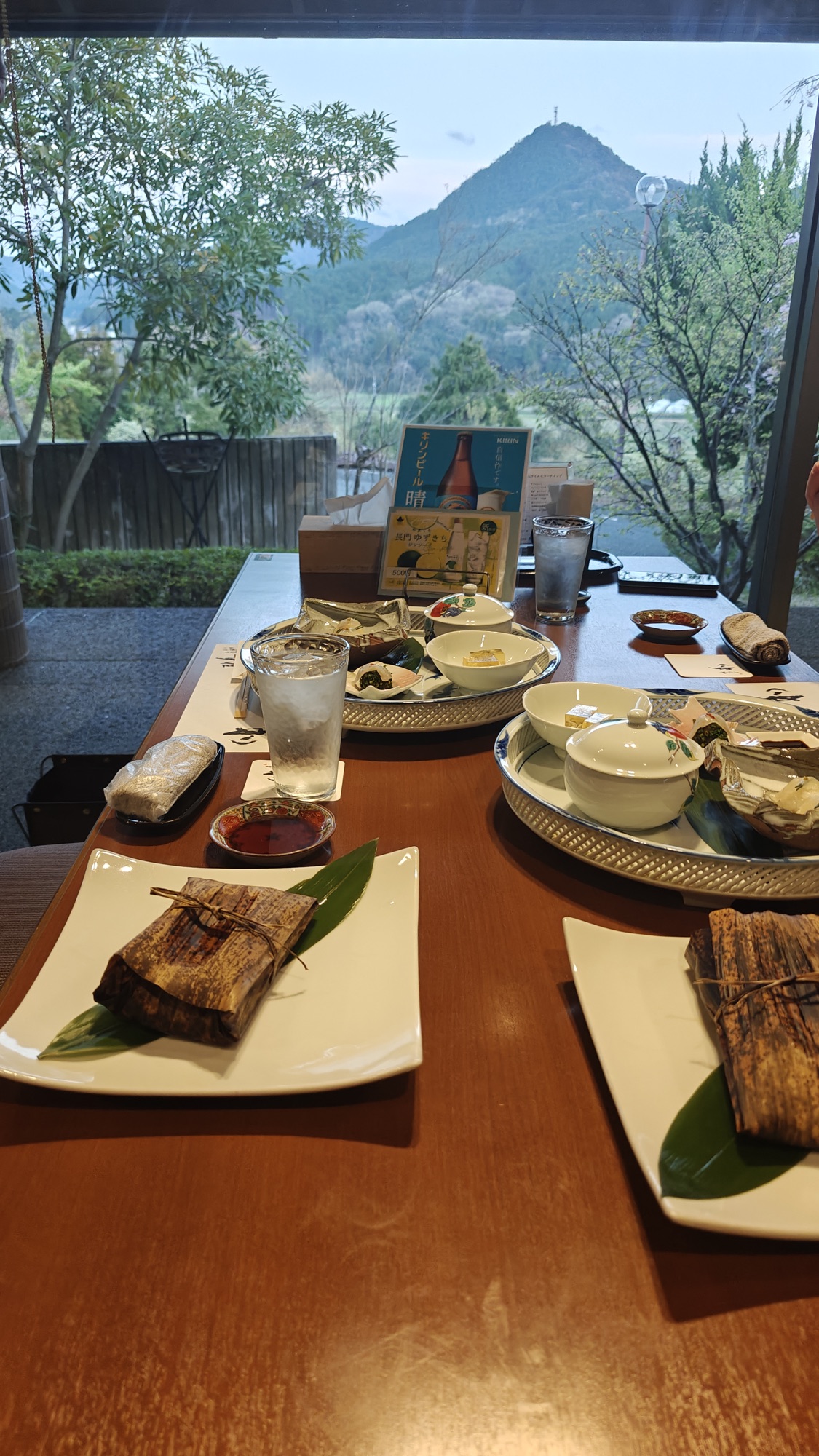
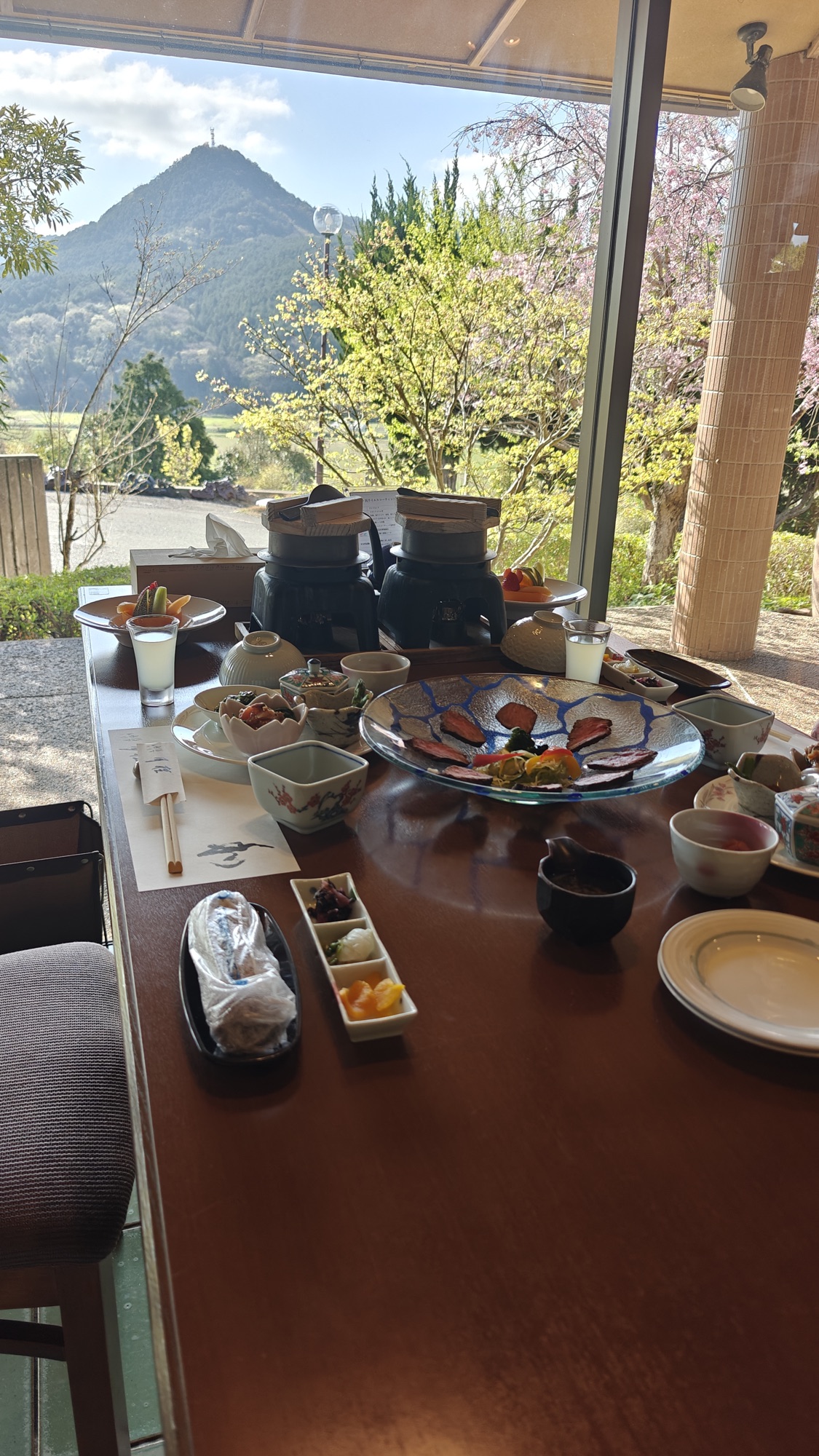
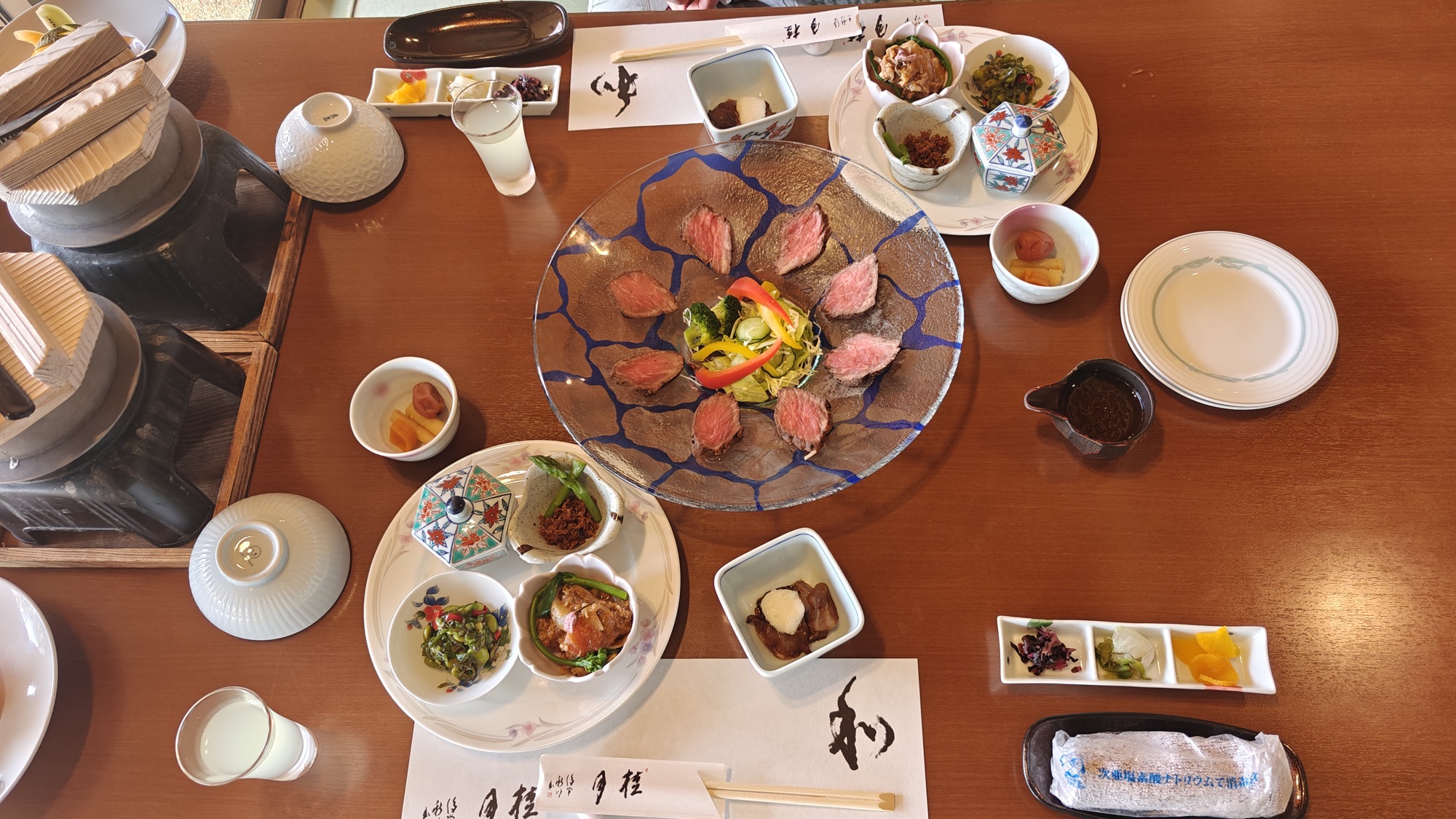
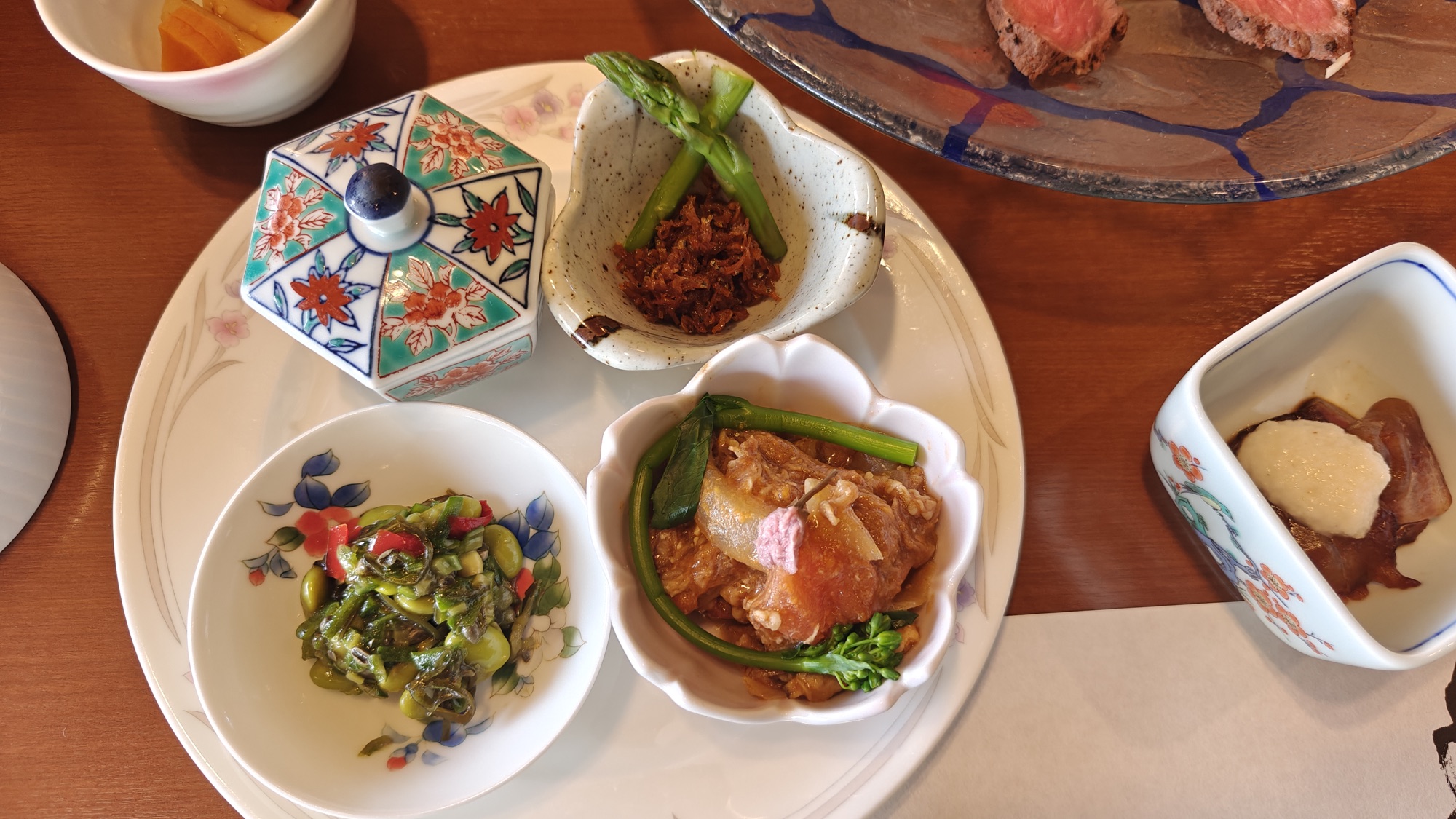
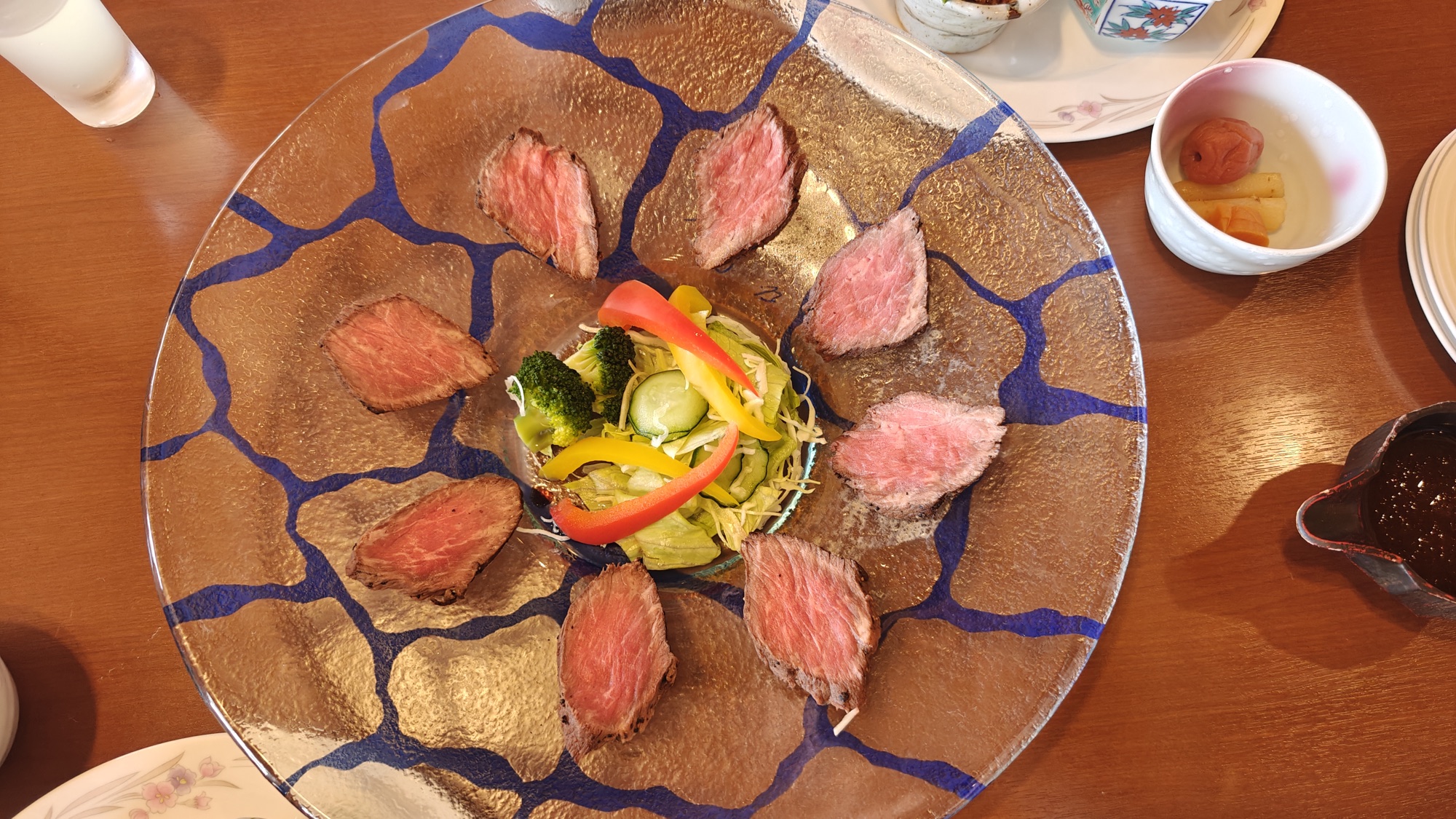
Breakfast runs to the same scale: a dozen small dishes, grilled fish, and rare roast beef fanned across a glass plate. We ate at the window counter, looking across the fields at a steep conical hill, and did not need much for the rest of the day.
Ask to be seated on the window side. It is the difference between eating in a dining room and eating in front of the valley.

A quiet base for Akiyoshidai
The lane ends at the gate and there is nothing within walking distance, which is the point. Akiyoshidai and the city of Yamaguchi are both a short drive, so you give up nothing by staying out here.
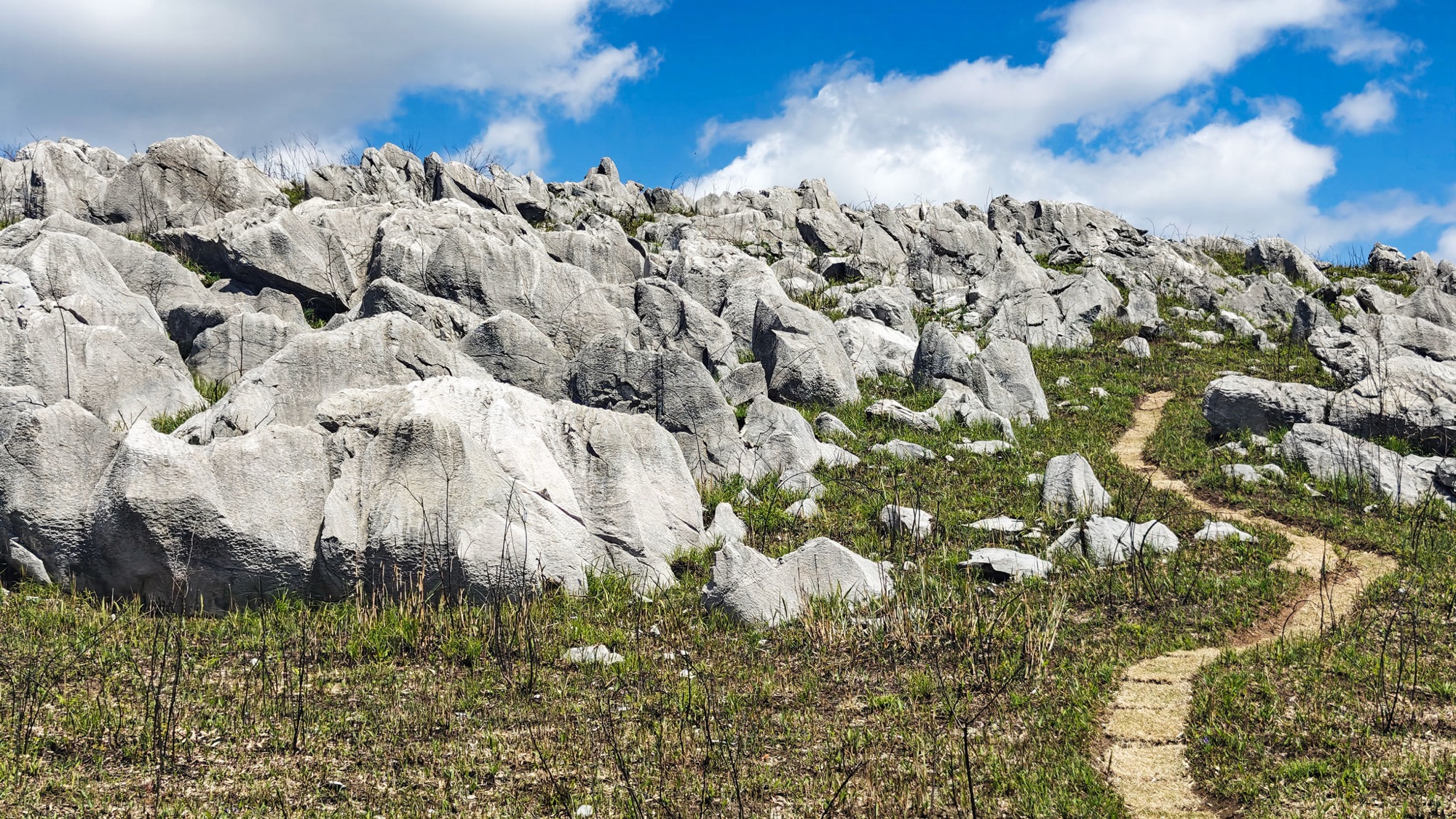
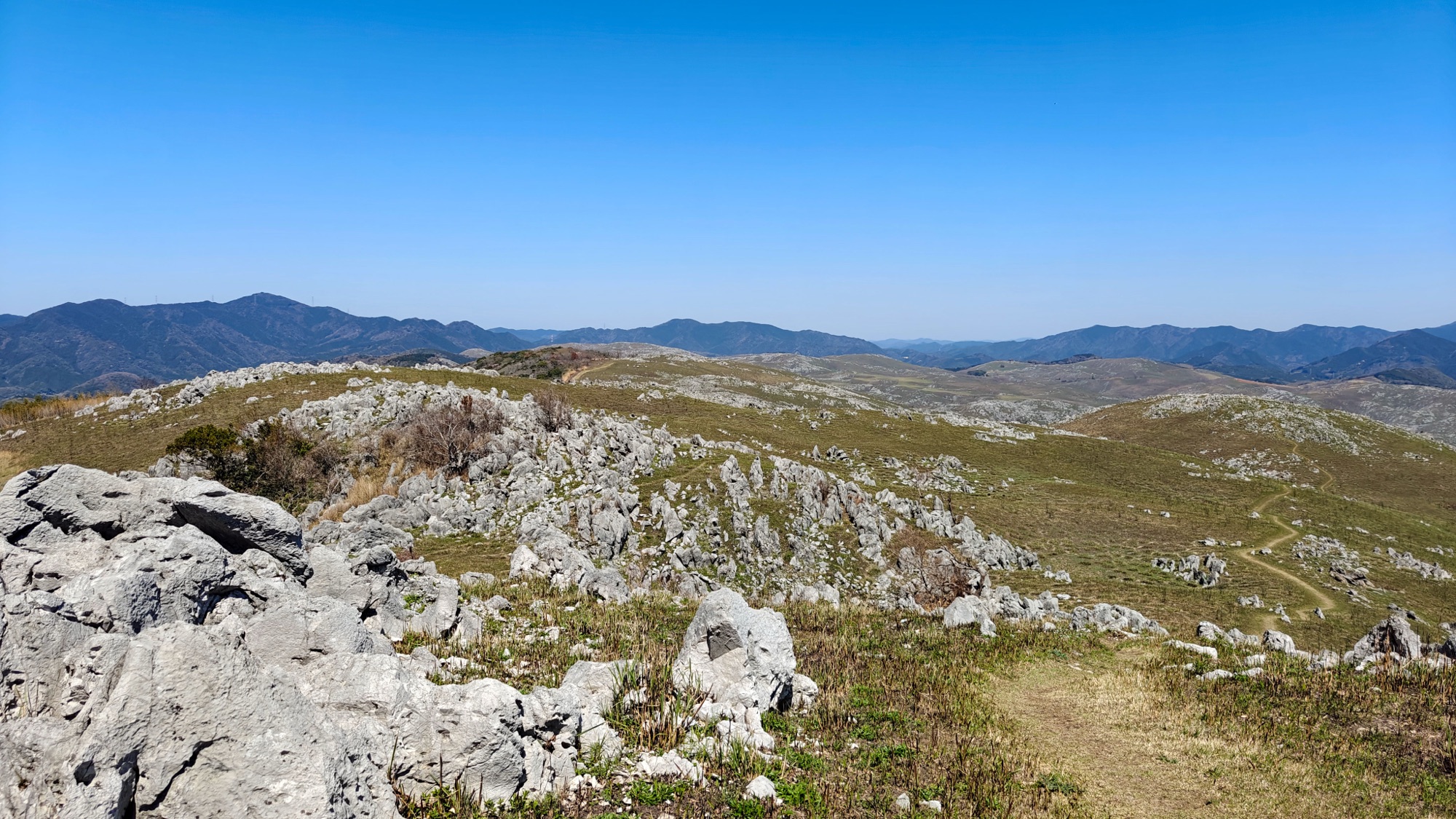
Two nights suit it better than one. The two dinners do not repeat themselves, and there is still enough of the day left over for the karst: on this trip we walked the Chōjagamori loop and the longer climb to Mount Ryūgohō, either of which fits around a night here.
Good to know
- Access
- By car it is about 15 minutes from Shin-Yamaguchi Station (12 km) and 25 minutes from Yamaguchi (21 km).
- There is no station pickup, so it is worth coming by car as we did.
- Baths
- Yunokuchi Onsen is an alkaline cold spring, heated for the baths.
- Indoor bath, open-air bath, cold bath, sauna and a covered outdoor lounge. The men’s and women’s sides swap between morning and afternoon.
- The baths are open to day visitors in the afternoon.
- Nearby
- Akiyoshidai Chōjagamori walk and Mount Ryūgohō hike, both under 20 minutes by car.
- Akiyoshidō cave, 12 km.
- Links
- Location
-
Yunokuchi Onsen, Yamaguchi Open in maps (external link)
- Details
-
Visited Last checked