Kishimadake and Eboshidake hikes at Mount Aso
杵島岳・烏帽子岳
Two short hikes from Kusasenri to Kishimadake and Eboshidake, with open views across the active volcanic centre of Mount Aso.
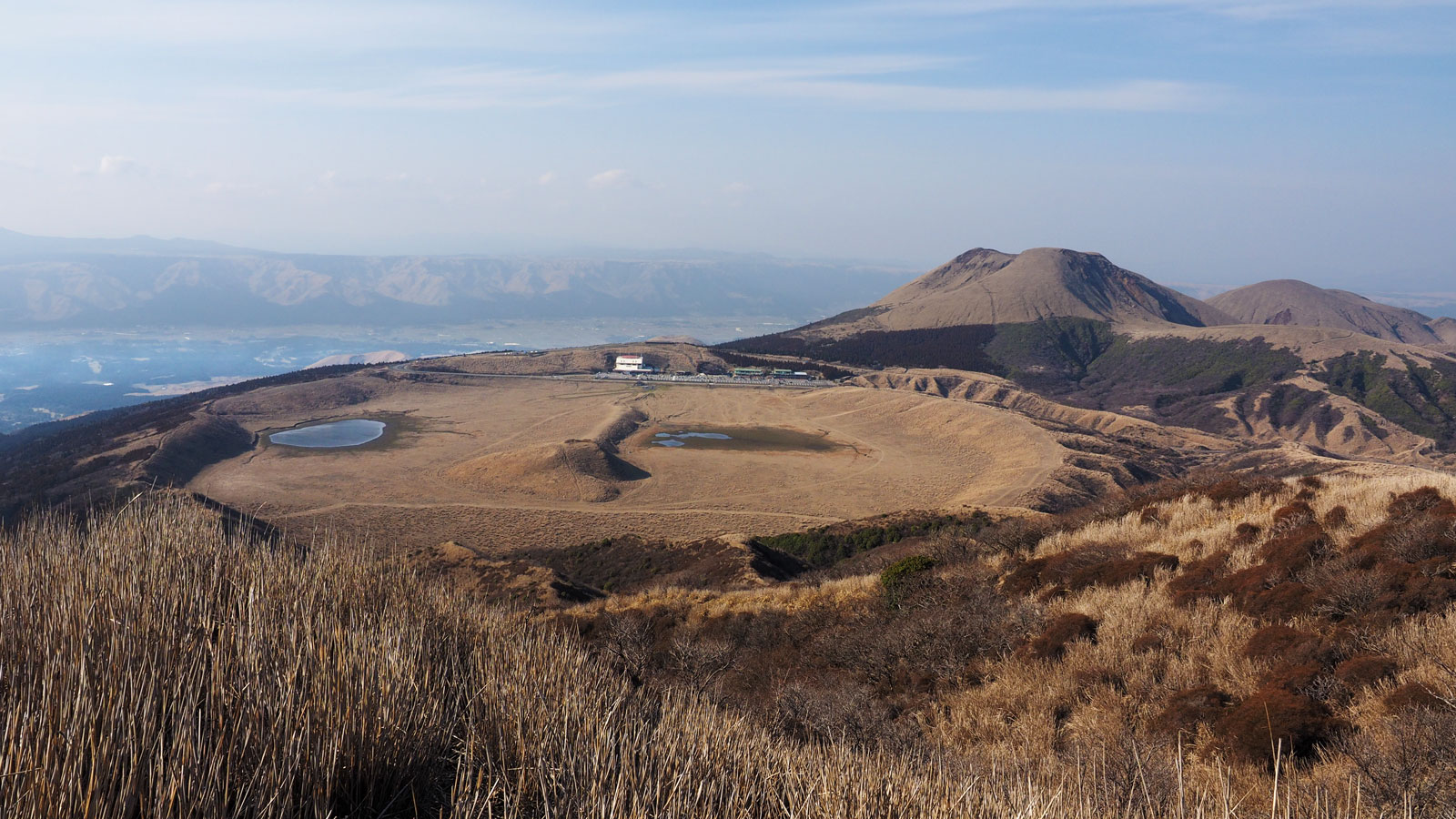
Kishimadake and Eboshidake at Mount Aso
Kishimadake and Eboshidake are two beginner-friendly peaks reached from Kusasenri in the centre of the Aso caldera. We walked both in March 2020, using the same parking area and treating them as two separate short hikes.
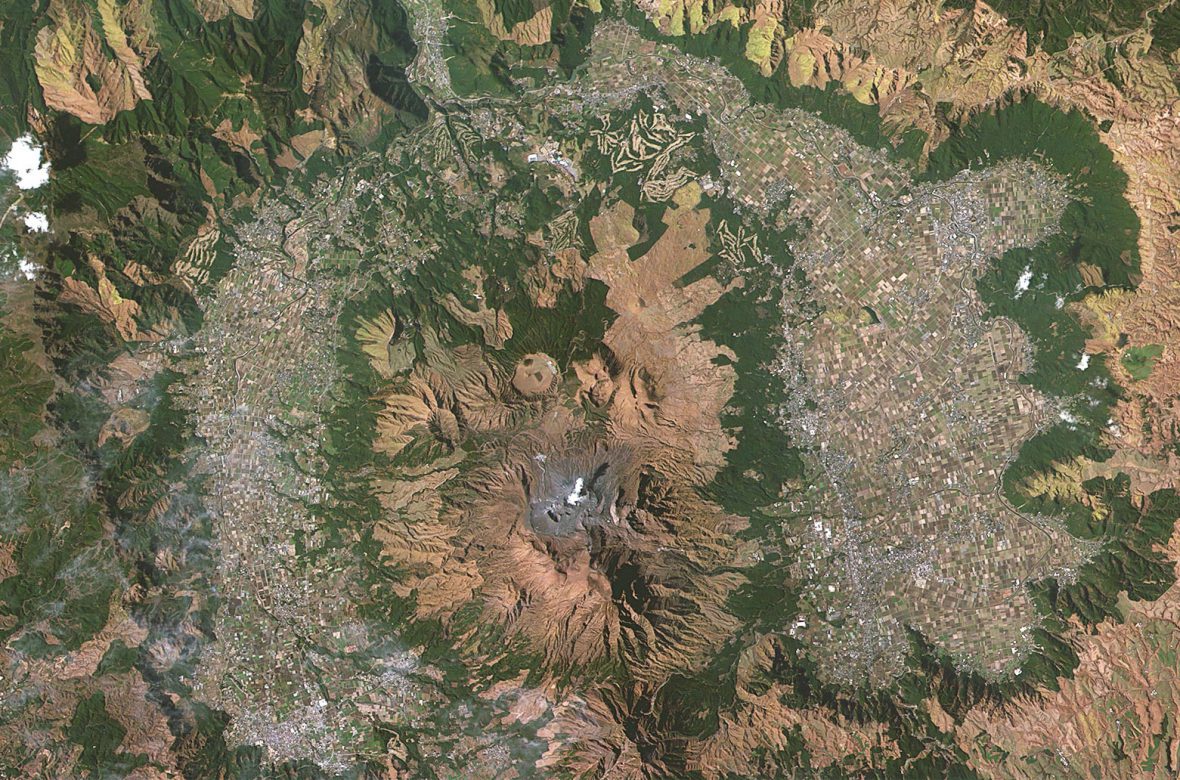
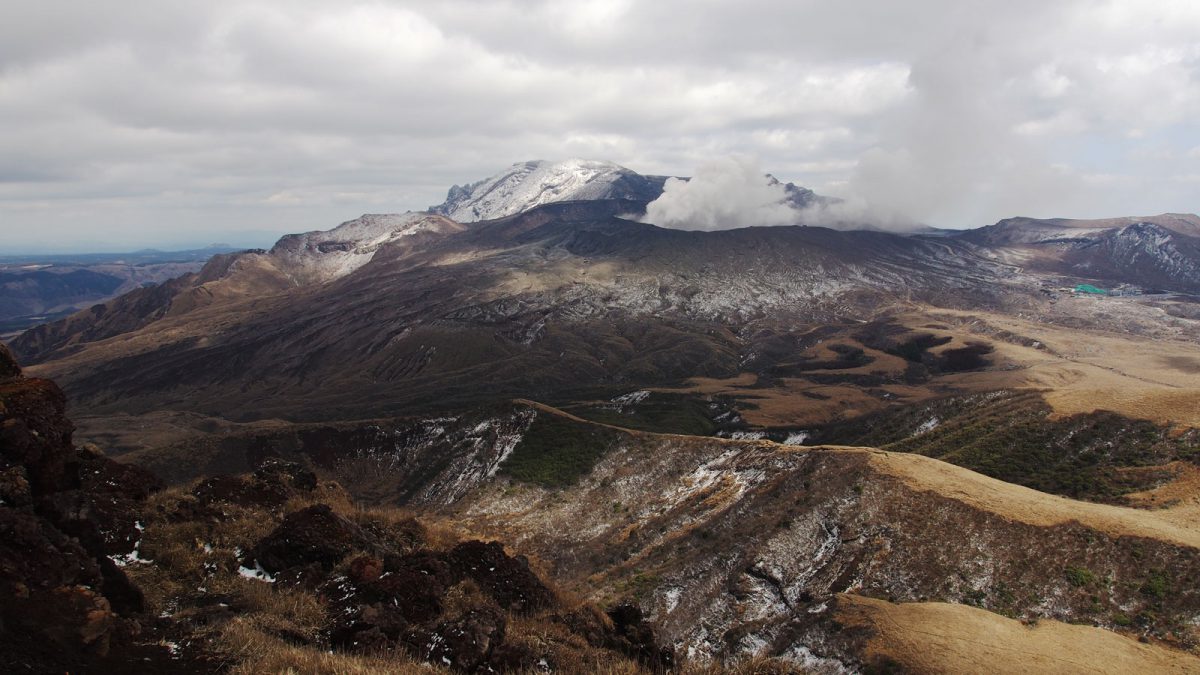
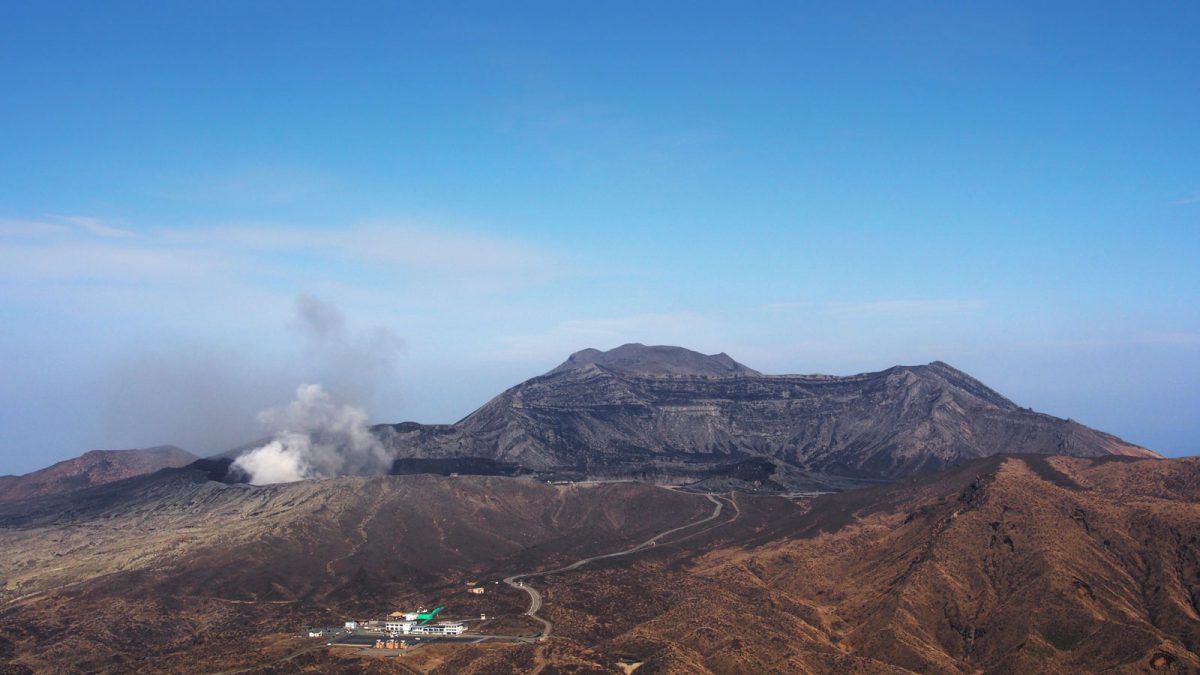
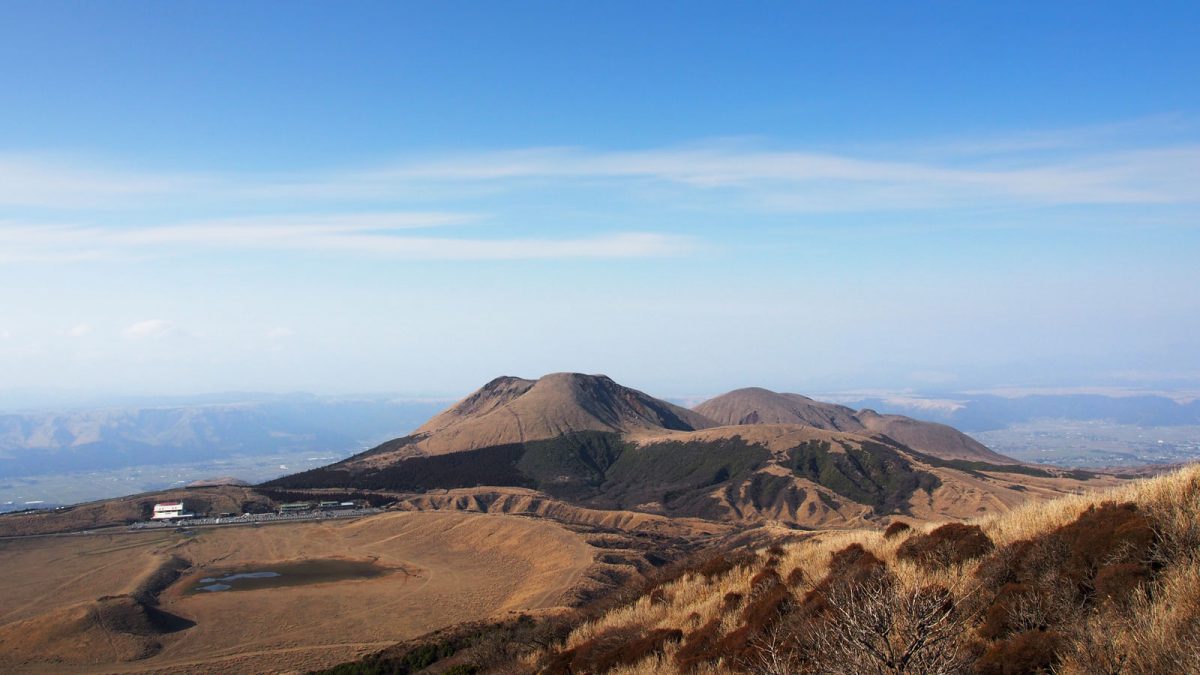
The routes show different sides of the volcanic landscape. Kishimadake climbs above old crater remains and Komezuka, while Eboshidake follows open grassland around the rim of the older Kusasenri crater, with Nakadake across the plain.
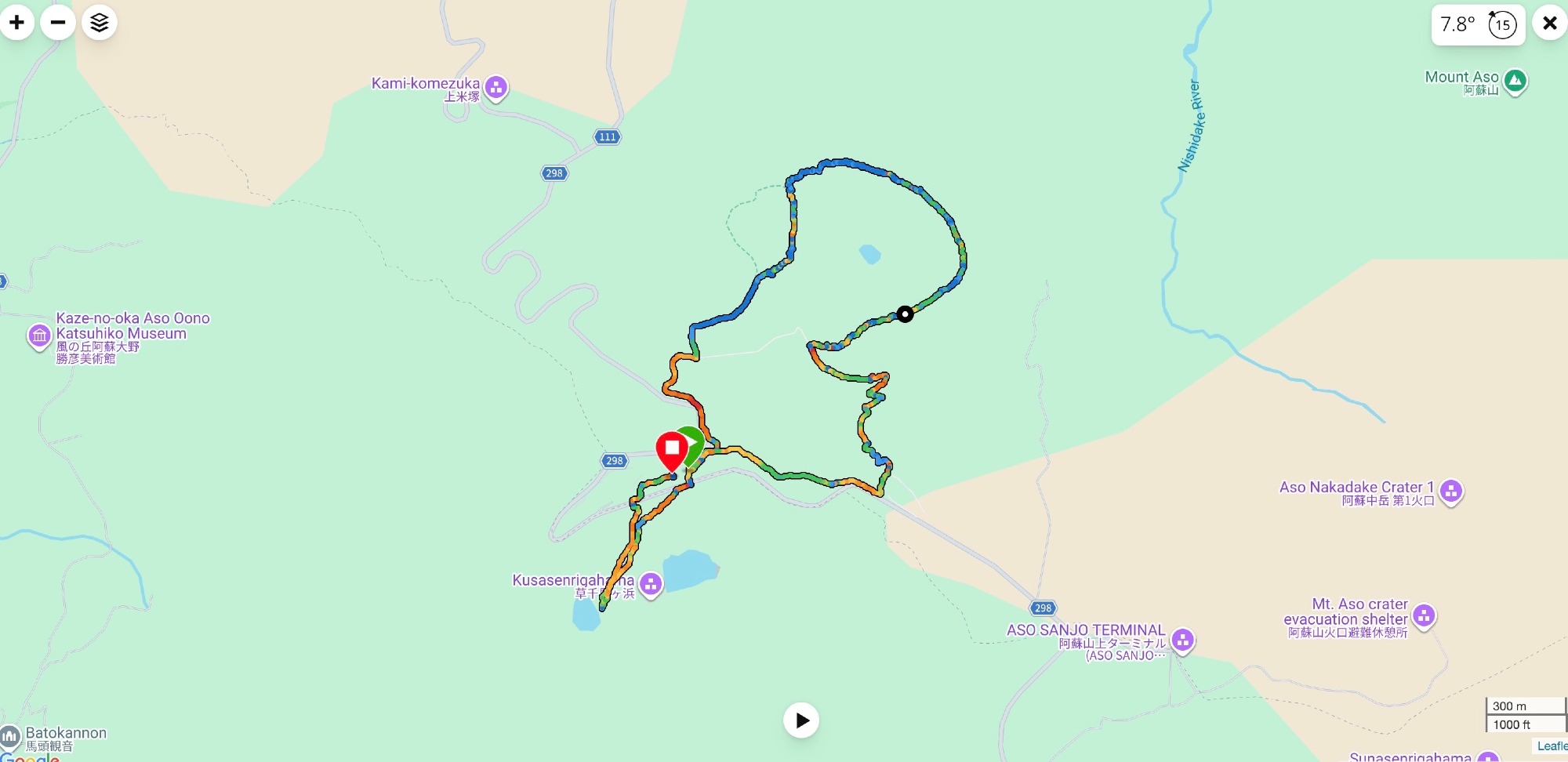
Kishimadake hike from Kusasenri
The Kishimadake trail begins at the far end of the Kusasenri parking area, beside the Aso Volcano Museum. A paved approach leads to a long sequence of stone steps, with the slope becoming noticeably steeper as the summit comes into view.
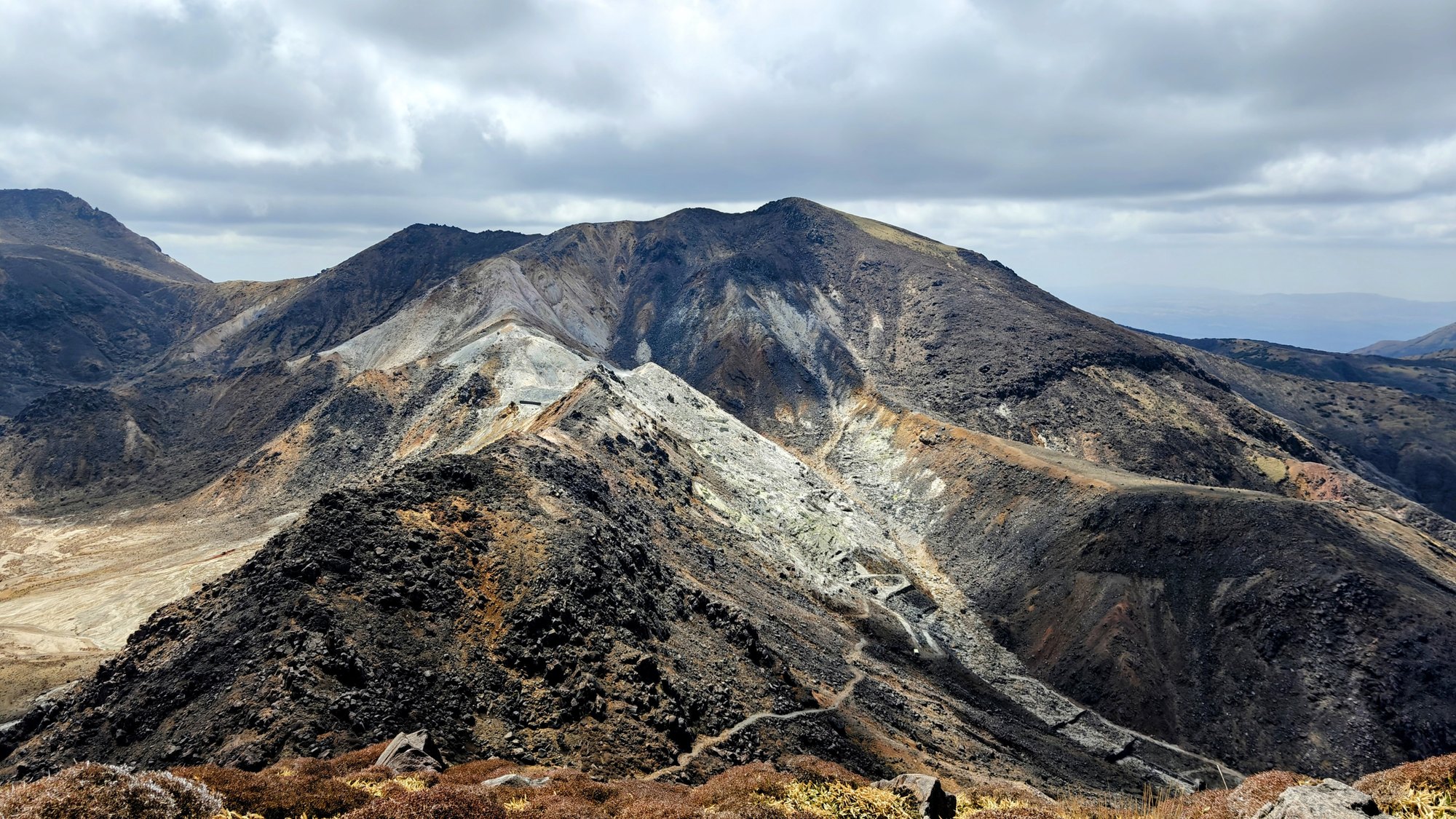
Kishimadake was the more demanding of our two walks, but the path was clear and there was nothing technical. From the upper slope and summit, the view opens across Kusasenri, Nakadake, the small cone of Komezuka and the older craters around Kishimadake.
Eboshidake loop around Kusasenri
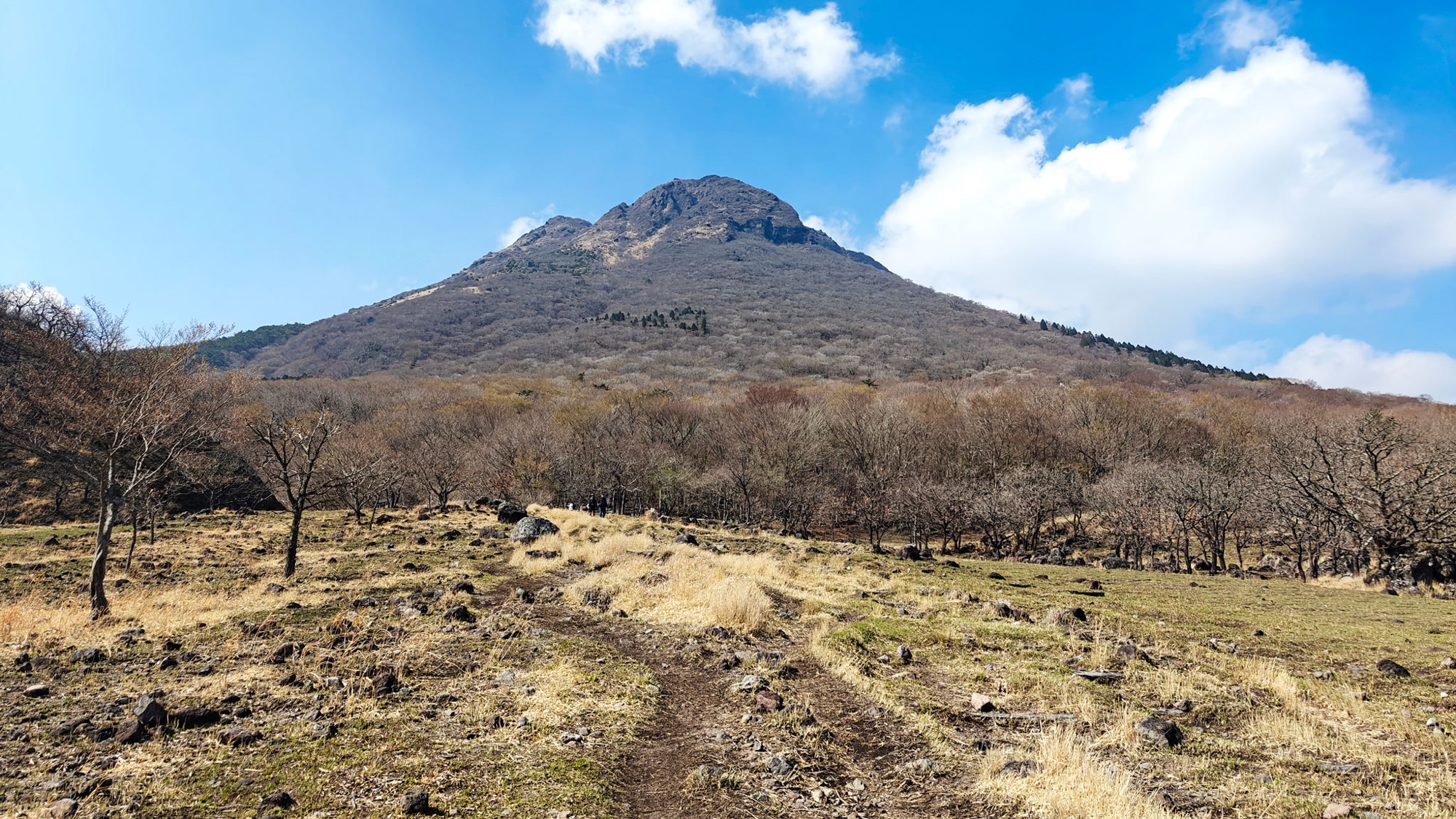
Eboshidake starts from the Kusasenri grassland on the opposite side of the parking area. Instead of Kishimadake’s stair climb, it follows an open dirt trail around the edge of the old crater before gaining the summit.
This was the gentler of the two hikes. The route keeps changing direction around Kusasenri, so the grassland, caldera wall and smoking Nakadake crater move in and out of view rather than appearing only at the top.
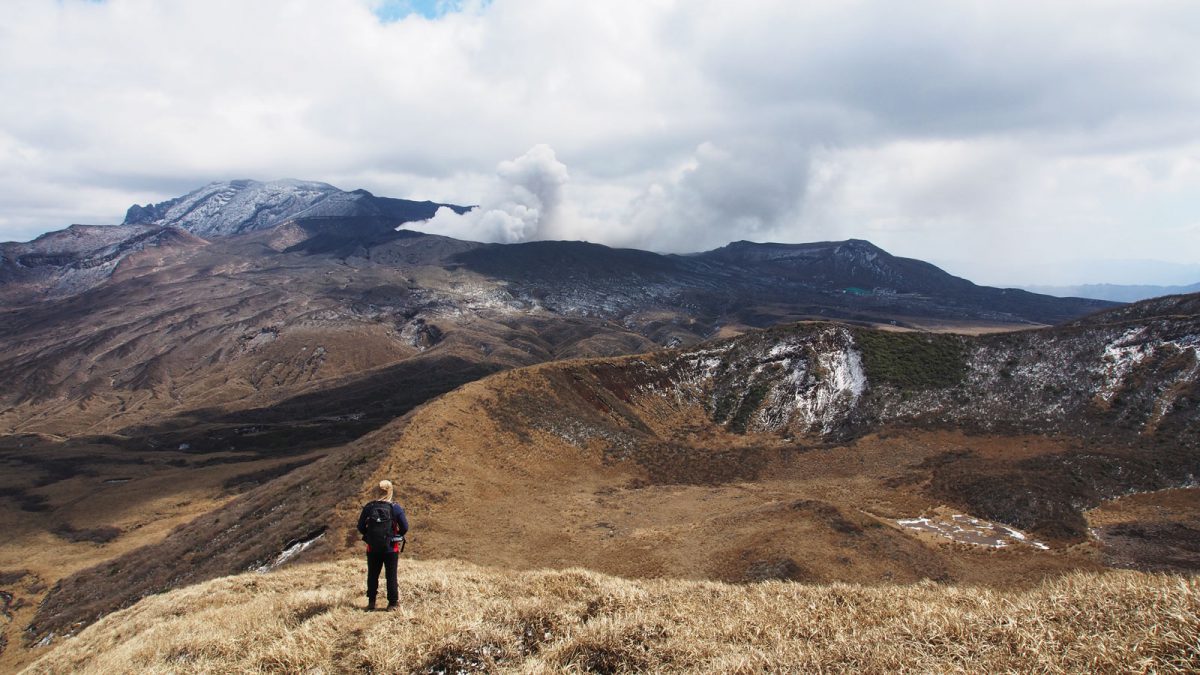
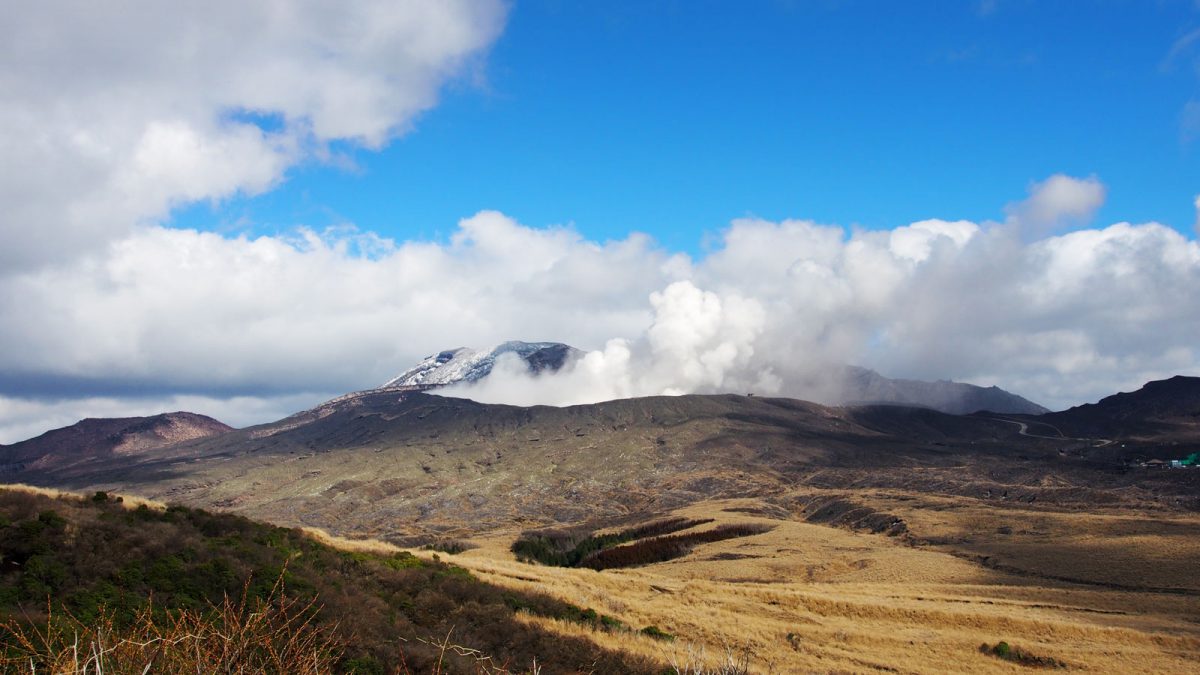
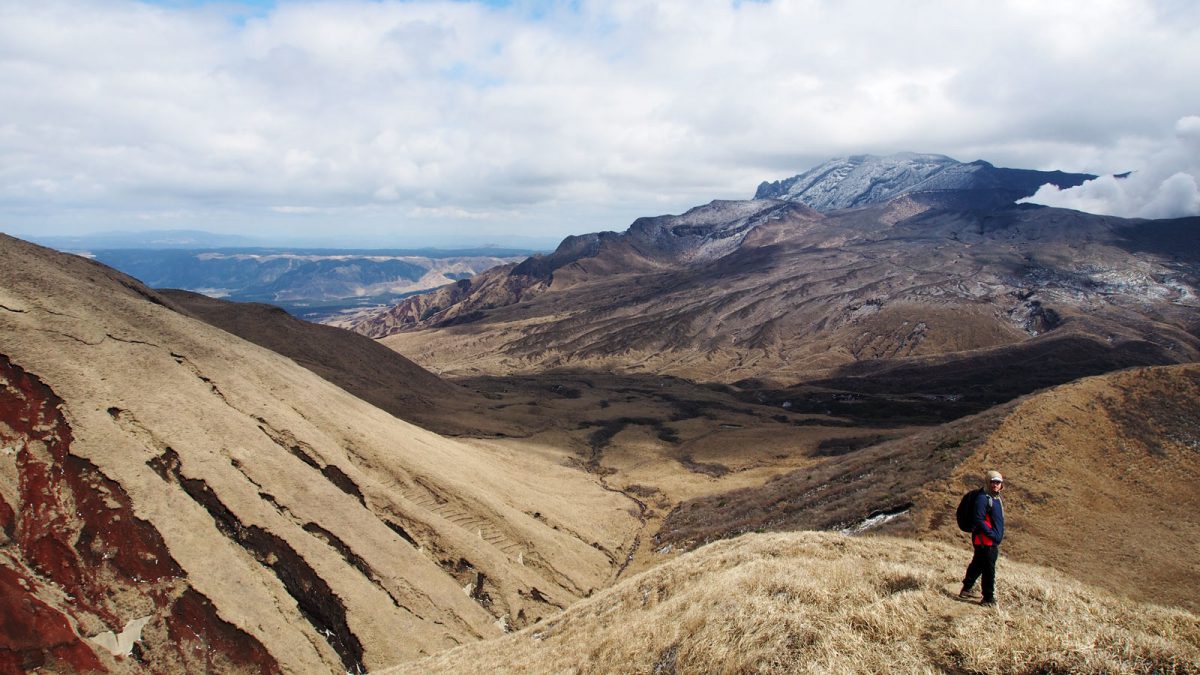
Nakadake crater from the trail
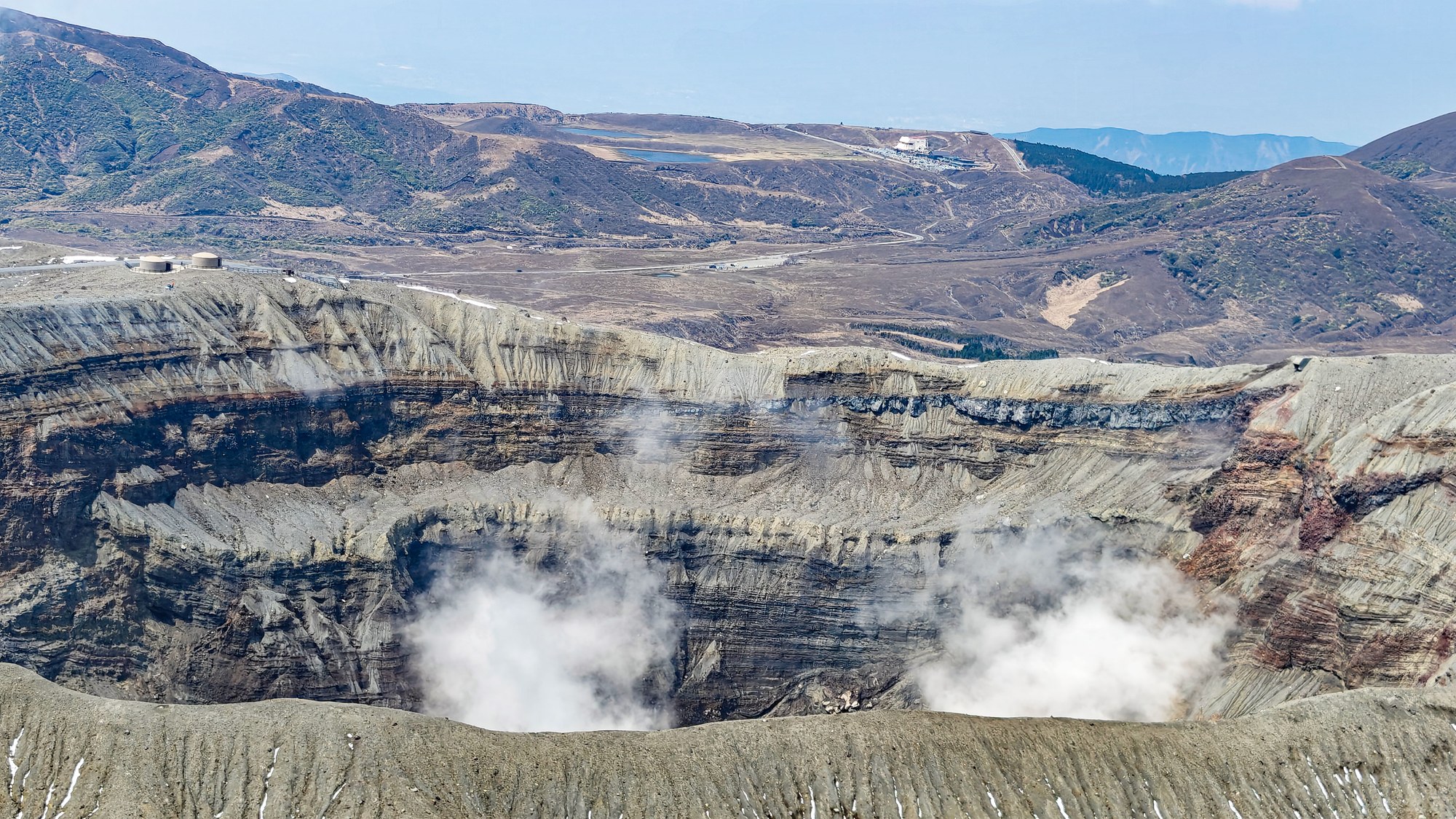
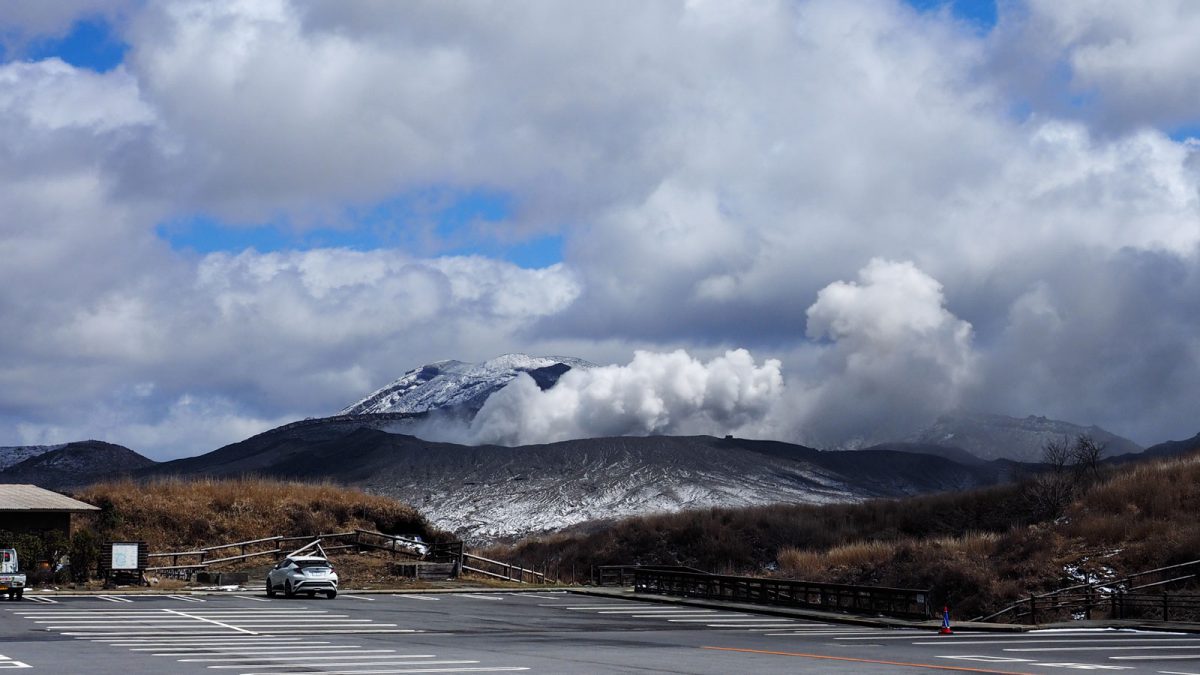
Both walks remain outside the active crater area but face directly towards Nakadake. During our March 2020 visit, the crater viewpoint was closed; from the trails we could still see a steady gas plume and hear a deep, continuous rumble across the open ground.
For a longer and much steeper route into Aso’s central peaks, see our Sensuikyo hike to Nakadake and Takadake.

Good to know
- Getting there
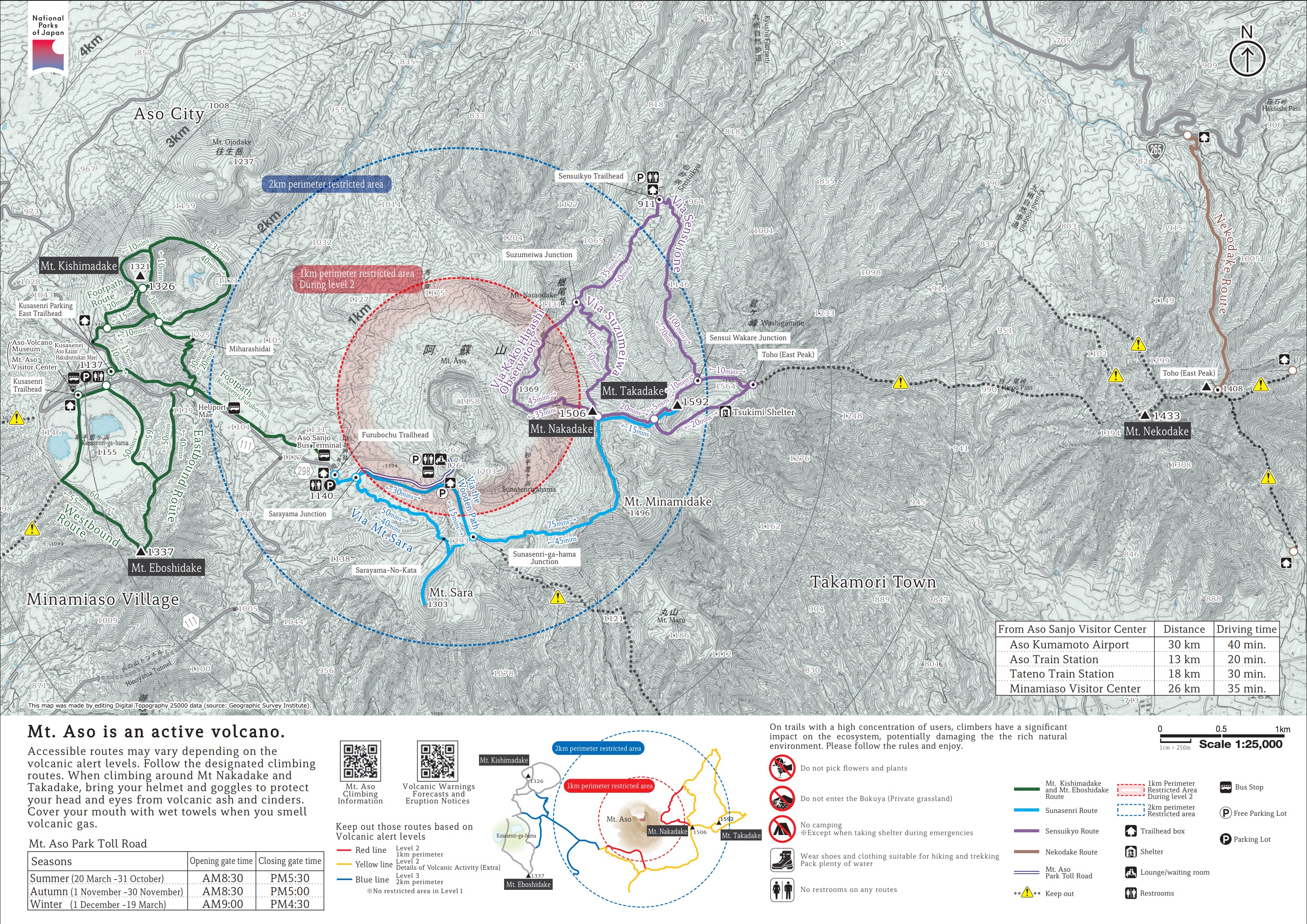
Both hikes start at the Kusasenri parking area beside the Aso Volcano Museum. Passenger-car parking is ¥500; buses also run from Aso Station. The parking area has toilets, shops and the Mount Aso Visitor Center, where route maps are available.
- Kishimadake route
Our GPX records a 7.2 km return route from Kusasenri, completed in 2 hours 14 minutes. This is longer than the official 1.4 km one-way direct route to the summit.
- Eboshidake route
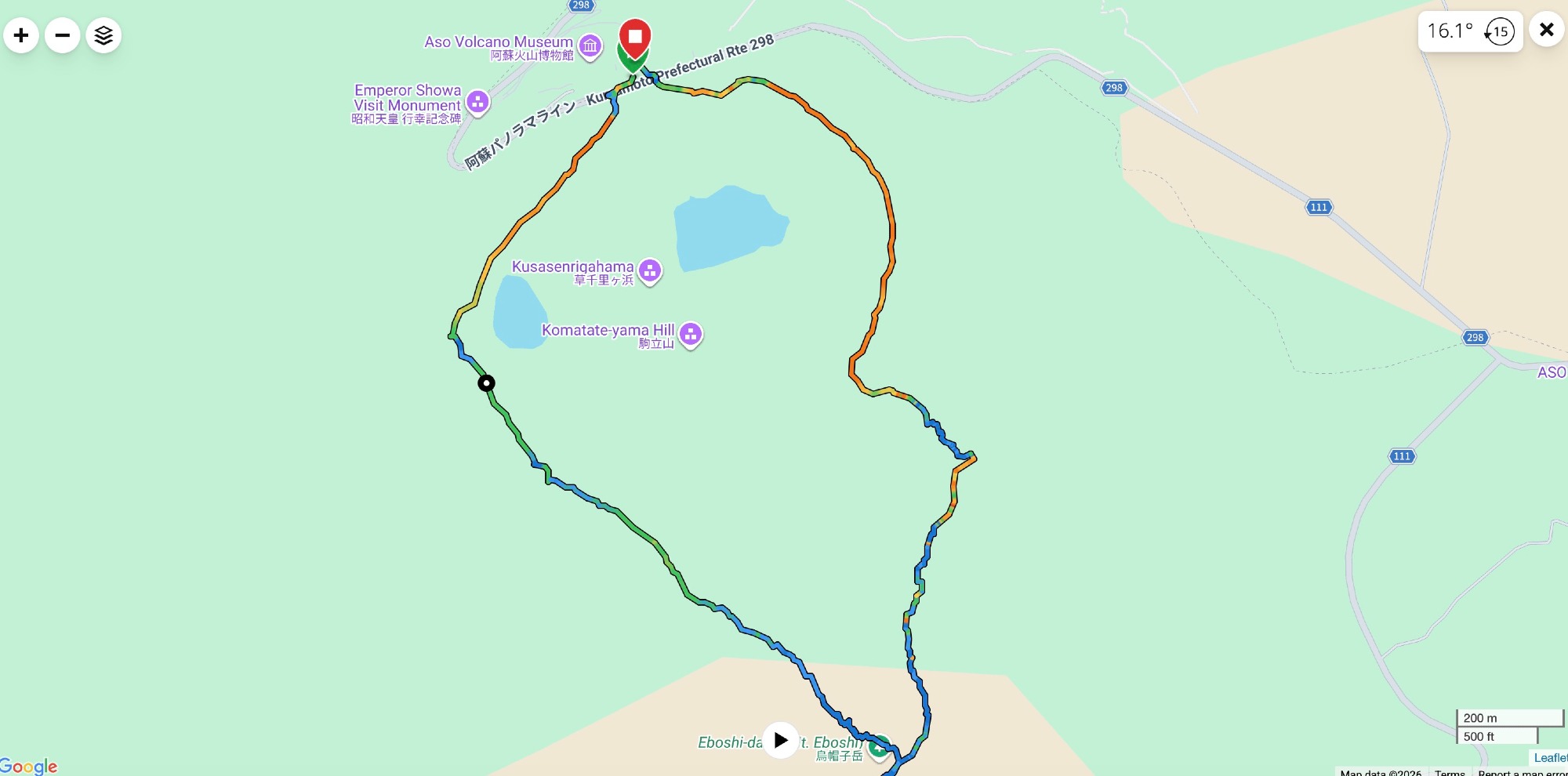
Our GPX records a 4.2 km loop around Eboshidake, completed in 1 hour 17 minutes. Official guidance suggests allowing about two hours for a relaxed circuit.
- Difficulty
Both are classified as beginner routes. Kishimadake has a sustained stone-step climb; Eboshidake uses an open dirt path with some loose or slippery volcanic ground. Wear shoes with grip and carry water, as there are no toilets on the trails.
- Volcano safety
Crater restrictions and nearby hiking-route closures can change with volcanic gas, weather and alert levels. Check the current Aso City climbing information on the day, follow all closures and submit a hiking notification.
- Where to stay
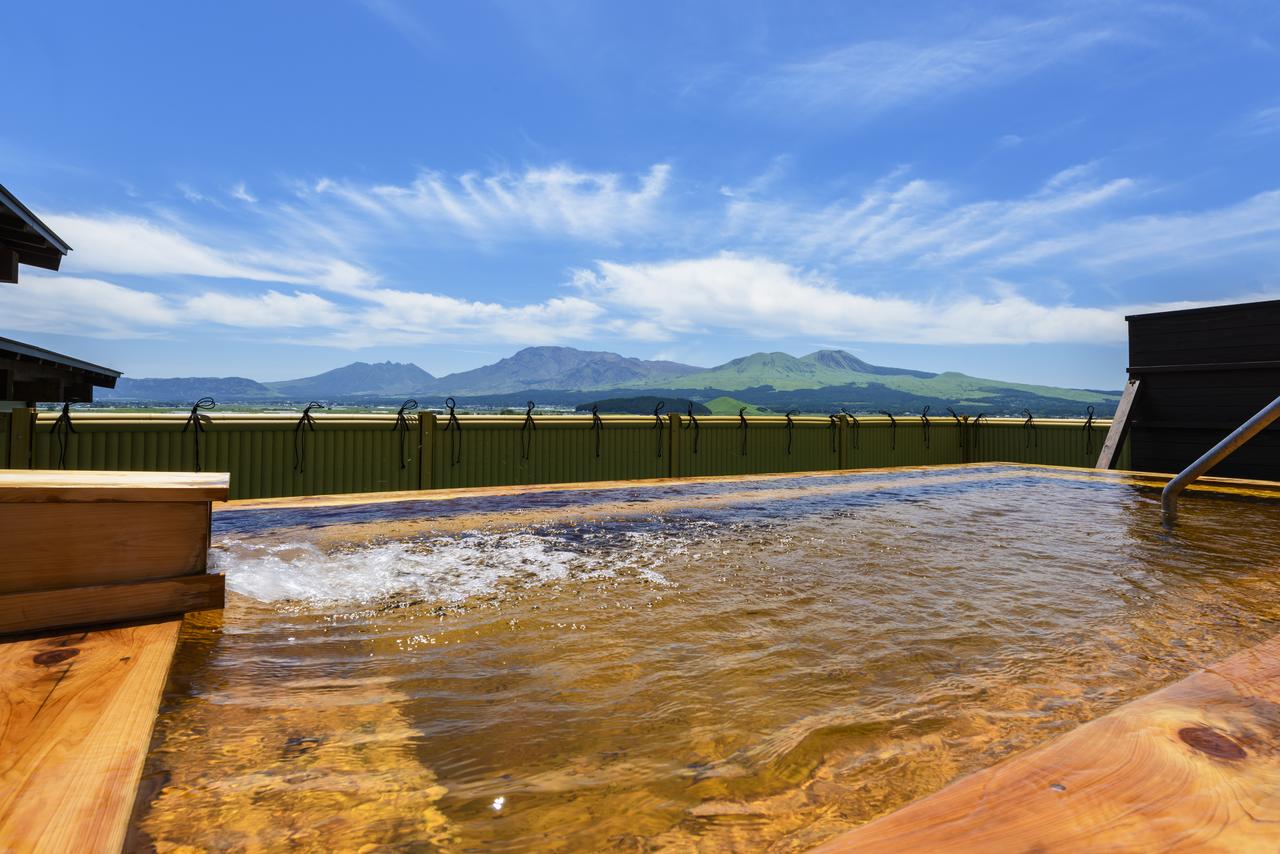
We stayed two nights at Aso Plaza Hotel in Aso town and used a rental car to reach Kusasenri.
- Official maps & status
- GPX tracks
-
For your maps app or GPS watch.
- Location
- Details
-
Visited Last checked