Mount Nakadake hike from Makinoto Pass in the Kuju Mountains
くじゅう連山・中岳
An 11 km return hike from Makinoto Pass to Mount Nakadake, the highest summit on Kyushu’s main island.
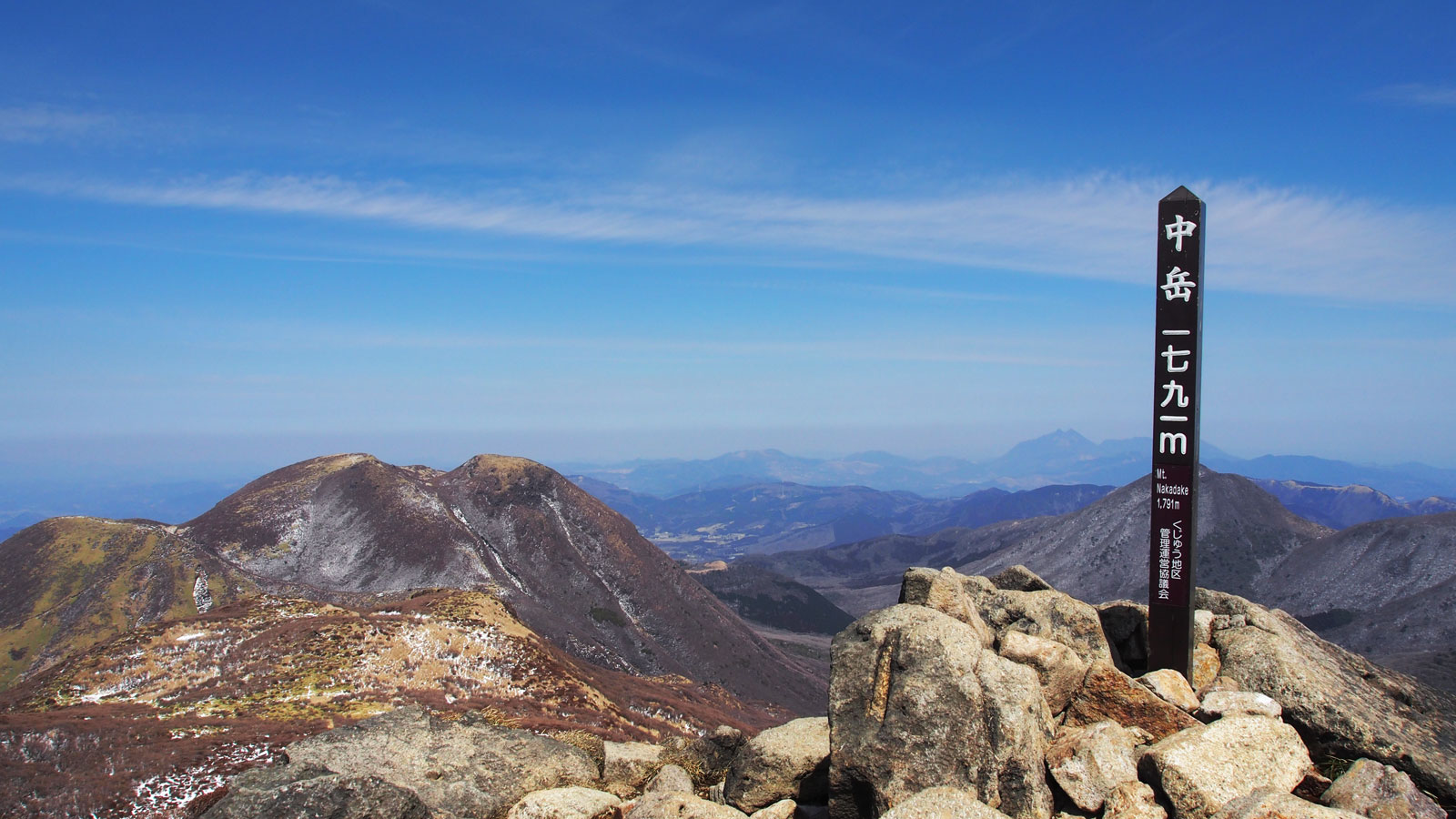
Mount Nakadake hike through the Kuju Mountains
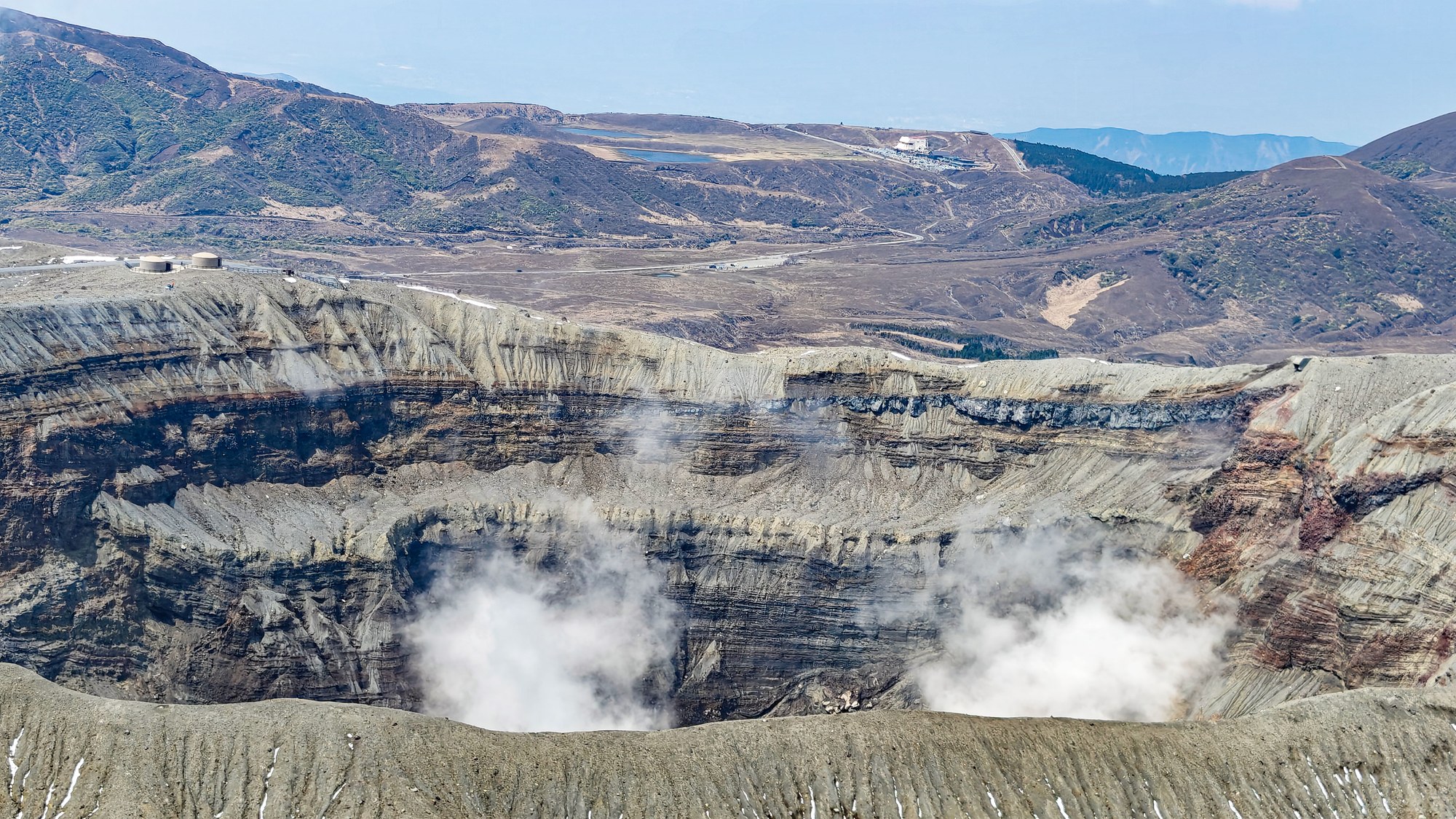
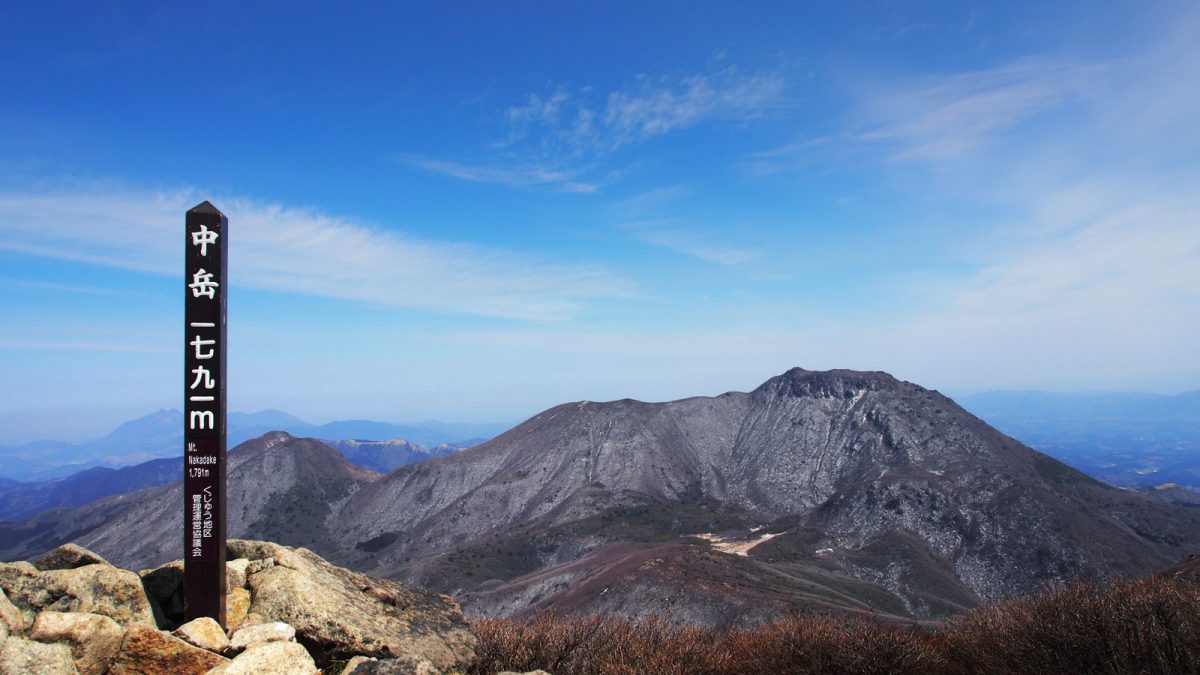
This return route runs from Makinoto Pass along the main ridge of the Kuju Mountains to Mount Nakadake at 1,791 m, the highest summit on Kyushu's main island. It is distinct from the active Nakadake crater at Mount Aso.
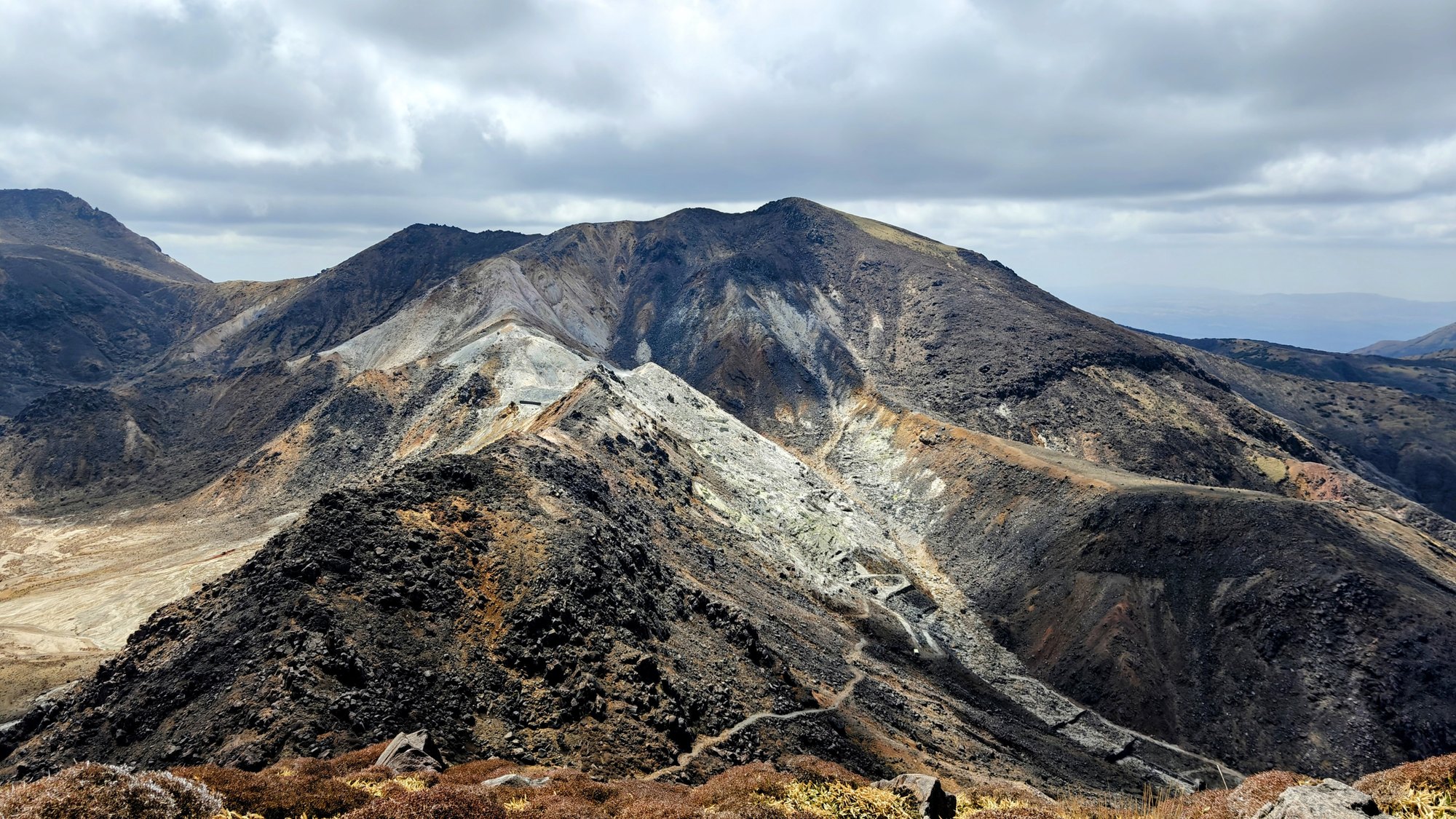
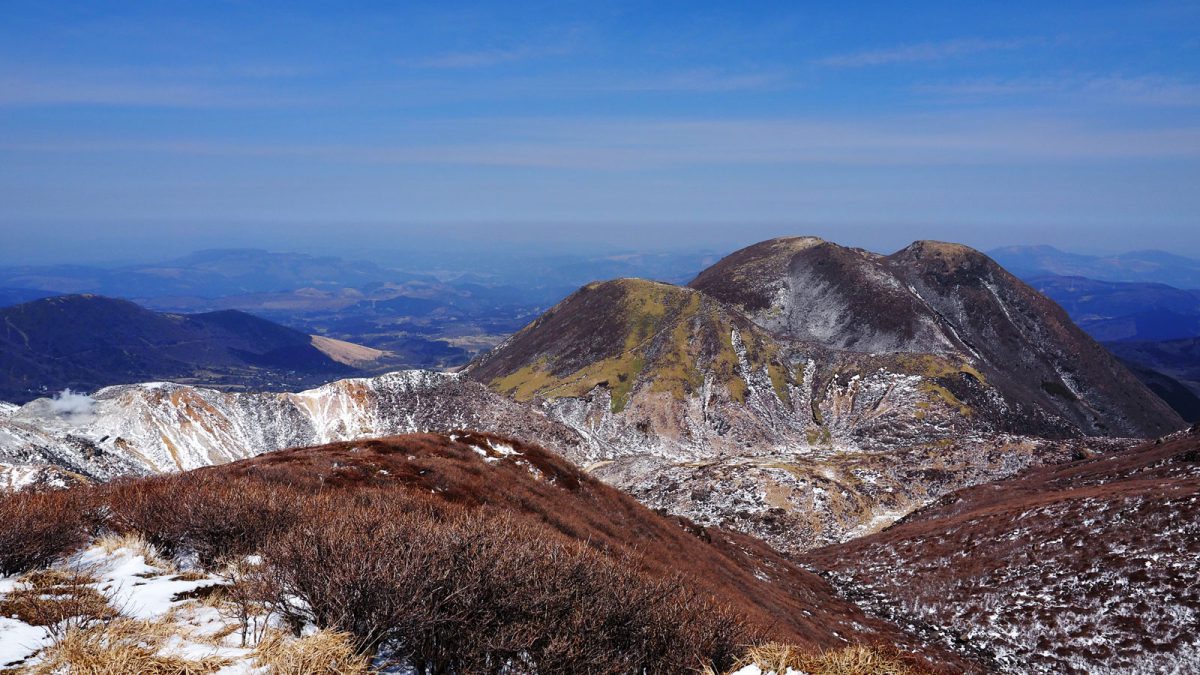
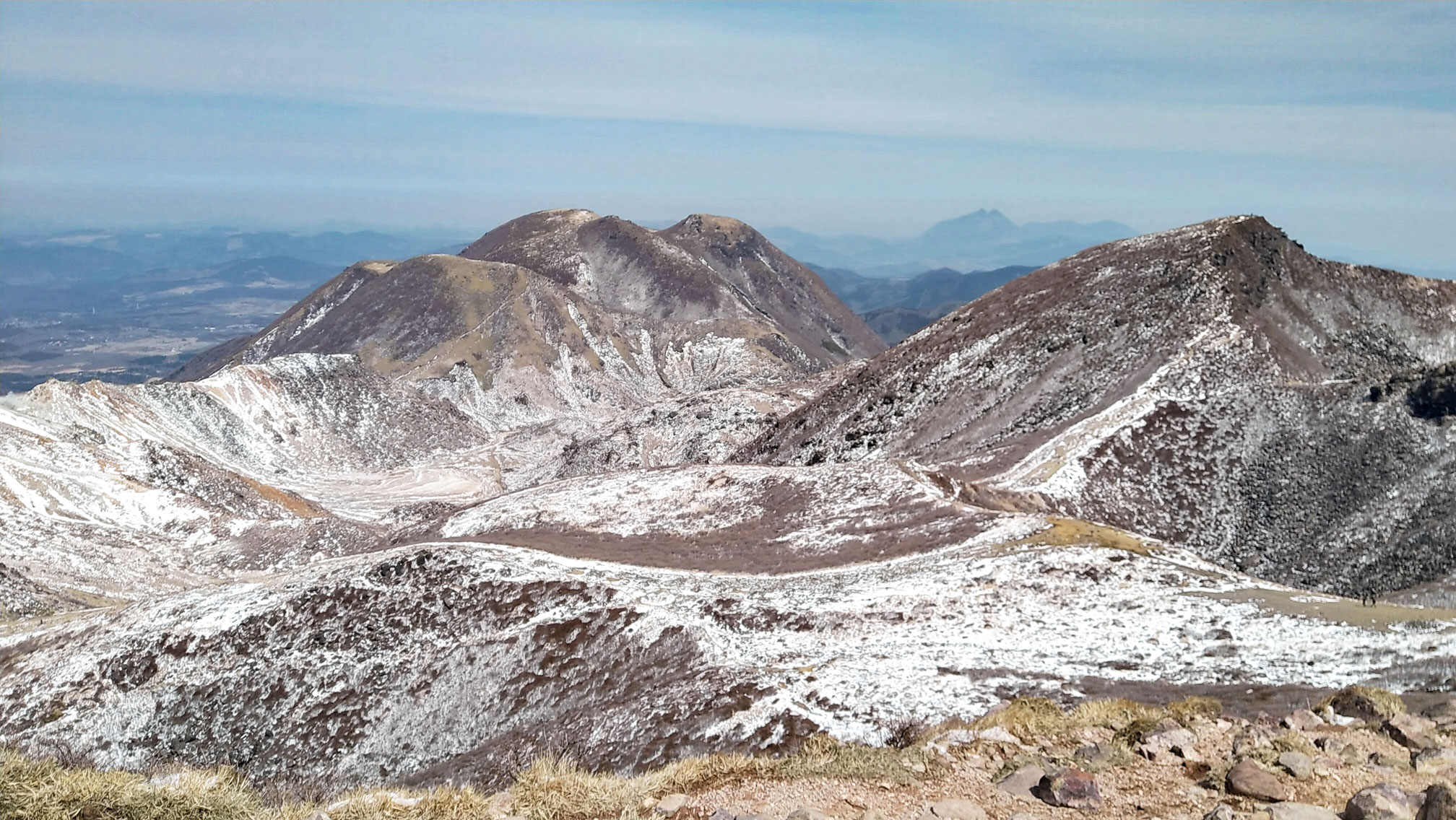
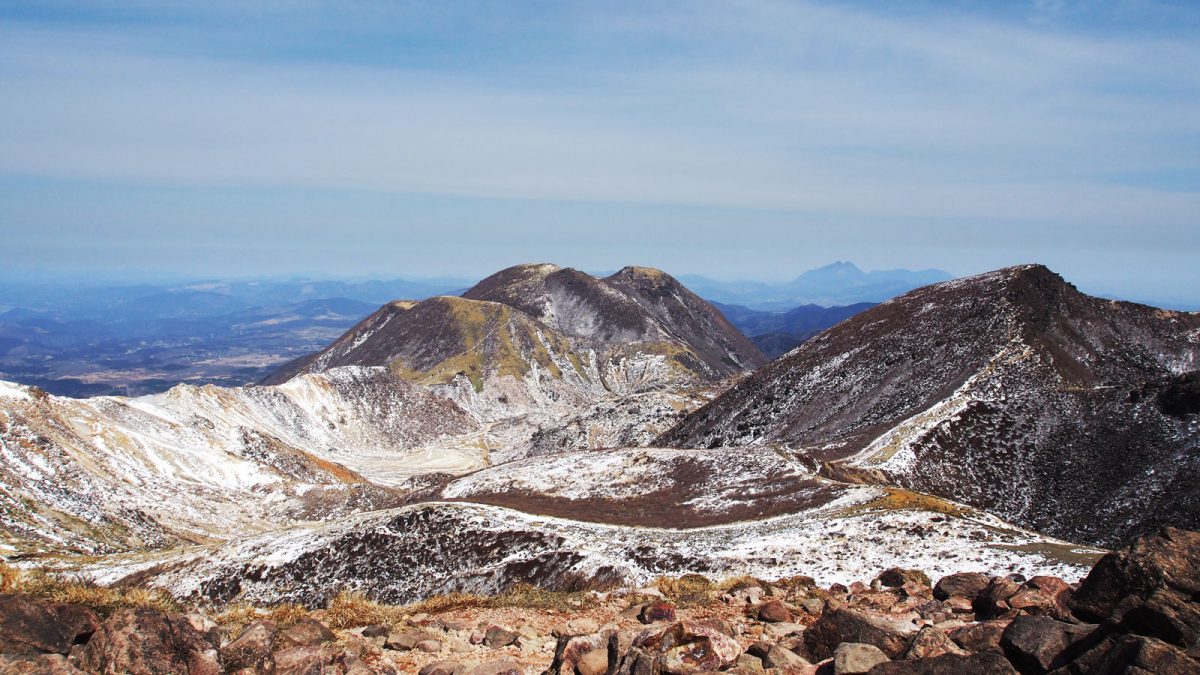
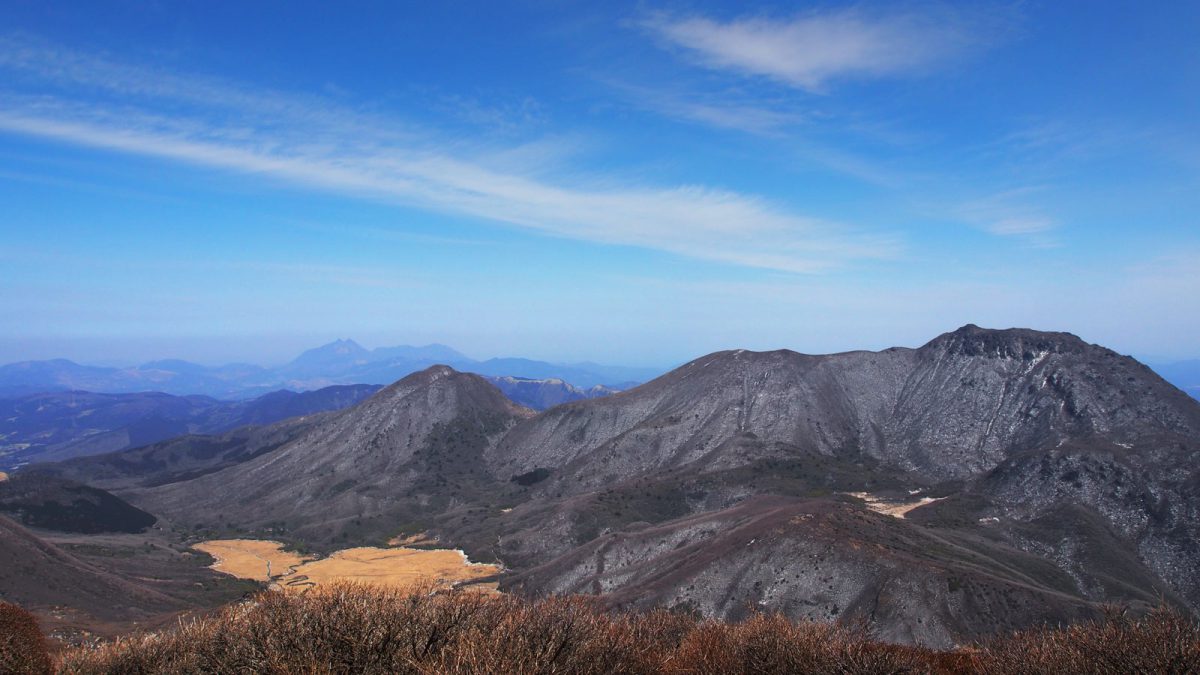
The range is quieter and more spread out than Aso's central crater. Instead of one dominant cone, a cluster of summits sits close together, connected by open ridges that keep the surrounding peaks in view.
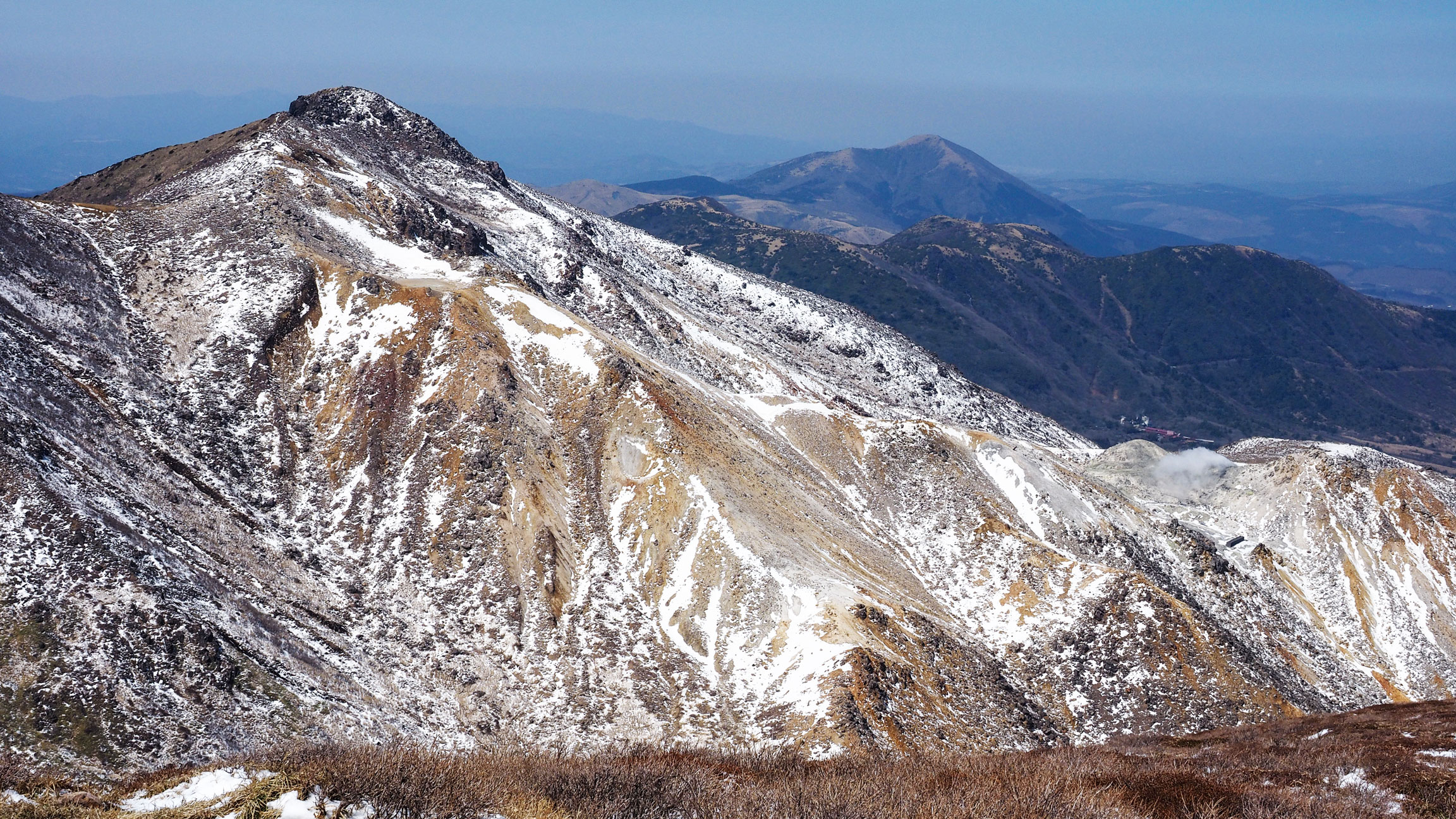
Low shrubs and grasses give the slopes a palette of yellow, rust and orange that intensifies in autumn but was already striking in early spring. Faint volcanic fumes rise from a few slopes, but the broad mountain views define the walk.
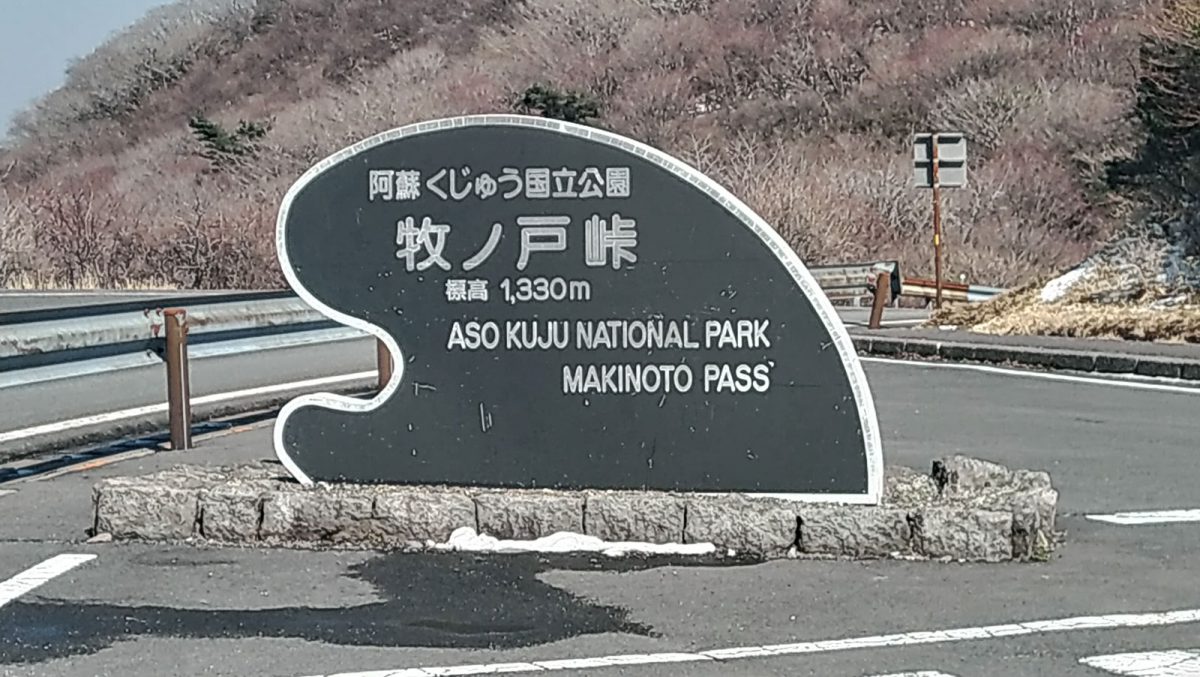
From Makinoto Pass to the main ridge
The trail begins with stairs and paved stretches through forest. After the trees, it becomes a rocky mountain path with clear views across the surrounding peaks and occasional wisps of volcanic fume on the slopes.
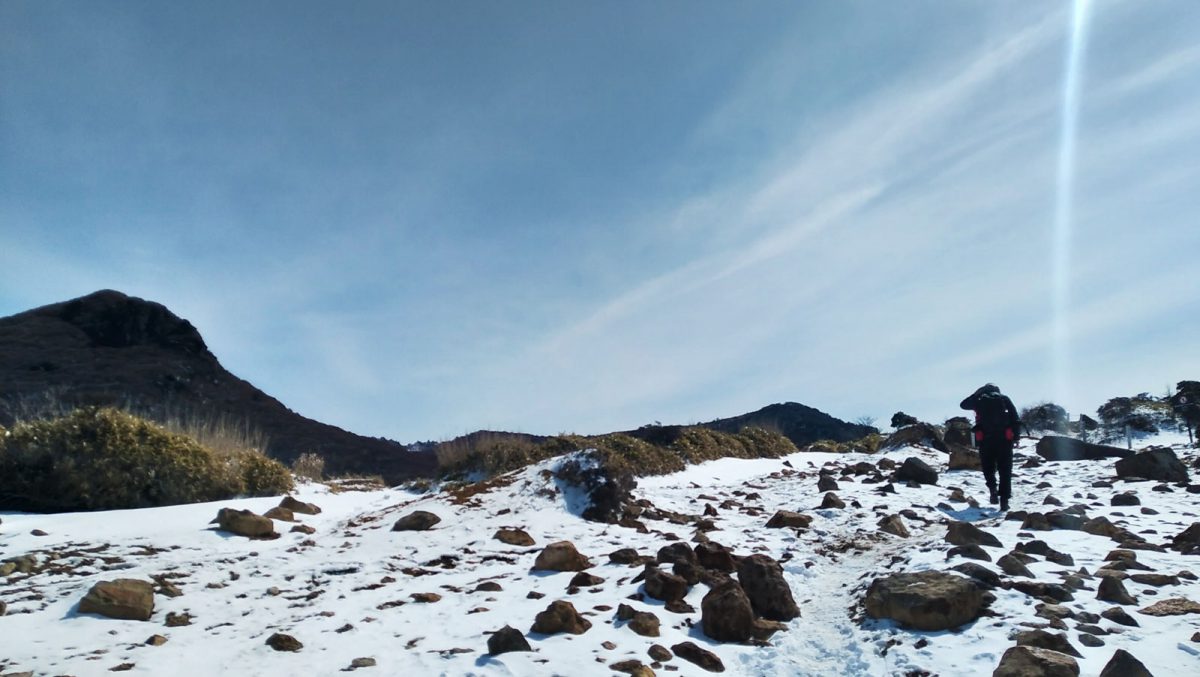
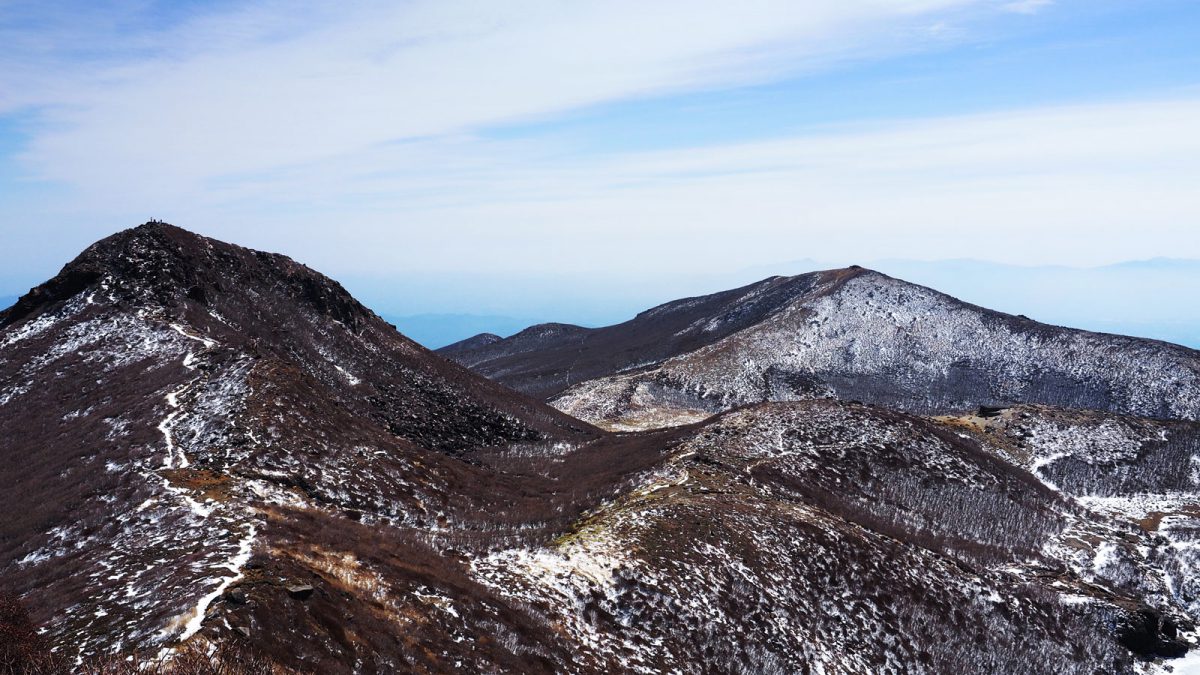
Snow had fallen the day before our March hike, leaving the route covered in white, but the day itself was bright and sunny. The steps near the start were icy on the way up.

Miike Pond and the Mount Nakadake summit
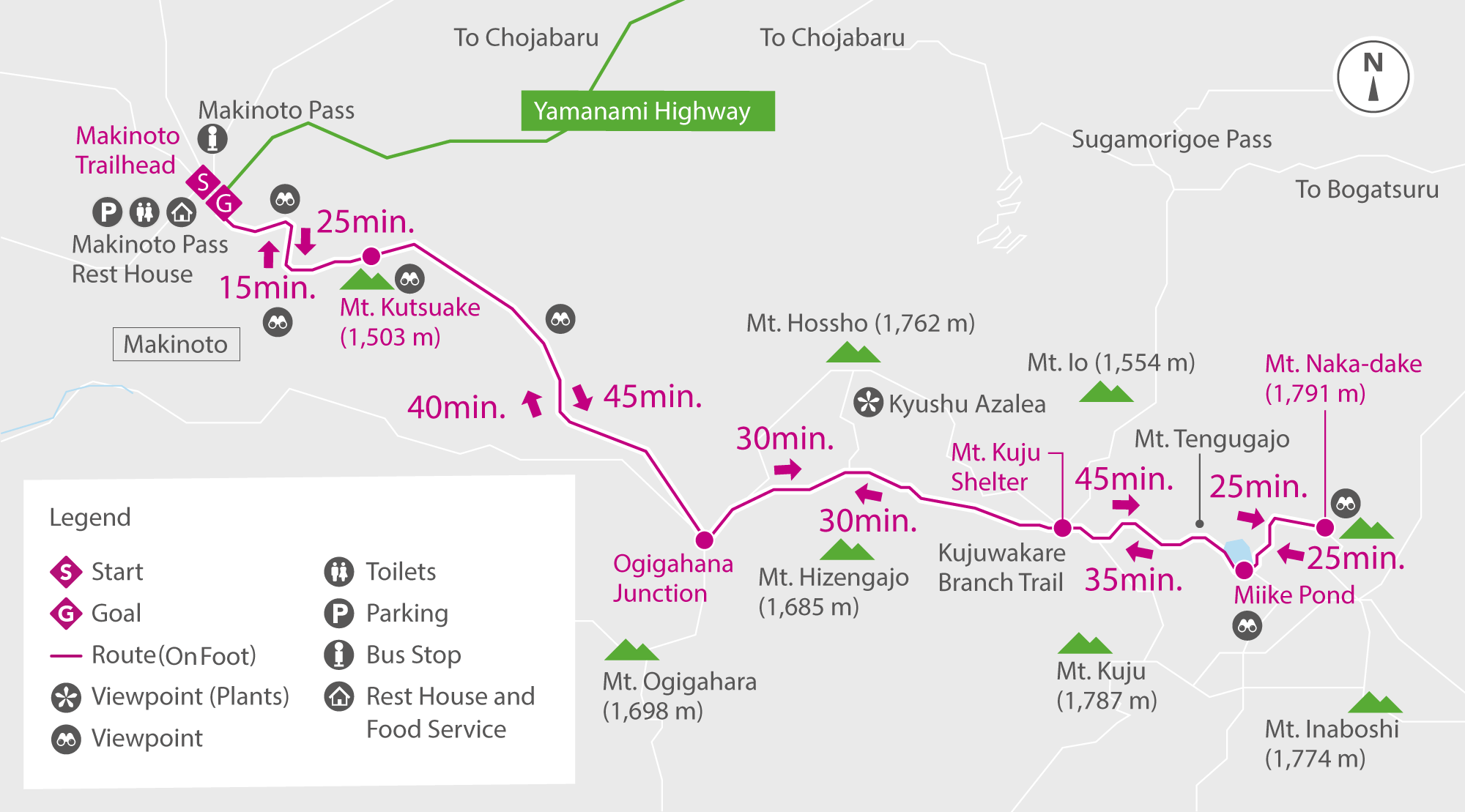
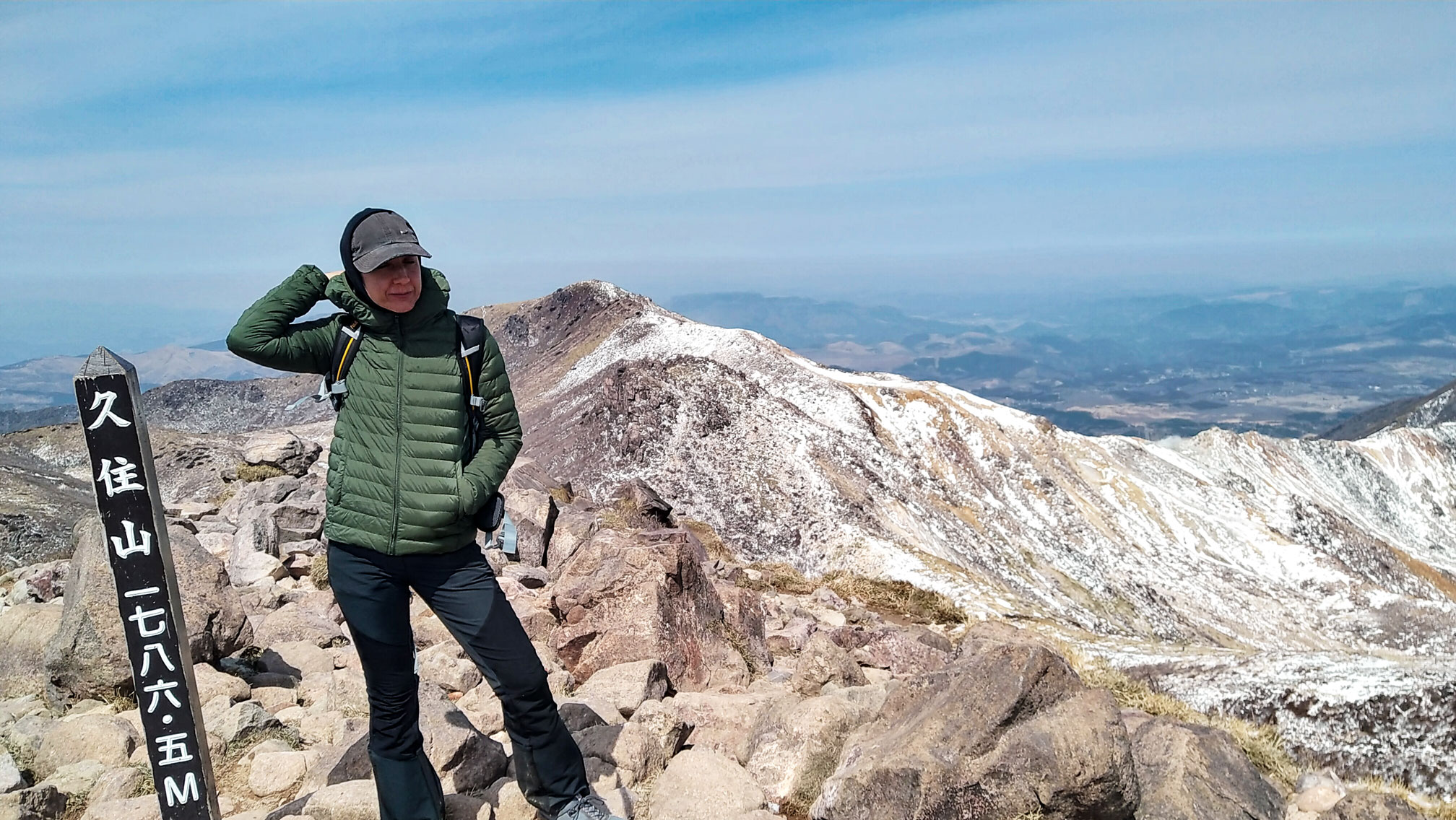
Before reaching Mount Nakadake, we made short detours to Mount Tengugajo (天狗ヶ城) and Mount Kuju (久住山). Both summits opened views in every direction across the connected ridges.
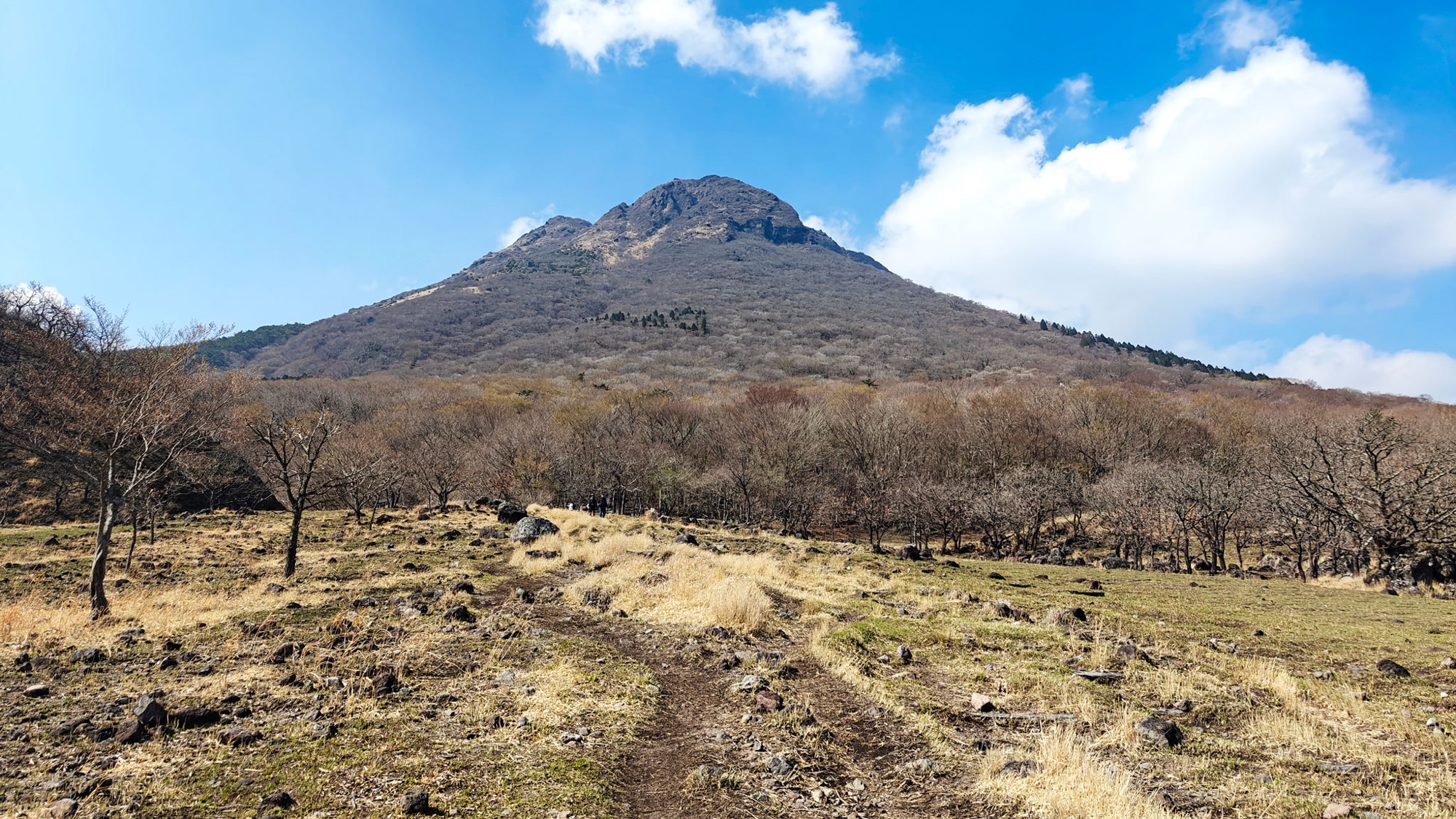
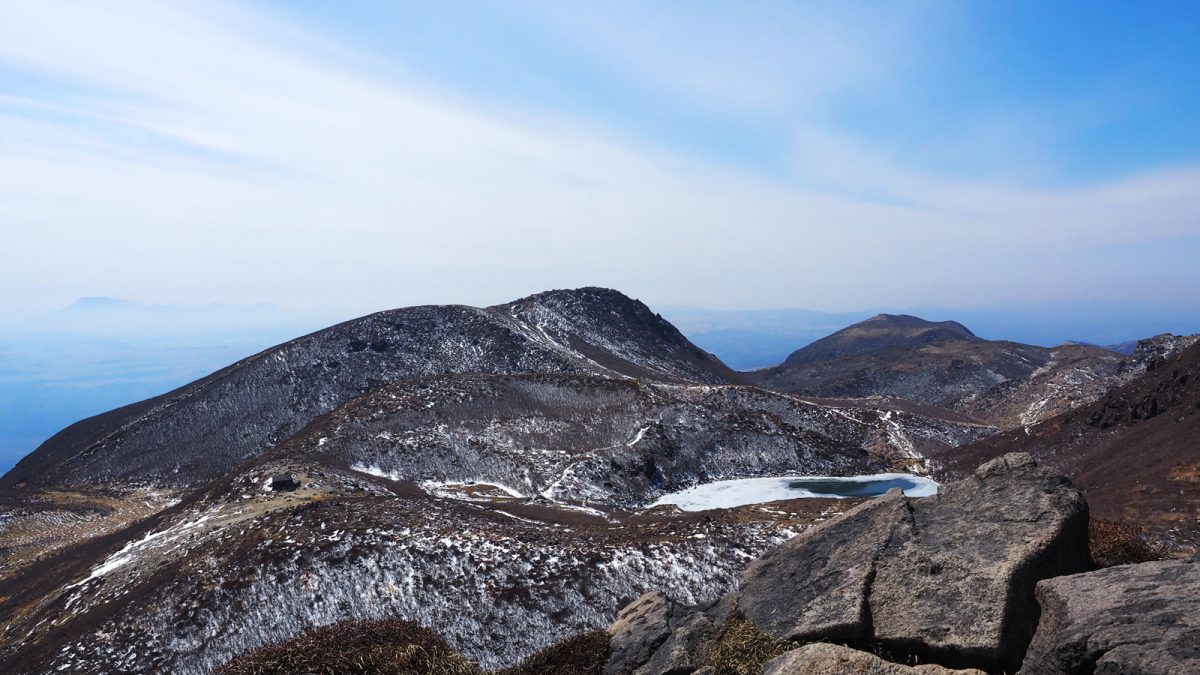
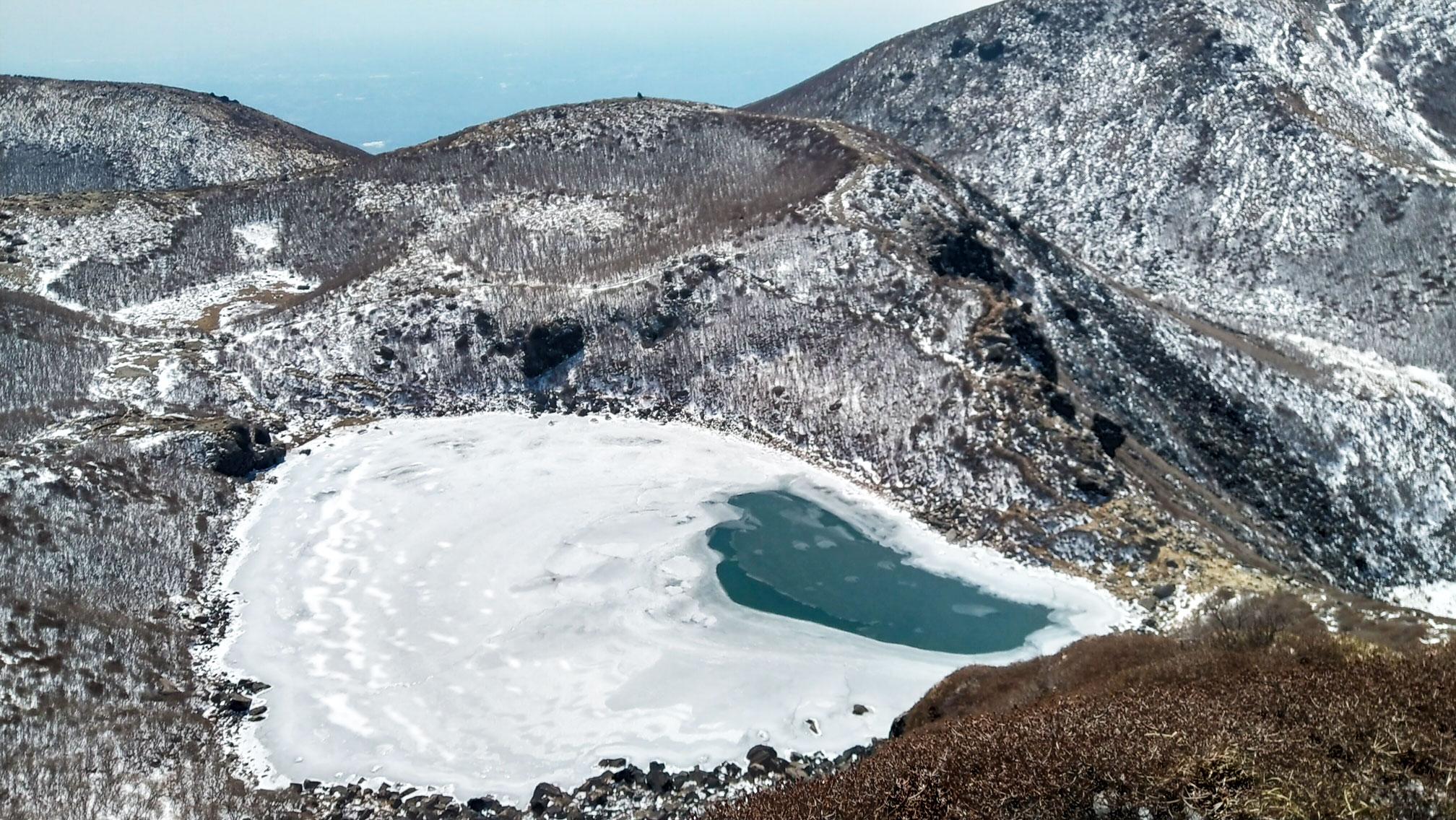
Miike Pond (御池) was partly frozen in March and remained visible from the higher points along the route. Mount Nakadake has a rocky upper ridge and a compact summit, with the other major peaks of the Kuju Mountains spread around it.
Slush and mud on the return
By the time we descended, the sun had melted much of the snow. The icy steps from the morning had turned into wet, muddy slush, which was messier and more unpleasant than the climb and left us dirty. The taps at Makinoto Pass Rest House let us wash off the worst of it before leaving.
Good to know
- Getting there
The hike starts and finishes at Makinoto Pass. We arrived by car and parked at the trailhead. The Makinoto Pass Rest House has toilets and a small shop with mountaineering supplies, coffee and souvenirs. Bring food and enough water; we bought onigiri in Kurokawa Onsen the evening before so we could make an early start.
- Route
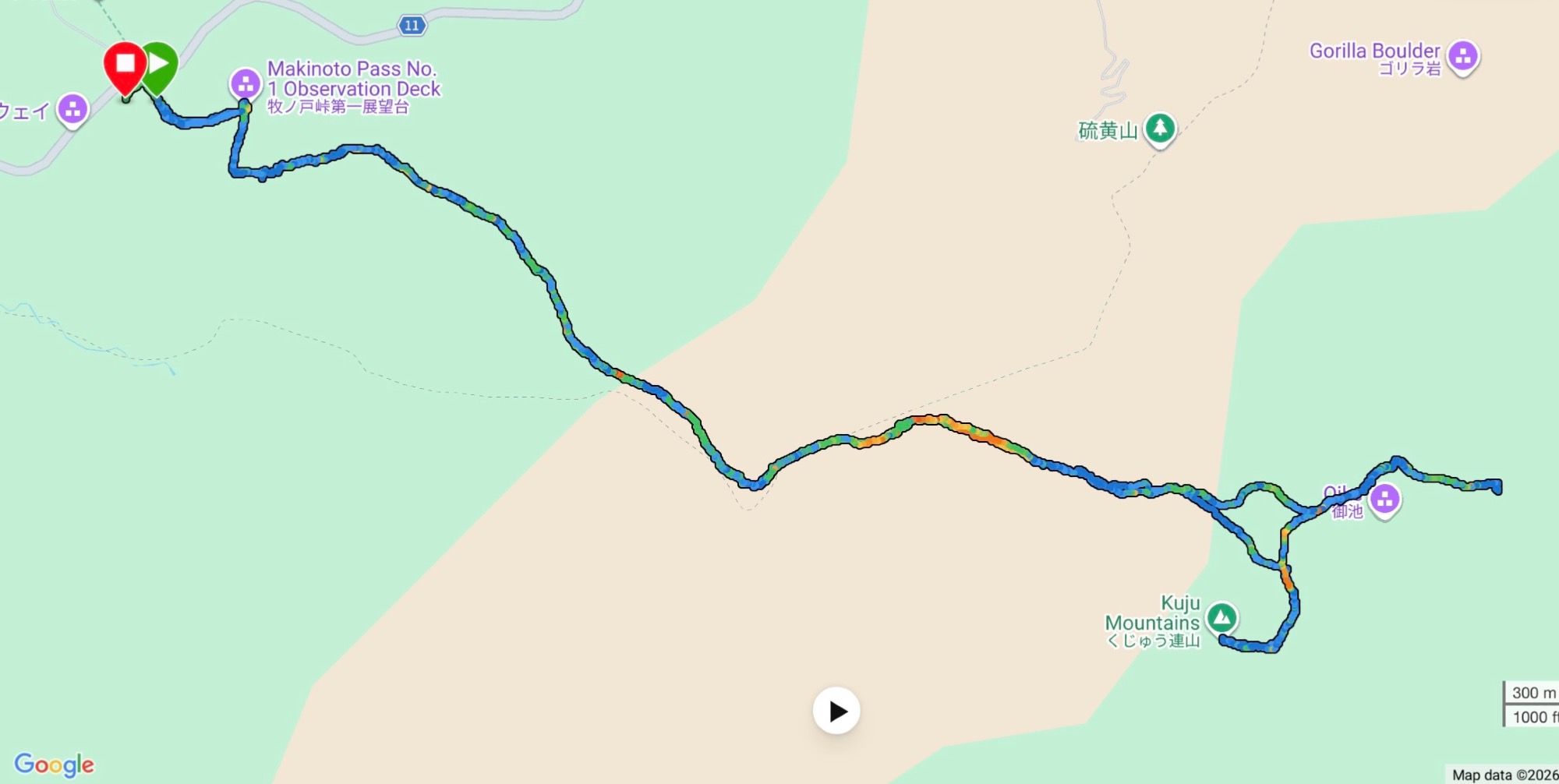
The return route is 11 km with around 800 m of ascent. It took us about five hours, including short detours to Mount Tengugajo and Mount Kuju.
- Difficulty
The opening climb is steep, followed by open ridge walking. Near the summits there are rocky sections, light scrambling and loose stones that need particular care on the descent.
- Season
Spring snow and ice can affect the route. Check current trail and weather conditions before leaving and carry suitable equipment.
- Where to stay
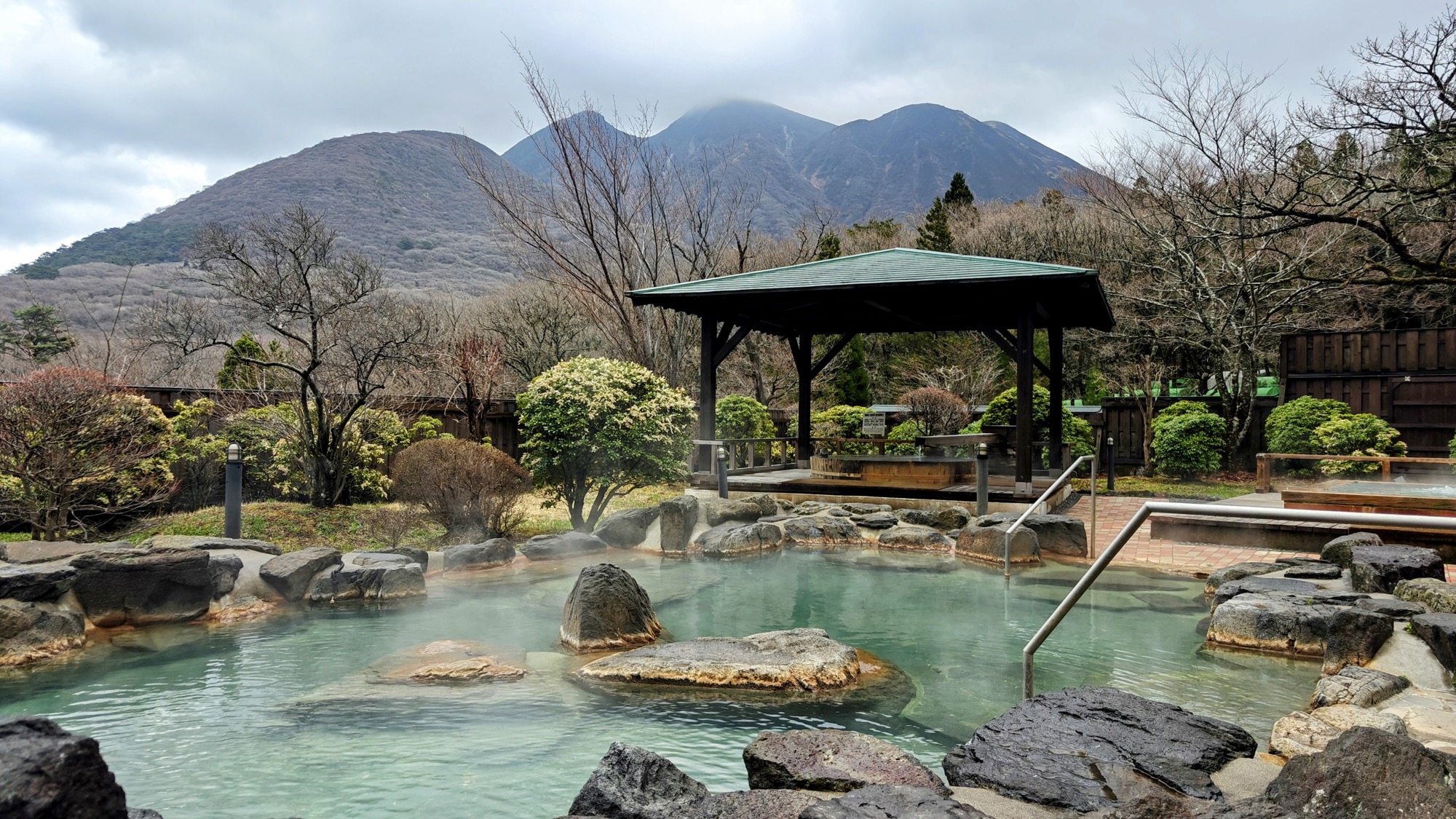
Kuju Hossho Hotel is our recommended base for this hike. It is closer to Makinoto Pass than staying in Aso, and its extensive onsen is particularly welcome after a day on the trail. Aso Plaza Hotel and Okunoyu in Kurokawa Onsen also work if the hike forms part of a wider Aso–Kuju trip.
- Official links
- GPX track
-
Download the GPX track of Mount Nakadake hike from Makinoto Pass, for your maps app or GPS watch.
- Location
-
Kokonoe, Oita Open in maps (external link)
- Details
-
Visited Last checked